
What mold damage service do I need after water damage?
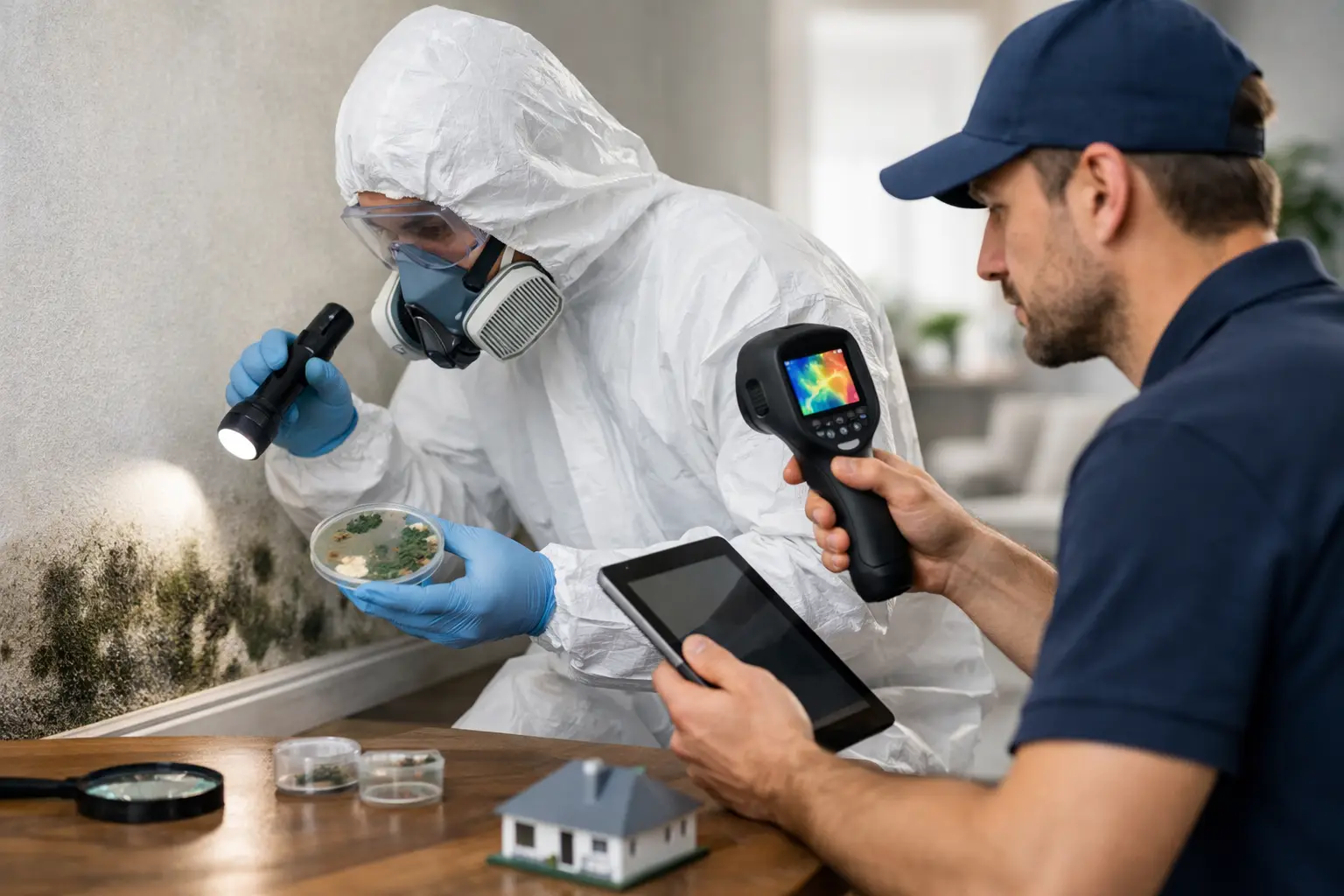
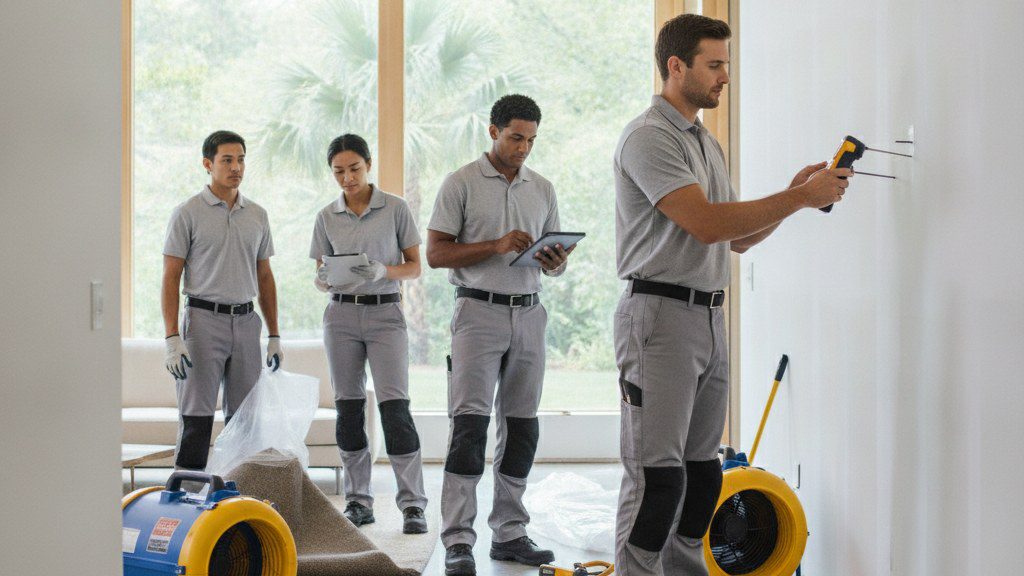
A mold damage service helps stop visible growth, hidden moisture, and the conditions that keep mold spreading after a leak, flood, or sewer backup. The real fix is fast water extraction, controlled drying, and professional remediation backed by proper containment and cleanup so the problem does not keep coming back.
What counts as mold damage service after a leak, flood, or backup?
Mold damage service is the mix of drying, containment, cleanup, and repair that prevents a water event from becoming a mold problem. If the structure stayed wet long enough, you are no longer dealing with a simple cleanup. You are dealing with contamination risk and possible hidden damage.
The term gets used loosely, which is annoying, because the work is not vague at all. A real mold damage service starts with the water source, then moves to moisture control, then to removal of affected materials if mold has already formed. That sequence matters.
A homeowner usually notices the obvious part first: wet floors, dripping drywall, a damp closet, a flooded basement, or a sewer backup. The less obvious part is the moisture sitting inside cavities and porous materials. That is the part that keeps feeding mold growth after the surface looks fine.
If the damage came from a supply line, appliance leak, storm water, or sewage, the response is different in detail but not in logic. Stop the source, remove water, dry the structure, inspect for hidden moisture, and remove contaminated material where needed.
That is why a service call should not be treated like a cosmetic fix. The question is not whether the stain disappears. The question is whether the building is dry enough and clean enough that the problem does not continue behind the walls.
- Standing water and wet materials need immediate extraction.
- Drywall, insulation, baseboards, and flooring can trap moisture.
- Musty odors often point to moisture that is still present.
- Sewer-related losses require cleanup, not just drying.
- Visible mold is a sign to inspect beyond the surface.
How do you know if mold is already growing behind the surface?
You usually do not know by sight alone, and that is the trap. The surface can look tolerable while the wall cavity, subfloor, or crawl space is already wet enough for mold to develop.
The first clue is often smell. A stale, earthy, or damp odor after a water event usually means something is still wet or contaminated. That smell is not a personality trait of the house. It is a clue.
The next clue is material behavior. Paint bubbling, drywall softening, baseboards swelling, flooring cupping, and insulation that feels compromised all point to moisture that has gotten where it should not be. If the material changed shape, the water was not minor.
Then there is the time factor. If a room stayed wet, humid, or closed up after the loss, the risk climbs. People want a neat yes or no, but the honest answer is that mold risk depends on what stayed wet, where it stayed wet, and for how long.
A proper inspection focuses on the moisture path, not the visible spot. That means looking at the source, the wet materials, the adjacent areas, and the places water usually hides: behind trim, under floors, in insulation, and in crawl spaces.
- Musty odor after a leak is a warning sign.
- Swollen drywall or flooring usually means moisture moved deeper.
- Repeated condensation can keep an area wet longer than expected.
- Crawl spaces and wall cavities can hide damage.
- Visible mold is not required for a problem to exist.
What does proper mold cleanup actually include?
Proper mold cleanup includes containment, removal of affected materials, cleaning of exposed surfaces, and drying the space so the conditions that allowed mold are gone. If any of those steps are skipped, you are not really done.
A lot of people assume cleanup means wiping a surface and spraying something fragrant on it. That is not cleanup. That is a delay tactic with better marketing.
Real cleanup begins with isolating the affected area so spores and debris do not travel through the rest of the home. Then technicians remove contaminated porous materials that cannot be restored, clean salvageable surfaces, and dry the area with the right equipment and monitoring.
If the water source involved sewage, the standard is stricter. You are dealing with contamination, not just moisture. That means the approach has to protect both the home and the people living in it, which is exactly why the process matters more than the label.
After cleanup, the structure still has to be evaluated for what is left behind. If the underlying leak is not fixed, or hidden moisture is still there, the issue can return. Mold jobs are repetitive when the root cause is ignored. Not a mystery.
- Containment limits spread into unaffected rooms.
- Porous materials may need removal, not just cleaning.
- Drying must be verified, not assumed.
- Sewage backup changes the cleanup standard.
- Root cause repair is part of finishing the job.
Elevated Operations provides 24/7 water, fire, mold, storm, and sewage damage restoration across Metro Atlanta.
Get a free quoteWhy fast water extraction changes the mold outcome
Fast water extraction matters because mold is a moisture problem first and a biology problem second. If you remove the water quickly, you reduce the amount of material that becomes contaminated and the amount of demolition the job may require.
This is where homeowners lose time. They wait to see whether the floor dries on its own. It might. It also might feed mold in the subfloor while the room looks harmless from the doorway.
The faster the standing water comes out, the better the odds that flooring, drywall, and contents can be saved. That is not hype. It is basic material behavior. Wet porous materials are harder to restore the longer they sit.
Extraction also gives the next phase a real chance to work. Drying equipment is not magic. It performs best after the excess water is removed. If you skip extraction or do it too late, drying takes longer and hidden damage becomes more likely.
For a homeowner, the practical takeaway is simple. After a burst pipe, leak, or flood, the first hours are about controlling the environment. That is what lowers the chance of a bigger mold job later.
- Standing water should be removed before drying starts.
- The longer materials sit wet, the less likely they are to be salvaged.
- Drying equipment works better after extraction.
- Early action can reduce demolition.
- Hidden moisture is easier to control when the first response is fast.
Which materials are most likely to need removal after mold damage?
The materials that usually need removal are the porous ones that absorbed water and cannot be reliably cleaned once mold has taken hold. Think drywall, insulation, carpet pad, and some soft contents, not just the visibly stained piece.
People understandably want to save as much as possible. That is fine until the material itself becomes the problem. Porous items can absorb moisture deep into the structure, which makes full cleaning less reliable than most homeowners hope.
Drywall is a common example. Once it softens or wicks water, the material may no longer be worth saving. Carpet padding is another. Even if the surface seems manageable, the underlayer can hold moisture and contamination.
Insulation is especially tricky because you often cannot inspect it properly without opening the assembly. That is why hidden moisture checks matter. If the cavity stayed wet, the visible surface is not the whole story.
Contents can also be affected. Upholstered items, paper goods, and some personal belongings may need specialized cleaning or disposal depending on exposure. The right call is based on what was exposed, how much water reached it, and whether contamination was present.
- Drywall that wicked water often cannot be restored.
- Carpet pad traps moisture and contamination.
- Insulation can hide damage inside walls and ceilings.
- Soft contents may need contents cleaning or disposal.
- Decisions depend on exposure, not just appearance.
How mold damage service fits with insurance paperwork and claims
Mold damage service should support the claim, not create more confusion. The practical goal is to document the loss clearly, show what was damaged, and keep the restoration work aligned with the insurer’s process.
This part is where many homeowners get stuck. They know the house is wet or moldy, but they do not know what to tell the adjuster, what to save, or how to connect the damage to the original water event.
Good documentation matters. Photos, moisture findings, affected areas, and the sequence of work all help explain what happened. Without that, the claim can turn into a guessing game, and no one likes a guessing game when the drywall is coming off.
Insurance-guided restoration is about reducing friction. The restoration team handles the work, but also helps keep the paperwork and communication from becoming a second disaster. That is not fluff. It is the difference between progress and repeated callbacks.
If you are already stressed, the last thing you need is to interpret technical notes on your own. You need a clean record of the damage and a clear path from emergency cleanup to reconstruction.
- Photos and moisture notes support the claim.
- The sequence of damage needs to be documented.
- The source of water should be tied to the mold issue.
- Clear records reduce confusion with the adjuster.
- Restoration and claim management should move together.
Who should handle mold damage in Metro Atlanta homes?
The right choice is the crew that can handle the emergency, the drying, the remediation, and the rebuild without handing you off three times. That matters when the damage is active, the clock is moving, and you are trying to protect the home.
You do not want separate people for water removal, mold cleanup, and reconstruction unless you enjoy coordination headaches. Most homeowners do not. They want the problem handled correctly and the home put back together without a scavenger hunt of subcontractors.
In Metro Atlanta, response time matters because humidity and concealed moisture are not your friends. A company that can respond quickly, assess the damage, and move into mitigation fast gives you a better shot at limiting the scope.
That is where a one-stop restoration and reconstruction team is useful. Elevated Operations offers 24/7 service in the Atlanta metro area, and its IICRC-certified technicians handle water, mold, sewage, storm, fire, and the rebuild that follows. That means fewer handoffs and less confusion.
The real test is not what a company says it can do. It is whether it can take the job from the first wet room to the final repaired wall without treating each stage like a different problem.
- Choose a team that can dry, remediate, and rebuild.
- Fast response matters in humid climates.
- Fewer handoffs usually means fewer delays.
- IICRC-certified technicians are a strong baseline.
- One team from mitigation through reconstruction simplifies the job.
What to do when you see mold or smell it after water damage
| Situation | What to do | Why |
|---|---|---|
| Musty odor after a leak or flood | Inspect for hidden moisture in walls, floors, and crawl spaces, then start drying immediately. | Smell often means moisture is still active somewhere in the structure. |
| Soft drywall, swollen trim, or cupped flooring | Open the affected area for a moisture check and remove materials that cannot be restored. | Visible material change usually means water traveled deeper than the surface. |
| Sewage backup or contaminated water exposure | Use remediation and sanitation steps, not simple cleanup. | Contamination changes what can be safely saved and what must be removed. |
| Mold showing up after a prior water event | Address the root cause, document the damage, and verify the structure is dry before rebuilding. | Mold returns when moisture remains or the source was never fixed. |
Doing it yourself vs bringing in Elevated Operations
| Doing it yourself | With Elevated Operations | |
|---|---|---|
| Finding the hidden moisture | You can spot the obvious wet areas, but the trapped water in walls, under floors, or in a crawl space is easy to miss. | IICRC-certified technicians look for the full moisture path and treat the source, not just the stain. |
| Drying and demolition decisions | You may over-save damaged materials or remove too much and create extra work. | The team can separate salvageable materials from contaminated ones and keep the job moving toward the right scope. |
| Insurance coordination | You are left to document everything, explain the loss, and answer adjuster questions while managing the home. | Elevated Operations helps manage the claim process so the paperwork matches the restoration work. |
| Rebuilding the space | After cleanup, you still need licensed reconstruction and a way to get the room usable again. | Elevated Operations provides reconstruction, so the same company can move from mitigation to repair without handing off the job. |
Frequently Asked Questions
How soon should I call after discovering mold damage?
Call as soon as you notice the damage, the odor, or the water source that caused it. The longer moisture stays in the structure, the more likely it is that cleanup becomes remediation and reconstruction instead of a simple dry-out.
Can mold damage be fixed without tearing out walls?
Sometimes, but only if the affected materials are still dry enough and the contamination has not moved into porous building materials. If the wall cavity, insulation, or subfloor is involved, removal may be the safer and more complete option.
Is a small area of mold still worth professional help?
Yes, if it follows a leak, flood, or backup. Small visible growth can be the tip of a bigger moisture issue. A professional assessment can tell you whether the problem is isolated or if hidden damage is present.
How much does mold damage service cost?
The cost depends on how far the water spread, what materials were affected, and whether reconstruction is needed after cleanup. The honest way to get a number is to book a call for a free quote so the scope can be assessed in person.
Can Elevated Operations help with the cleanup and rebuild?
Yes. If you want one team to handle water extraction, mold removal services, and the reconstruction that follows, Elevated Operations can help in the Atlanta metro area. Book a call for a free quote and get the next step mapped out.
Get a free, no-obligation restoration estimate
Elevated Operations provides 24/7 water, fire, mold, storm, and sewage damage restoration across Metro Atlanta.
Get a free quoteCall (770) 404-6895Last updated September 12, 2026