How do I choose mold testing near me after water damage?
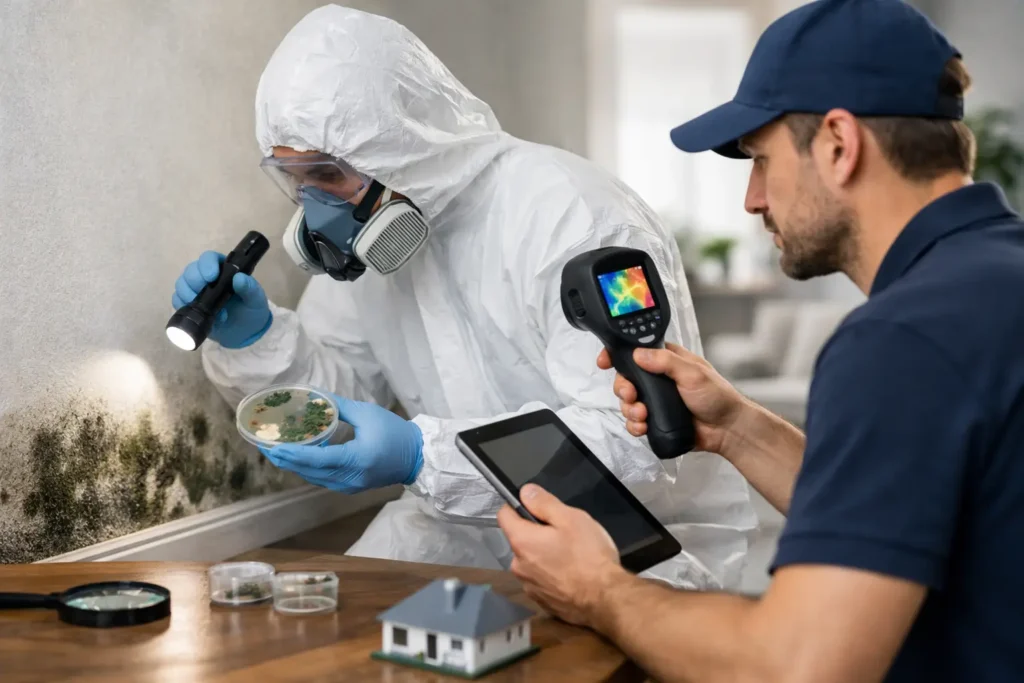
mold testing near me usually means you need a local pro to identify whether mold is present, where moisture is lingering, and what has to be removed or dried before the problem spreads. The real fix is a proper inspection plus moisture control, then cleanup and restoration guided by the findings.
What does mold testing near me actually cover?
It covers the building, not just the sample. The right local search result should lead you to someone who checks for moisture sources, visible growth, and the conditions that let mold keep coming back after water damage.
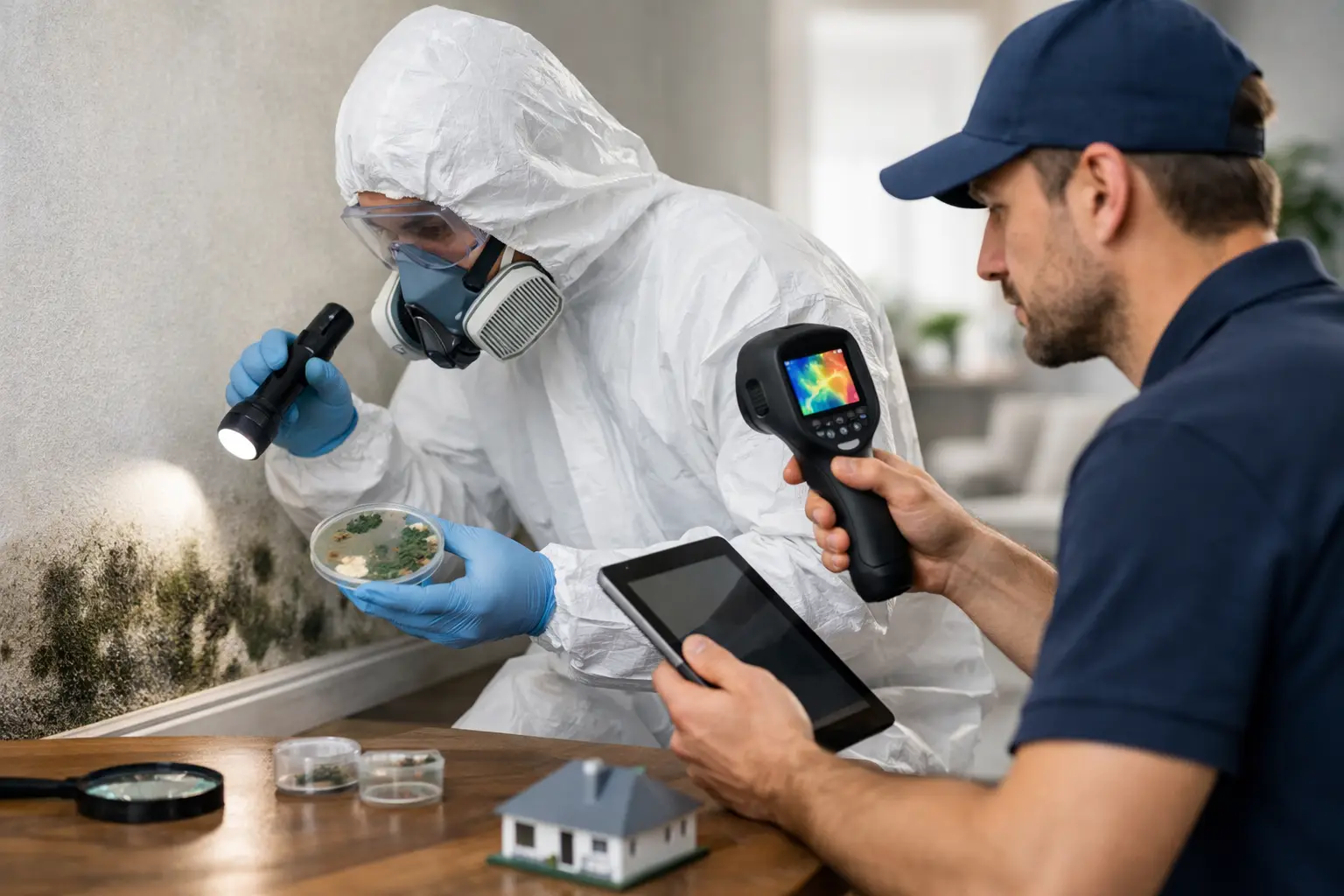
In plain English, mold testing near me is really a request for answers about what is growing, where it is growing, and whether the building is still wet enough to support it. That is why a good visit starts with a visual inspection and moisture assessment, not a test strip and a shrug.
A useful inspector looks at water stains, wall cavities, flooring, baseboards, crawl spaces, attic conditions, and any area that had recent leak or flood exposure. If the source is still active, the sample result is only half the story.
The buyer mistake is assuming the lab result is the whole decision. It is not. You need context: where the water came from, which materials stayed wet, and whether the property needs drying, containment, remediation, or reconstruction.
For Atlanta homeowners, especially after a burst pipe or sewer backup, the question is less about paperwork and more about preventing structural damage and spread. The right local response should translate the findings into next steps fast.
Mold inspection, mold testing companies, and moisture mapping are usually part of the same decision. If one piece is missing, you are probably being sold convenience, not clarity.
- Visual inspection should come before any sample plan.
- Moisture readings matter because hidden dampness drives mold growth.
- Crawl spaces, basements, and wall cavities are common trouble spots.
- The source of water intrusion has to be corrected or the problem returns.
- A useful result explains action, not just contamination.
When is a mold inspection enough, and when do you need testing?
If the source is obvious and the damage is visible, inspection can be enough to guide remediation. If the story is unclear, sampling can help confirm what the eye cannot see, but it should not replace fixing the water problem.
Here is the common mistake: people chase a lab report before they know whether the wall is still wet. That order is backwards. If the leak is active or materials are saturated, testing alone gives you trivia, not a plan.
A mold inspection is often enough when there is visible growth, a clear moisture source, or a strong odor in the same area as the water damage. In those cases, the next step is usually containment, drying, removal of affected materials, and cleanup.
Testing becomes more useful when the situation is disputed, the growth is not visible, or you need a clearer picture of indoor conditions across rooms or levels. That is where mold testing companies can help distinguish one affected area from a broader concern.
If you are dealing with property damage after a storm or sewer issue, the practical goal is not proof for its own sake. It is deciding what to dry, what to remove, and what needs reconstruction so the home can be safely used again.
For a homeowner in Mableton, Marietta, Decatur, or Sandy Springs, speed matters because wet materials do not wait politely for a report.
- Visible growth plus moisture often means remediation planning can begin.
- Unexplained odor or health concerns can justify sampling.
- Repeated dampness suggests the source was never fully corrected.
- Testing is more useful when the contamination pattern is unclear.
- The fix always starts with the water source, not the stain.
How do mold testing companies differ from a remediation contractor?
One tells you what is there. The other helps remove it and rebuild what was damaged. If you only hire for testing, you may still have to find a second team for drying, removal, cleanup, and reconstruction.
This is where people burn time. They call one company for a report, another for drying, another for demo, and another for rebuilding the walls. Then they act surprised when communication gets messy. Of course it does.
Mold testing companies focus on identification, sampling, and reporting. A restoration contractor focuses on stopping the source, drying the structure, removing affected materials, cleaning, and restoring the space. Those are different functions, even though the same leak started the whole mess.
For homeowners with sudden water damage, the better sequence is usually assessment, moisture control, remediation, and reconstruction under one roof if possible. Fewer handoffs mean fewer gaps, and fewer gaps mean less chance the problem gets reintroduced.
Elevated Operations fits that reality because it is a restoration and reconstruction provider, not just a name on a lab order. That matters when the issue is not theoretical mold but a wet room that needs to be handled correctly from start to finish.
If the home is already disrupted, the useful question is not who can generate the prettiest report. It is who can help you close the loop.
- Testing identifies; restoration resolves.
- Sampling without drying leaves the root cause in place.
- Separate vendors can slow down communication and approvals.
- One-stop coordination is easier when insurance is involved.
- Licensed reconstruction matters when walls, floors, or finishes must be rebuilt.
Elevated Operations provides 24/7 water, fire, mold, storm, and sewage damage restoration across Metro Atlanta.
Get a free quoteHow do I compare local options for mold testing near me without getting stuck in the map pack?
Look past the first few pins. The map pack is influenced by proximity, reviews, and category signals, but the homeowner still has to ask the practical question: who can actually solve a moisture problem after the initial search?
Near-me queries are convenient, and that is exactly why they can mislead you. A business can appear close because it has the right GBP categories, review velocity, service area setup, and NAP consistency, while still being a poor operational fit for a real restoration job.
For mold testing near me, compare how clearly the company explains the sequence from inspection to action. If they cannot tell you what happens after the test, they may only be selling a snapshot. You need the next step too.
Also check whether they understand Atlanta-area realities like storm losses, flooded basements, crawl space mold, and sewer contamination. Those situations do not behave like a generic indoor air problem. They involve moisture movement, containment, drying, and building materials.
This is where AI Overviews and local search snippets can help, but only if the underlying business information is complete. The reader should want a provider with strong service pages, accurate location signals, and enough substance to answer the real question without confusion.
Mold testing companies that cannot explain the fix are not helping much. They are just occupying the results page.
- Confirm the service area matches your part of Metro Atlanta.
- Check whether the business can handle the problem beyond sampling.
- Look for clear NAP details and consistent branding.
- Read reviews for communication, not just praise.
- Make sure the company can coordinate with insurance if needed.
What should a proper mold testing visit include after sudden water damage?
It should include moisture investigation, visual documentation, and a plan for what to do next. If the visit ends with a vague recommendation and no clarity on the source, the job was incomplete.
After a burst pipe, leak, or flood, the visit should start with the building envelope and the wet materials, not just the air in one room. Mold does not appear by magic. It follows water, time, and the materials that stayed damp.
A strong inspection usually looks at affected surfaces, hidden cavities, and the areas most likely to trap moisture, such as crawl spaces, basements, and behind finished walls. If there is sewage contamination, that changes the cleanup standard immediately.
You also want the findings translated into action. Drying, containment, demolition, cleaning, and reconstruction each solve a different piece of the problem. A good process is defined by sequence, not by buzzwords.
For a homeowner, the goal is simple: identify the risk, stop the spread, and restore the space without dragging the project into a second round of damage. That is the difference between a real assessment and a box-checking visit.
If you are already dealing with wet drywall or musty odors, waiting for the issue to become obvious is how a small problem turns into a bigger one.
- Identify the source of water intrusion.
- Check for visible growth and hidden dampness.
- Assess affected building materials, not only surfaces.
- Determine whether containment or removal is needed.
- Explain the next step in plain language.
Why do near-me searches for mold testing usually happen after water damage?
Because people do not search for mold for fun. They search when a leak, flood, or sewer issue has already made the home feel questionable, and they need a local answer before the damage spreads.
That is the assumption flip people miss. The search is rarely about curiosity. It is about fear that the wall, floor, or crawl space has become a mold problem because the water event was not minor enough to ignore.
When the search starts after a loss, speed matters more than perfect wording. The homeowner needs someone who can get there, identify the moisture source, and tell them whether drying, removal, and reconstruction are required. Waiting around for a general answer just prolongs the exposure.
This is why direct insurance claim management can be valuable in restoration work. When the home is already disrupted, nobody wants to be the middle manager between adjuster, inspector, and contractor. The job is hard enough without extra admin.
The Atlanta metro area also sees the kind of losses where one issue turns into another: burst pipes, storm intrusion, flooded basements, and sewage backups. Those are not theoretical mold situations. They are active property damage situations.
If the house smells off after water damage, your instincts are probably better than your calendar.
- Water damage is the usual trigger for mold concern.
- The first priority is stopping the moisture source.
- The second priority is determining affected materials.
- The third priority is cleanup and reconstruction.
- The longer the delay, the more complicated the job tends to become.
What makes an Atlanta-area mold testing call worth booking?
Clarity. You want a provider who can explain the findings, the next move, and the scope without turning a simple property problem into a sales performance. That is the standard, not a bonus.
A worthwhile call should give you a sense of whether the issue is truly about mold, whether moisture is still present, and what will happen if nothing is done. If the answer is vague, keep looking.
In Atlanta, the practical advantage is local response and local familiarity with the kinds of damage common in the metro area. That includes storm events, crawl space humidity, basement water intrusion, and the aftermath of plumbing failures.
Elevated Operations can fit that moment because it offers 24/7 restoration and reconstruction, IICRC-certified technicians, and one team from mitigation through rebuild. That matters when the property needs more than a test and a referral.
The goal is not to oversell fear. It is to reduce chaos. When the right team can manage the drying, cleanup, and rebuild while you deal with your family and insurance, the whole thing becomes more manageable.
If you need help deciding whether you are looking at mold testing companies or a full restoration response, a free quote is the cleanest next step.
- Book when the issue follows a leak, flood, or sewer backup.
- Book when there is visible growth or a persistent musty odor.
- Book when you need a local plan, not just a sample result.
- Book when multiple trades would otherwise have to coordinate.
- Book when you want one estimate and a clear path forward.
When the inspection findings should move you from testing to action
| Situation | What to do | Why |
|---|---|---|
| Persistent musty odor after a leak or flood | Schedule inspection and moisture mapping, then dry or remove affected materials | Odor usually means moisture is still present somewhere, even if the surface looks fine |
| Visible growth on drywall, trim, or insulation | Treat it as a remediation issue, not only a testing issue | You already have evidence of colonization, so the next question is extent and containment |
| Soft, swollen, or warped materials | Assess for removal and reconstruction | Damaged building materials often cannot be restored once they have stayed wet too long |
| Sewer backup or contaminated water | Use remediation and sanitation standards appropriate for sewage cleanup | Contamination changes the health and safety response immediately |
Doing it yourself vs bringing in Elevated Operations
| Doing it yourself | With Elevated Operations | |
|---|---|---|
| Finding the real moisture source | You may spot the stain, but hidden moisture behind walls or in crawl spaces can be easy to miss | IICRC-certified technicians assess the water path, affected materials, and drying needs so the problem is not guessed at |
| Coordinating the cleanup | You may have to call separate people for inspection, drying, demolition, and rebuild | One team can handle mitigation and reconstruction, which reduces handoff problems |
| Working with insurance | You are left to manage paperwork, photos, and adjuster communication while also dealing with the damage | We provide direct insurance claim management so the restoration process stays organized |
| Getting the space usable again | You can lose time lining up trades and waiting on each step | We provide a one-stop path from emergency response through final construction in the Atlanta metro area |
Frequently Asked Questions
Do I need mold testing if I already see water damage?
Not always. If there is visible growth, wet drywall, or a strong musty odor, the issue may already be obvious enough to move into cleanup planning. Testing is more useful when the source or spread is unclear. The right next step is to identify moisture, determine the affected materials, and stop the damage from continuing.
What do mold testing companies check in a home?
They usually look for signs of growth, take samples when needed, and help identify whether indoor conditions point to a mold problem. For a homeowner after water damage, the important part is how the results connect to moisture, structural materials, and the cleanup plan. A useful report should answer what happens next.
Can mold come back after a leak is repaired?
Yes, if wet materials were not fully dried or removed. Mold growth often returns when hidden moisture remains in walls, flooring, insulation, or crawl spaces. That is why testing alone is not enough in many water damage cases. The source has to be corrected and the affected area handled properly.
How much does mold testing near me cost?
It depends on the size of the problem, whether samples are needed, and how complex the inspection is. Because every loss is different, the cleanest way to understand cost is to book a call for a free quote. That gives you a custom look at the scope before you commit.
Can Elevated Operations help after the test if the problem is bigger than expected?
Yes. If the findings point to real water damage, mold, sewage, or reconstruction needs, Elevated Operations can help with the full restoration path in the Atlanta metro area. That is often easier than juggling multiple vendors, especially when the home needs drying, cleanup, and rebuilding.
Get a free, no-obligation restoration estimate
Elevated Operations provides 24/7 water, fire, mold, storm, and sewage damage restoration across Metro Atlanta.
Get a free quoteCall (770) 404-6895Last updated September 16, 2026