
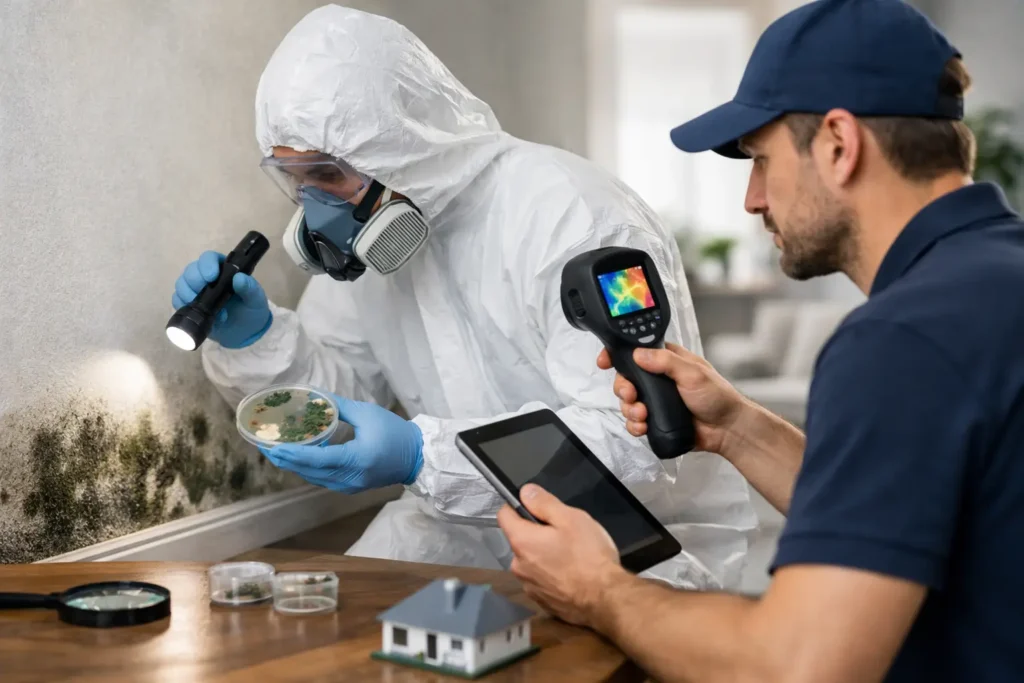
How do I choose mold remediation companies near me after water damage?
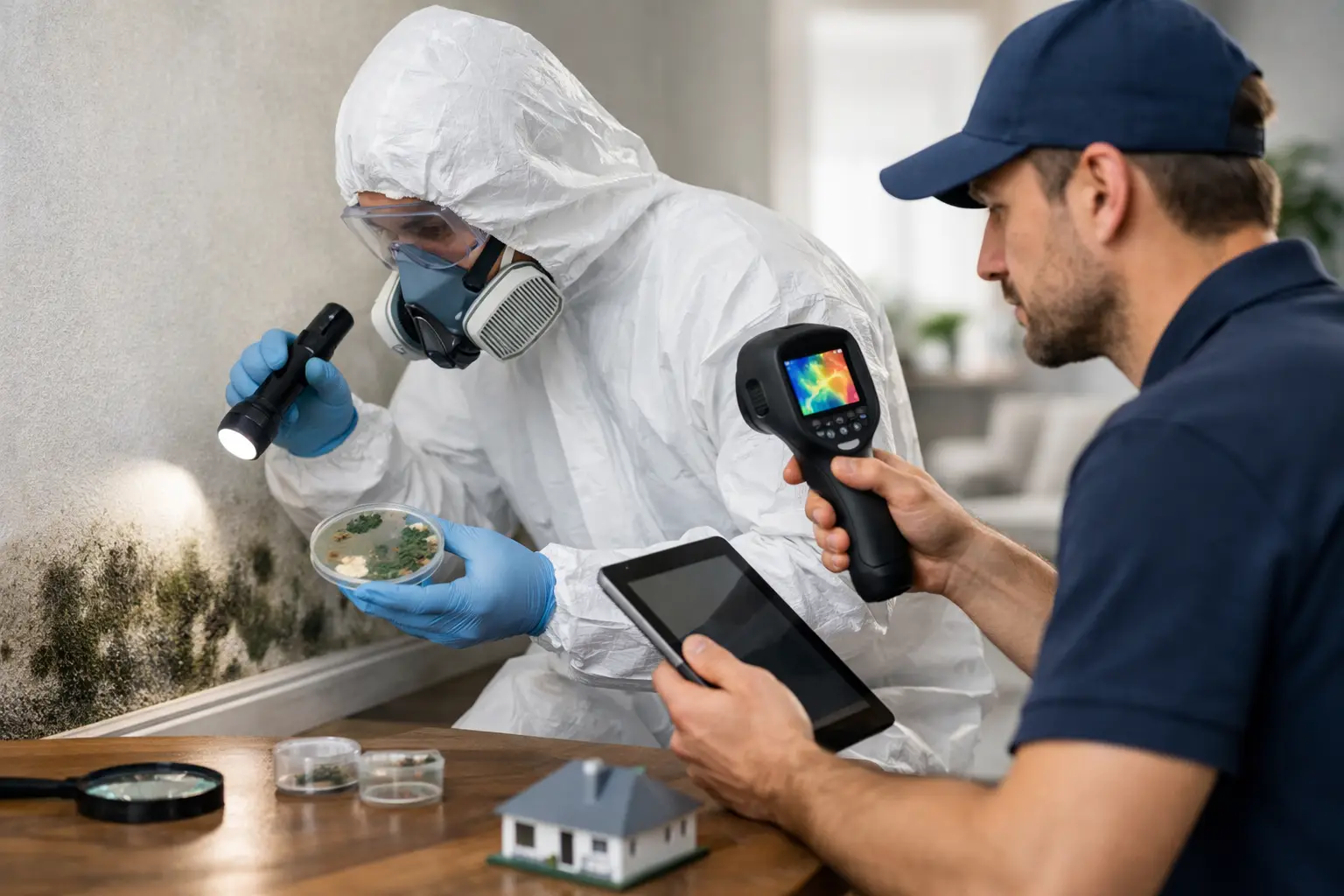
Mold remediation companies near me should be chosen for fast response, clear containment, proper drying, and IICRC-certified technicians who can handle the cause, not just the visible mold. If the job started with a leak, burst pipe, or sewage issue, the right fix is full moisture control plus safe removal and cleanup.
What do mold remediation companies near me actually do after a leak?
The real job is not spraying something and hoping the smell goes away. It is source control, containment, cleanup, drying, and deciding what can stay versus what has to come out.
If you are searching locally, you are usually not asking a branding question. You are asking who can stop a wet area from becoming a mold problem. That means the company has to look at the leak source, the wet materials, and the air movement around the damage, not just the surface stain.
Good remediation starts with inspection and moisture mapping. Then the crew contains the area so spores and dust do not move through the house while the work is happening. After that comes removal, cleaning, and drying, with the goal of making the space safe to rebuild or reoccupy.
A weak response focuses on what you can see. A proper response focuses on what you cannot see yet, like damp drywall, soaked insulation, hidden framing moisture, and trapped humidity inside the wall cavity. That is where the trouble keeps living if nobody deals with it.
If the problem started with water intrusion, the best local company is the one that treats mold as a symptom and moisture as the cause. That is the whole game.
Containment to isolate the work area
Moisture inspection to find the source of the problem
Removal of damaged materials that cannot be saved
Cleaning and drying to stabilize the structure
Clear scope before reconstruction begins
- Ask whether they inspect the moisture source before they talk about mold.
- Look for containment, not just visible cleaning.
- Make sure they can explain what gets removed and what can be dried.
- If drywall, insulation, or subflooring are wet, the scope should reflect that.
- A local company should be able to respond fast enough to limit spread.
Why does a fast local response matter when mold is tied to water damage?
Because mold does not wait for your schedule, and the structure does not care that you are still calling around. The longer wet materials stay wet, the more complicated the job gets.
This is where the common mistake shows up. People shop for mold help like it is a normal home service. It is not. If water sat in the home, time is part of the damage. Fast response can be the difference between contained cleanup and a larger restoration scope.
Near-me searches are really urgency searches in disguise. You want someone in the Atlanta metro area who can get to the property, assess the damage, and begin stabilization before the issue spreads into adjacent rooms, cavities, or contents.
Delay creates a chain reaction. Wet drywall softens. Insulation holds moisture. Wood framing stays damp. Odor gets stronger. The work shifts from cleanup to removal and rebuilding. That is why homeowners who wait often end up with more disruption than they expected.
The right local company should be able to move from inspection to mitigation to restoration without making you coordinate three different vendors. One handoff means fewer gaps and fewer chances for the issue to get worse.
Wet materials become harder to dry as time passes
Mold odor is often a sign the source is still active
Fast containment protects adjacent rooms and belongings
Single-vendor coordination reduces missed steps
Emergency response is more useful than another vague estimate
- The first hours matter because moisture keeps moving into materials.
- A local team reduces the gap between discovery and action.
- Better speed often means less demolition later.
- One company handling mitigation and rebuilding prevents scope drift.
- If the odor is spreading, the problem is already broader than the stain.
Which local signals tell you a company understands mold, not just marketing?
Ignore the polished wording for a second. What matters is whether they can explain the problem clearly, show real credentials, and handle the paperwork without turning your life into a project.
A lot of pages sound the same because they are built for clicks, not for actual restoration decisions. The buyer-side test is simple: can this company explain containment, drying, and rebuild planning in plain English? If not, keep looking.
IICRC-certified technicians matter because mold remediation and water restoration are technical work. You want people who know the procedures, not someone improvising because the site smelled musty. Certification does not solve everything, but it is a meaningful filter.
Then look at the practical stuff. Do they serve your area directly? Do they answer after hours? Do they manage insurance claims, photos, and invoicing? Do they have licensed contractors for reconstruction if the damaged materials must be replaced? Those are the things that keep a bad week from becoming a bad month.
For Atlanta metro homeowners, local proof matters more than generic promises. Search results can be crowded, but the company that wins the call usually makes the process feel orderly instead of chaotic.
IICRC certification for technical remediation work
24/7 availability for emergency water and mold issues
Direct insurance claim management
Licensed reconstruction capability when rebuild is needed
Clear local service area for Atlanta metro neighborhoods
- Certification is a credibility check, not a marketing slogan.
- After-hours availability matters for active leaks and backups.
- Insurance support can reduce paperwork friction.
- Reconstruction capability matters when materials cannot be saved.
- A real local provider should name the neighborhoods they actually serve.
Elevated Operations provides 24/7 water, fire, mold, storm, and sewage damage restoration across Metro Atlanta.
Get a free quoteWhat should you ask before hiring for mold cleanup in Metro Atlanta?
If you ask the wrong questions, you get a vague estimate and a polite headache. Ask about the cause, the containment plan, and what happens after the visible mold is gone.
This is the section most homeowners wish they had read before making the first call. Your goal is not to sound technical. Your goal is to find out whether the company is solving the problem at the right depth.
Start with the cause. Ask what they think allowed the mold to develop and how they will verify the moisture source. Then ask how they will contain the area so the cleanup does not spread dust or spores into clean rooms.
Next, ask about reconstruction. If drywall, trim, flooring, or cabinets are damaged, do they stop at cleanup and send you elsewhere, or can they carry the job through final construction? That distinction matters because a lot of the stress lives in the handoffs.
Finally, ask how they handle insurance. Some companies make the customer do all the chasing. Others manage the claim communications and invoicing. If you are already dealing with water damage, the second option is usually the one that preserves your sanity.
What is the moisture source and how will you verify it?
How will the work area be contained?
What materials must be removed versus dried?
Can you handle reconstruction if the damage is beyond cleanup?
How do you document the job for insurance?
- Ask about the moisture source, not only the mold itself.
- Containment should be part of the plan from the start.
- You need to know whether the company can rebuild after cleanup.
- Insurance documentation should not be your full-time job.
- A clear answer is better than a fast answer.
How do nearby mold and water issues connect to hidden structural damage?
Because the stain on the wall is rarely the whole story. Wet materials inside the structure often drive the real repair scope, and that is what people miss until the problem comes back.
When a homeowner searches nearby for mold help, the visible damage is what triggered the search. The hidden damage is usually what drives the final job. Water can move behind walls, under flooring, into insulation, and into crawl spaces where mold grows quietly.
That is why a good remediation plan pays attention to structural conditions. A musty room may be a clue, not the entire problem. If the source was a burst pipe, floodwater, or sewer backup, the affected area may need cleanup and then reconstruction to restore the home properly.
This is also where crawl spaces, basements, and enclosed cavities deserve attention. They hold moisture longer than open areas. If they are not addressed, the issue can keep feeding the rest of the house through humidity and odor.
A competent local provider should explain the difference between visible contamination and hidden damage. If they skip that distinction, they are probably skipping the part you will eventually pay for anyway.
Drywall and insulation can trap moisture behind the surface
Crawl spaces can keep feeding humidity into living areas
Sewer backups need a different level of cleanup than simple leaks
Structural damage may require both remediation and reconstruction
Musty odor often points to a hidden source, not a surface issue
- The wall stain is a symptom, not always the source.
- Basements and crawl spaces can prolong the problem.
- Sewer contamination needs careful handling.
- Hidden damage often decides whether repair is simple or extensive.
- Rebuild planning should be part of the conversation early.
How Elevated Operations fits the job when the search turns urgent
You do not need five vendors. You need one team that can move from emergency response to cleanup to reconstruction without making you repeat the story six times.
This is where a lot of homeowners get stuck. They find one company for extraction, another for mold, and a third for repairs. Every handoff slows the job. Every delay gives moisture more time. That is a bad trade.
Elevated Operations provides 24/7 property restoration and reconstruction in the Atlanta metro area, which is exactly the kind of setup that matters when water damage has already started the clock. The value is not just speed. It is continuity.
Their technicians are IICRC-certified, and they offer direct insurance claim management plus licensed reconstruction. That combination matters because a mold problem tied to water damage is rarely only a cleaning task. It is usually a restoration sequence.
If you are in Mableton, Marietta, Decatur, Sandy Springs, or a surrounding community, the practical win is simple. One company can assess the damage, stabilize the site, handle the remediation, and carry the job through rebuild without forcing you to coordinate the whole mess yourself.
24/7 emergency response for urgent water-related damage
IICRC-certified technicians for technical remediation work
Direct insurance claim management to reduce paperwork friction
Licensed reconstruction for jobs that do not stop at cleanup
Atlanta metro service area for nearby homeowners
- One vendor reduces communication breakdowns.
- Emergency response matters when moisture is still active.
- Claim management helps when you are already stressed.
- Reconstruction keeps the job from stalling after remediation.
- Local service means faster on-site action for nearby neighborhoods.
Should you call now or keep comparing mold companies?
| Situation | What to do | Why |
|---|---|---|
| The area still smells damp or musty after the leak. | Call a local restoration company that can inspect for hidden moisture and containment needs. | Odor often means the source is still active behind the surface. |
| Drywall, baseboards, or flooring feel soft, warped, or swollen. | Get a remediation scope that includes removal, drying, and possible rebuild. | Soft materials often cannot be saved once moisture has moved in. |
| The problem followed a burst pipe, flood, or sewer backup. | Choose a company that can handle cleanup and reconstruction, not just surface cleaning. | Contaminated water and structural damage change the job completely. |
| You need to coordinate insurance while the house is disrupted. | Use a provider that can manage claims, invoices, and communication. | Less back-and-forth means fewer mistakes and less delay. |
Doing it yourself vs bringing in Elevated Operations
| Doing it yourself | With Elevated Operations | |
|---|---|---|
| Finding the source | You can spot the wet area, but hidden moisture behind walls or under flooring is easy to miss. | We look at the broader damage path, not just the visible stain, so the scope is based on the actual source. |
| Containment and cleanup | You may clean the surface, but keeping contamination from spreading takes the right setup and procedure. | Our technicians handle containment, remediation, and drying as part of one coordinated process. |
| Insurance and documentation | You are left gathering photos, notes, invoices, and adjuster details while also dealing with the damage. | We provide direct insurance claim management so the paperwork does not sit on your kitchen table. |
| Reconstruction | If materials have to be removed, you still need a way to put the home back together. | We offer licensed reconstruction, so the job can move from mitigation to final repair without another handoff. |
Frequently Asked Questions
What makes a mold remediation company worth calling near me?
The useful signals are local availability, clear explanation of the moisture source, proper containment, and the ability to handle both cleanup and any needed reconstruction. If the company only talks about what you can see and skips what is behind the wall, keep looking.
How do I know if the mold problem is tied to water damage?
If the issue started after a leak, burst pipe, flood, sewer backup, or overflow, it is probably tied to moisture that is still in the structure. A good company should inspect the affected materials and explain how they will verify the source before they start removing anything.
Do I need remediation if the mold is only in one room?
Maybe, but the room is not the real question. The real question is whether moisture spread into walls, floors, insulation, or adjacent areas. Even a small visible patch can hide a broader problem if drying did not happen fast enough.
How much should I expect to pay for mold remediation?
There is no honest flat answer because the scope depends on the size of the damage, the materials affected, and whether reconstruction is needed. For a real number, book a call for a free quote based on your property and the actual conditions.
Can Elevated Operations help if I need both cleanup and rebuild?
Yes. Elevated Operations handles restoration and reconstruction for water, mold, fire, storm, and sewage damage in the Atlanta metro area, which is useful when the job does not end with cleanup. If you want one team to manage the process, book a call for a free quote.
Get a free, no-obligation restoration estimate
Elevated Operations provides 24/7 water, fire, mold, storm, and sewage damage restoration across Metro Atlanta.
Get a free quoteCall (770) 404-6895Last updated September 12, 2026