
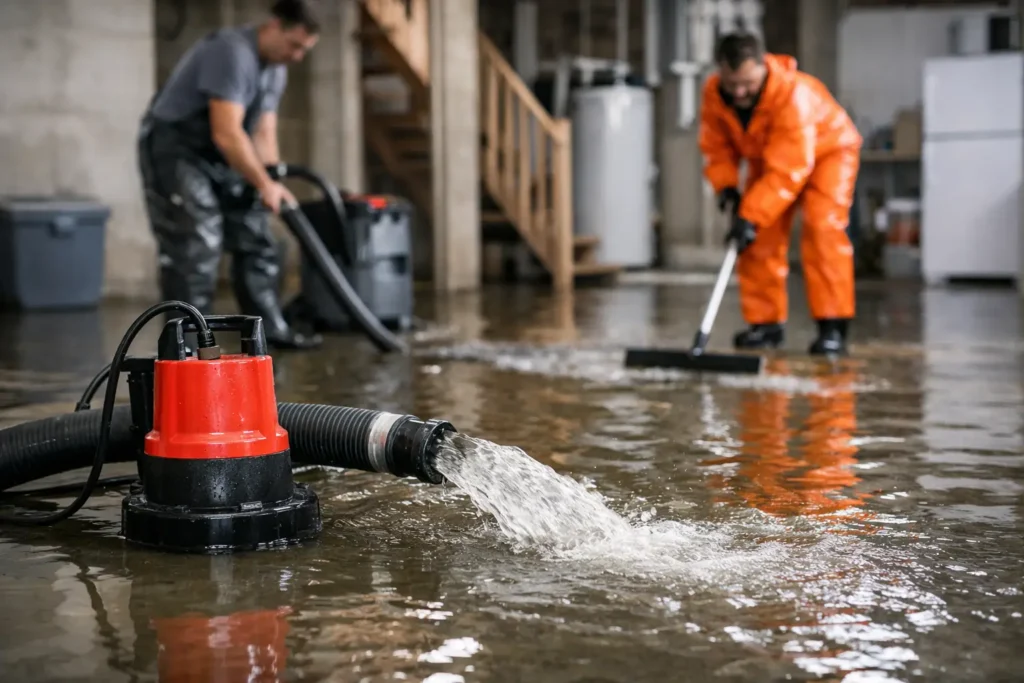
A basement can go from damp to destructive in a single Atlanta thunderstorm, a failed sump pump, or a burst supply line. Knowing how to drain Atlanta basements starts with one priority: protect people before property. Standing water can hide energized outlets, damaged wiring, sharp debris, sewage, and structural hazards. Move quickly, but do not enter a flooded basement until it is safe to do so.
For a few inches of clean water from a contained plumbing leak, careful extraction may be possible. For stormwater, sewer backups, or water that has been sitting for more than a day, professional mitigation is usually the safer and less expensive decision. The visible water is only part of the problem. Moisture can travel behind finished walls, beneath flooring, into insulation, and through framing where mold can begin growing.
Start With Safety Before You Drain the Basement
If water is above electrical outlets, appliances, or the furnace, stay out of the basement. Turn off power to the affected area only if you can reach the electrical panel without walking through water. If you are unsure, call an electrician or emergency restoration team first. Never run an extension cord into standing water, and do not operate a wet vacuum from a flooded area.
Next, identify the source. Shut off the main water supply if a burst pipe or failed appliance is still releasing water. If rainwater is entering through a foundation wall, window well, or exterior door, wait until the storm conditions are safe before addressing the outside drainage issue. A sewer backup requires a different response entirely: avoid contact, keep children and pets away, and treat all affected materials as contaminated.
Take clear photos and video before moving contents or removing water, provided it is safe. Capture the waterline on walls, damaged belongings, affected flooring, and the suspected source. This documentation can support an insurance claim and help establish what needs to be removed, cleaned, dried, or rebuilt.
How to Drain Atlanta Basements Safely
The right method depends on the volume and category of water. A small amount of clean water from a recently discovered pipe leak may be removed with a wet/dry vacuum, mop, and portable fans. Larger volumes call for a submersible pump, commercial extraction equipment, or both.
Do not pump out a deeply flooded basement all at once after prolonged heavy rain. Water pressure in saturated soil can press against the foundation walls. Rapidly emptying the basement while the ground outside remains waterlogged can, in rare but serious cases, place excessive pressure on the structure. Lower the water level gradually, then monitor conditions. If you see wall movement, widening cracks, or bowed foundation surfaces, stop and get a qualified professional involved.
For a clean-water incident, remove standing water first, then move wet items away from walls and off the floor. Rugs, cardboard boxes, upholstered furniture, and stored fabrics hold moisture longer than they appear to. Throw away wet cardboard and other low-value porous items that cannot be thoroughly cleaned and dried.
If the water is from a drain backup, toilet overflow, groundwater mixed with visible contaminants, or outdoor flooding, do not attempt normal household cleanup. Sewage and floodwater can carry bacteria and other pathogens. Carpeting, carpet pad, insulation, unsealed drywall, and many porous belongings may need removal. Certified technicians use protective equipment, containment, disinfecting procedures, and controlled disposal to prevent contamination from spreading through the property.
Extraction Is Not the Same as Drying
A basement floor can look dry while building materials remain wet. This is the mistake that often leads to musty odors, swelling baseboards, damaged drywall, and mold weeks after the emergency seems over.
Effective drying requires air movement, dehumidification, and moisture measurement. Open windows only when outside air is actually drier than the basement air. In Atlanta’s humid weather, open windows can introduce more moisture and make drying harder. Household fans can help with a very minor clean-water spill, but they cannot replace properly sized dehumidifiers and air movers after a significant flood.
Professional restoration teams use moisture meters and thermal imaging to locate water inside wall cavities, under flooring, and around structural materials. They then set drying equipment based on the size of the affected area and recheck moisture levels until materials reach an appropriate dry standard. That verification matters. Drying by appearance alone leaves too much to chance.
Materials That Need a Fast Decision
Concrete can often be dried and cleaned, although moisture may remain in it for some time. Solid wood furnishings may be salvageable if addressed quickly. Laminate flooring, particleboard furniture, carpet pad, insulation, and standard drywall are less forgiving.
Drywall that has absorbed clean water may sometimes be dried if the affected area is limited and action begins immediately. Once water has wicked upward, sat for an extended period, or involved sewage, targeted removal is commonly the safer approach. The same is true for carpet padding: it is difficult to dry thoroughly and often needs replacement after meaningful flooding.
Stop the Water From Coming Back
Draining the basement is emergency work. Preventing the next flood requires finding out why water entered. In Metro Atlanta, common causes include clogged gutters, downspouts that discharge too close to the foundation, negative grading, failed sump pumps, blocked exterior drains, cracked foundation penetrations, and aging plumbing lines.
Walk the perimeter after the emergency has passed. Downspouts should carry roof runoff away from the home rather than dumping it at the foundation. Soil should slope away from exterior walls. Window wells need clear drains and properly fitted covers. If your basement relies on a sump pump, test it regularly and consider a battery backup, especially before periods of severe weather.
Water entering through a wall is not always proof that the wall itself is the root problem. Exterior runoff may be overwhelming the foundation because of a drainage or grading issue. On the other hand, repeated dampness in one location can point to a crack, failed seal, or plumbing leak. Correct diagnosis prevents spending money on a patch that does not solve the source.
Protect Your Insurance Claim While Work Begins
Most policies expect property owners to take reasonable steps to prevent additional damage. That can include stopping an active leak, removing standing water, and beginning drying. Keep damaged materials when practical until your insurer has documented them, but do not keep contaminated items in the home just for claim purposes.
Save photos, videos, receipts, equipment records, and a timeline of when you discovered the loss and what actions were taken. Ask whether the policy covers the cause of loss, not just the cleanup. A sudden burst pipe may be handled differently than gradual seepage, surface-water flooding, or a sewer backup without a specific endorsement.
A restoration provider can also create moisture records, drying logs, itemized mitigation documentation, and an insurance-ready scope of work. This is especially useful for landlords, investors, and commercial property managers who need a clear record of what happened and why the work was necessary.
When to Call Emergency Basement Flood Help
Call for professional help immediately when the basement has more than a minor amount of water, the source is unknown, water has touched electrical systems, or there is any possibility of sewage or stormwater contamination. The same applies if water has reached finished walls, carpet, hardwood, insulation, HVAC equipment, or stored valuables.
Elevated Operations provides 24/7 emergency water extraction, moisture mapping, structural drying, cleanup, insurance coordination, and reconstruction for property owners across the Atlanta area. A fast response can limit demolition, reduce mold risk, and preserve more of the materials worth saving.
The best time to make decisions is before hidden moisture becomes a second emergency. Once the area is safe, document the loss, remove the water with the right method, and make sure the basement is measured dry – not merely dry to the touch.