
A mold inspection comparison should not start with the lowest price. It should start with one question: will this inspection identify the moisture source, define the affected area, and give you a clear path to protect the property? For Metro Atlanta homeowners, landlords, investors, and facility managers, that difference can determine whether a small leak stays manageable or turns into damaged drywall, odor problems, tenant complaints, and a larger insurance claim.
Mold is not just a surface-cleaning issue. It is often evidence that water has been present long enough to feed microbial growth inside walls, under flooring, above ceilings, or behind cabinets. A useful inspection finds the conditions behind the visible problem. A weak one simply confirms what you can already see.
What You Are Actually Comparing
Inspection providers may use similar language, but their scopes can be very different. One company may offer a quick visual walkthrough and an air sample. Another may perform a full moisture investigation, document affected materials, collect targeted samples when needed, and provide a report that supports remediation, repairs, and insurance communication.
The best choice depends on the reason for the inspection. If you are buying a home and notice a musty basement, you may need an impartial assessment and laboratory testing. If a burst pipe soaked your walls yesterday, the urgent need is to stop the water, extract it, map moisture, and begin structural drying. Waiting for lab results before addressing active water damage can allow conditions to worsen.
A strong provider explains that distinction instead of selling the same package for every property.
Visual Inspection Versus Moisture Investigation
A visual inspection is the starting point, not the finish line. A qualified technician looks for visible growth, staining, warped building materials, condensation, odor, prior water damage, poor ventilation, and drainage issues. That work matters because it identifies the likely story of the loss.
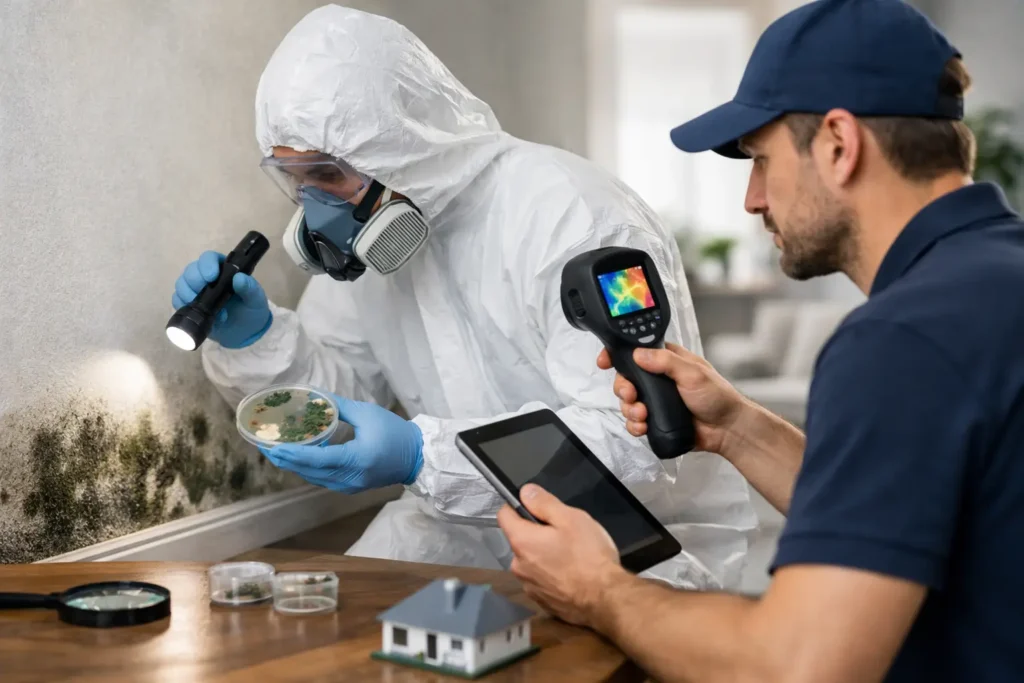
However, visible signs rarely show the full extent. Moisture meters and thermal imaging can help locate wet drywall, damp insulation, wet subfloors, or temperature differences that suggest concealed moisture. Thermal imaging is a diagnostic tool, not proof of mold by itself. It shows areas that deserve closer evaluation, while moisture readings confirm whether materials are actually wet.
When comparing inspection options, ask whether the provider will investigate likely moisture pathways. In Atlanta-area properties, that can include roof leaks, plumbing failures, crawl space humidity, HVAC condensation, exterior drainage, window intrusion, and flooding. Without finding the source, cleaning visible growth may only create a temporary improvement.
Air Testing, Surface Testing, and When Samples Help
Laboratory sampling can be valuable, but it is not automatically the best first step. Air samples can help compare indoor conditions with outdoor conditions or evaluate a space where occupants report odors or symptoms but no visible growth is present. Surface samples can help identify material collected from a suspicious area.
Neither sample type is a magic answer. Mold levels can fluctuate with weather, HVAC operation, open doors, cleaning activity, and the exact location of the sample. A clean air sample does not guarantee there is no hidden growth inside a wall. A positive surface sample does not define how far the damage extends.
Testing is most useful when it answers a specific question. That may include a real estate dispute, a suspected concealed condition, a commercial tenant concern, or post-remediation verification. If there is obvious mold growth and a confirmed water source, the priority is often documentation, containment, removal of unsalvageable materials, and drying. Paying for broad testing without a clear purpose can add cost without improving the repair plan.
Mold Inspection Comparison: The Report Is the Difference
A report should help you make a decision, not leave you with more questions. Before booking an inspection, ask to see the type of documentation the company provides. You want more than a one-line statement that mold was found.
A useful report identifies the inspected areas, visible conditions, suspected moisture source, moisture readings where applicable, photos, materials affected, sample locations and lab findings if testing was performed, and recommended next steps. It should make clear what was observed versus what is suspected. This matters when communicating with an insurer, buyer, seller, tenant, property manager, or reconstruction contractor.
For a property owner managing a claim, good documentation creates control. It connects the water event to the damaged building materials and helps establish why mitigation or repairs are necessary. It also helps prevent scope gaps later, such as discovering wet insulation after new drywall has already been installed.
Be cautious with reports that use alarming language but do not explain the actual extent of the problem. Labels alone do not restore a building. The report should lead to a practical scope: what must be cleaned, removed, dried, repaired, or monitored.
Independent Inspector or Restoration Company?
This is one of the most common decisions in a mold inspection comparison. An independent inspector may offer a separate assessment and has no role in performing remediation. That separation can be especially helpful when you need an unbiased opinion for a purchase, dispute, litigation matter, or second opinion.
A restoration company can be the better fit after an active water loss or when you need immediate action. The team can assess conditions, begin emergency moisture control, document damage, coordinate with insurance, complete remediation, and rebuild the affected area. For a homeowner with a wet ceiling or flooded basement, managing separate assessment, mitigation, and reconstruction vendors can delay recovery.
There is a trade-off. If the same company inspects and remediates, ask for a clearly documented scope, photos, moisture data, and an explanation of why each step is recommended. Transparency protects you. A professional provider should welcome questions, explain alternatives, and never pressure you into work that the evidence does not support.
At Elevated Operations, the focus after a property loss is not simply to clean what is visible. It is to identify the water conditions, protect the structure, document the work, and carry recovery through drying, repairs, and reconstruction when needed.
Credentials and Equipment Worth Checking
Mold work affects building materials, indoor conditions, and often insurance documentation. Credentials do not replace careful work, but they show that a provider is trained to follow recognized restoration practices. Ask whether technicians hold relevant IICRC certifications and whether the company uses trained crews for containment, water mitigation, drying, and cleaning.
Equipment is also part of the comparison. A flashlight and a handheld sample kit are not enough for a complex moisture problem. Depending on the situation, the provider may need moisture meters, thermal imaging, hygrometers, commercial dehumidification equipment, air movers, HEPA air filtration, and containment materials.
The key is not whether a company brings every tool to every visit. It is whether they can explain what each tool is measuring or accomplishing. For example, drying equipment should be placed based on material conditions and monitored with documented readings, not left running without a plan.
Questions That Reveal the Better Inspection
Before approving work, ask how the company will identify the moisture source and whether its inspection includes moisture mapping. Ask whether sampling is recommended, what question the sample will answer, and whether laboratory analysis is included or billed separately.
You should also ask what the written report includes, how quickly you will receive it, and whether the provider can explain the findings in plain language. If remediation is needed, ask how the work area will be contained, how contents will be protected, how dry materials will be verified, and whether post-remediation verification is appropriate for your situation.
For landlords and commercial property managers, add questions about tenant communication, work scheduling, documentation for claim files, and the timeline for returning affected spaces to service. The right provider understands that downtime is a property problem, not just a cleaning problem.
Do Not Wait for a Small Problem to Become a Major Repair
A musty odor after a storm, discoloration below a bathroom, recurring condensation, a damp crawl space, or a leak behind a refrigerator deserves attention before materials deteriorate. If water is actively entering the property, address the source and begin drying immediately. Mold conditions can follow quickly when moisture remains trapped.
Choose the inspection level that fits the evidence and the stakes. A targeted visual and moisture assessment may be enough for a recent, contained issue. A detailed inspection with sampling and independent verification may make more sense for a disputed condition, an unexplained odor, or a high-value transaction. The right next move is the one that gives you reliable facts and stops further damage before it spreads.