
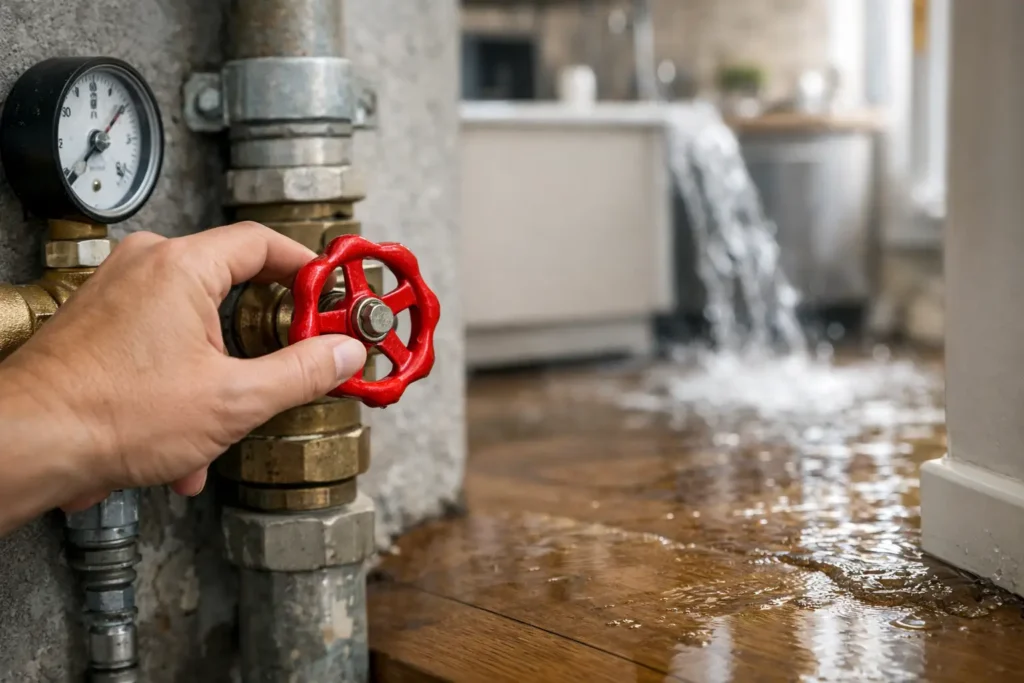
A pipe can release dozens of gallons before you finish searching for towels. When a supply line bursts, a toilet overflows, or water pushes through a ceiling, knowing how to shut off water is the first move that protects your property. The goal is simple: stop the source, stay safe around electrical hazards, and get professional help before moisture spreads into flooring, walls, cabinets, and framing.
Shut Off Water at the Closest Fixture First
If the leak is coming from a toilet, sink, washing machine, refrigerator, dishwasher, or water heater, look for the local shutoff valve before turning off water to the entire building. This is usually the fastest way to stop the flow while leaving other fixtures available.
Under a sink, you will typically find one or two small valves on the supply lines coming from the wall or floor. Turn the handle clockwise until it stops. Toilets usually have a single valve low on the wall behind or beside the toilet. For a washing machine, the valves are often in a recessed box behind the appliance. Refrigerator supply valves may be behind the refrigerator, under a nearby sink, in a basement, or along the water line itself.
Do not force a valve that feels seized or badly corroded. Older valves can break when excessive pressure is applied, turning a small leak into a larger one. If the fixture valve will not close, move quickly to the main water shutoff.
After closing a local valve, open the affected faucet or flush the toilet once if it is safe to do so. This releases remaining water pressure in the line. Then use towels, a bucket, or a wet vacuum to contain standing water until help arrives.
How to Shut Off Water at the Main Valve
The main water shutoff stops water entering the entire home or commercial space. Every property owner, tenant, maintenance manager, and employee responsible for a building should know where it is before an emergency happens.
In many Metro Atlanta homes, the main shutoff is located inside near where the water line enters the building. Check a utility room, garage, basement, crawlspace access area, mechanical closet, or exterior wall near the water heater. In some properties, it may be in a covered meter box near the street or sidewalk.
Indoor main valves generally come in two styles. A gate valve has a round wheel that turns clockwise through several rotations. A ball valve has a straight lever handle. Turn a ball-valve handle one quarter turn so it is perpendicular to the pipe. That position usually means the water is off.
Once the valve is closed, open a cold-water faucet at the lowest practical point in the building. This helps drain water already inside the plumbing lines and confirms whether the shutoff has worked. Water may run briefly, then slow and stop.
If water continues flowing strongly after the main valve is closed, the valve may be failing, the leak may be on a separate line, or the valve you found may not be the primary shutoff. At that point, contact your local water utility if you need the curbside meter shut off, and call an emergency restoration team to begin protecting the structure.
Never Ignore Electrical Risk
Water and electricity create an immediate safety hazard. If water is near outlets, appliances, a breaker panel, exposed wiring, or light fixtures, do not walk into the area until power is safely disconnected. Never touch a switch, plug, appliance, or electrical panel while standing in water.
If you can reach the electrical panel without crossing wet flooring or touching wet surfaces, shut off power to the affected area. When there is any doubt, stay clear, leave the area, and call a licensed electrician or emergency professional. A flooded basement, ceiling leak near recessed lights, or water-covered commercial floor is not a situation to troubleshoot by trial and error.
Find the Source Before You Start Cleaning
Turning off the water limits the loss, but it does not tell you whether the situation is clean, contaminated, or still active. Look for the source from a safe distance.
A broken supply line, failed appliance hose, or overflowing sink is generally treated as clean-water damage at first. It still requires fast extraction and drying because clean water can soak drywall, insulation, wood flooring, and subflooring quickly.
Water from a toilet that contains waste, a sewer backup, a drain line, or outdoor flooding requires a different response. This water may contain bacteria and contaminants. Keep people and pets out of the affected space, avoid using fans that could spread contamination, and do not attempt to salvage porous materials such as soaked carpet padding, insulation, or upholstered belongings without professional guidance.
Water coming through a roof after a storm may also be more complicated than it looks. The visible drip is often not the full footprint of the damage. Water can travel along rafters, wiring, and ceiling cavities before appearing somewhere else.
What to Do in the First Hour After a Leak
Once the water is off, the first hour matters. A rapid response can reduce material loss, limit mold conditions, and provide the documentation insurers often need.
Start by taking photos and short videos of the source, standing water, damaged contents, and any visible damage to walls, floors, or ceilings. Do this before moving items when possible. Keep damaged parts, such as a failed hose or supply line, if they can be safely retained. They may help identify the cause of loss.
Move dry, valuable, and absorbent belongings away from wet areas. Lift curtains off the floor, remove rugs if they can be moved without spreading contamination, and place furniture legs on blocks or foil to reduce additional absorption. Do not drag saturated furniture across wood or carpet flooring.
Use towels or a wet vacuum for small, clean-water spills. For a substantial leak, burst pipe, or flooding event, household fans and shop vacuums are rarely enough. Water can remain beneath flooring, behind baseboards, and inside wall cavities even after the surface looks dry. Professional moisture mapping with meters and thermal imaging identifies where water traveled so drying can target the real problem, not just the visible one.
Avoid these common mistakes:
- Do not use a household vacuum to remove water.
- Do not enter a room where a ceiling is sagging or bulging with water.
- Do not leave wet carpet, padding, or drywall in place for days hoping it will dry on its own.
- Do not turn your HVAC system on if it may pull contaminated air or moisture through the building.
- Do not throw away damaged materials before documenting them for an insurance claim unless they create an immediate health or safety concern.
When a Water Shutoff Is Not Enough
Some water losses are beyond a simple cleanup, even when the source has been stopped. If water has reached drywall, wood floors, cabinets, insulation, crawlspaces, or multiple rooms, the property needs professional assessment. Materials may need controlled drying, selective removal, antimicrobial treatment when appropriate, and documented moisture readings before repairs begin.
The same applies when a pipe burst while the property was vacant. Water may have flowed for hours or days, allowing it to migrate under flooring and into structural components. A dry-looking surface does not mean the structure is dry.
For commercial properties, fast action also helps protect operations. A leak in an office, retail space, restaurant, or multifamily building can affect tenants, inventory, electrical systems, adjacent suites, and business continuity. The right response includes extraction and drying, but also clear documentation, communication, and a plan for reconstruction if finishes or building materials need replacement.
Elevated Operations provides 24/7 emergency water damage response for property owners across Metro Atlanta, with IICRC-certified technicians, commercial-grade drying equipment, moisture mapping, insurance claim support, and reconstruction when the damage requires more than mitigation. We do not just clean up the mess. We help protect the building and move recovery forward.
Prepare Before the Next Plumbing Emergency
The best time to locate a main shutoff valve is when nothing is leaking. Walk through your property, identify the valve, and make sure responsible adults, tenants, or key employees know where it is. Label it if needed. Test accessible valves carefully once in a while, especially in older homes, but stop if corrosion or resistance suggests the valve needs a plumber’s attention.
For vacant rentals, seasonal properties, and buildings that will be unoccupied for extended periods, consider shutting off the main water supply and draining lines as appropriate. It depends on the plumbing system, weather conditions, fire-sprinkler requirements, and whether heat will remain active, so consult a qualified plumber or property professional before making a long-term shutdown plan.
A fast shutoff can prevent a bad day from becoming a major rebuild. Keep the main valve location known, act carefully around electricity and contaminated water, and bring in experienced help when moisture has already moved beyond the obvious spill.