
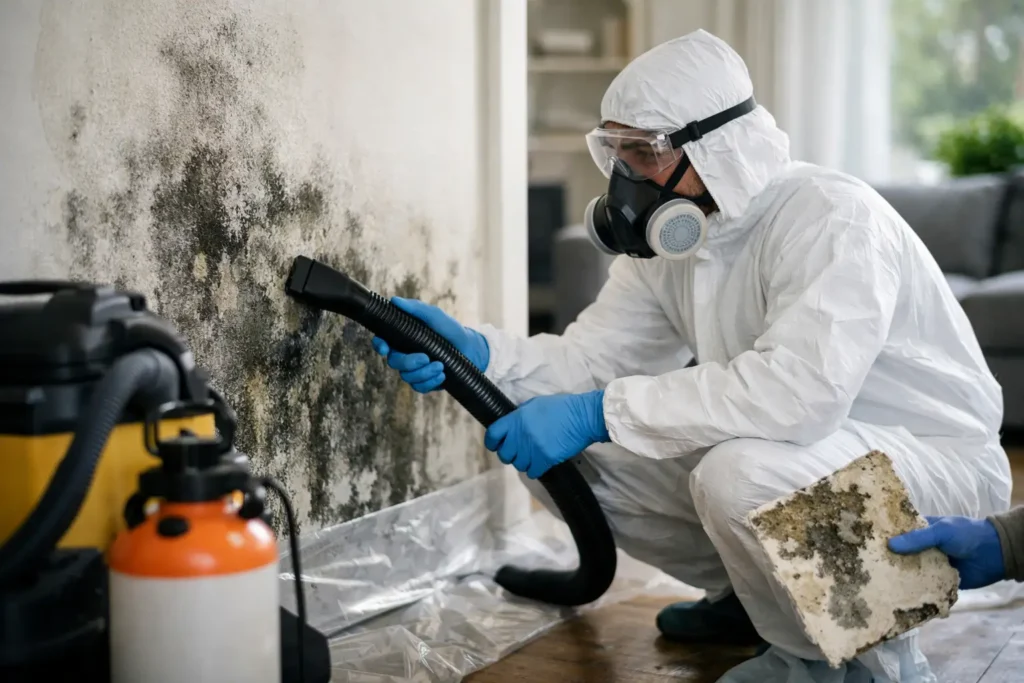
A dark spot on drywall is rarely the whole problem. When moisture has been trapped behind a wall, under flooring, or above a ceiling, mold can continue spreading where you cannot see it. Proper mold remediation is not a cosmetic cleaning job. It is a controlled process that identifies the water source, contains affected areas, removes damaged materials when needed, and confirms the structure is dry before repairs begin.
For Metro Atlanta property owners, speed matters. A slow pipe leak, roof intrusion, HVAC condensation issue, or recent flood can turn a manageable repair into a larger restoration project. The goal is to stop the conditions mold needs before damage reaches more of your property.
What Mold Remediation Actually Means
Mold spores are naturally present in indoor and outdoor air. The concern begins when persistent moisture allows those spores to grow on building materials such as drywall, insulation, wood framing, carpet backing, and contents. Simply spraying a visible surface with bleach or disinfectant may change its appearance, but it does not reliably address hidden growth or the moisture feeding it.
Professional remediation focuses on the full condition of the affected area. That starts with determining where the water came from and whether it is still active. Technicians then assess the extent of the damage using moisture meters, thermal imaging, visual inspection, and, when appropriate, targeted testing or sampling. These tools help locate damp materials without unnecessarily opening every wall.
The work may involve containment barriers, air filtration, removal of unsalvageable porous materials, detailed cleaning of salvageable surfaces, structural drying, and post-remediation verification. The exact scope depends on the size of the affected area, the materials involved, the duration of moisture exposure, and whether contamination is limited or widespread.
The Moisture Source Must Be Fixed First
Mold is a symptom of a moisture problem. If the leak, intrusion, or humidity issue remains unresolved, even a thorough cleanup can be temporary. This is why remediation and water-damage restoration often overlap.
A burst pipe may leave moisture behind baseboards and inside wall cavities. A roof leak can wet attic insulation and ceiling materials long before staining appears indoors. In commercial properties, an HVAC drain-line issue may repeatedly wet the same ceiling grid or wall section. Each situation requires a different repair strategy, but the principle stays the same: control the water, dry the materials, then restore the affected space.
In many cases, property owners are surprised by how far water traveled. Water follows framing, collects beneath flooring, and can wick upward through drywall. What looks like a small stain may point to moisture several feet away. Professional moisture mapping provides a clearer picture before demolition or rebuilding decisions are made.
When You Should Call for Professional Help
Not every small area of surface mildew requires a major restoration project. A minor spot on a nonporous bathroom surface caused by routine condensation may be cleaned safely once ventilation and humidity are corrected. But recurring growth, a musty odor, visible water damage, or mold on porous materials calls for a closer evaluation.
Bring in a professional restoration team when you notice mold after a flood, sewage backup, burst pipe, roof leak, or appliance failure. The same applies when you smell a persistent musty odor but cannot identify its source, see staining around ceilings or baseboards, or find growth in a crawl space, attic, HVAC area, or behind cabinetry.
Extra caution is warranted when the affected space includes occupants with respiratory sensitivities, when contamination may have reached a large area, or when the property is a rental, office, retail space, or multifamily building. Documentation, containment, and a clear scope of work protect more than the building. They also help property owners communicate with tenants, insurers, and future buyers.
What a Professional Mold Remediation Process Looks Like
A reliable process begins with inspection, not assumptions. The team should identify the moisture source, assess affected materials, document conditions, and explain what needs to happen before work starts. Clear communication matters because the right scope can range from localized cleanup to selective demolition and reconstruction.
Next comes containment. Physical barriers and negative-air equipment may be used to keep disturbed particles from migrating into unaffected rooms. This step is especially valuable when work involves opening walls, removing wet insulation, or addressing a larger impacted area.
Damaged porous materials may need to be removed when they cannot be cleaned and dried effectively. Drywall, carpet padding, insulation, and particleboard often fall into this category after prolonged moisture exposure. By contrast, structural framing and some hard surfaces can often be cleaned and dried if addressed promptly and assessed correctly.
After removal and cleaning, commercial-grade drying equipment reduces moisture in the remaining structure. Air movers, dehumidifiers, and carefully monitored drying plans are used based on the materials and conditions present. Moisture readings should guide the process, not guesswork. A room can feel dry while wood framing or subflooring remains wet enough to support future growth.
The final phase is restoration. Walls, insulation, flooring, trim, cabinets, and paint may need repair after remediation is complete. Choosing a provider that can manage both mitigation and reconstruction avoids the common frustration of coordinating one company for cleanup and another for repairs.
Avoid These Common Mistakes
The first mistake is waiting for the visible area to get larger. Mold does not always spread in obvious patterns, particularly behind walls or beneath flooring. Early assessment can limit demolition, reduce downtime, and preserve more materials.
The second is treating every situation with the same household cleaner. Bleach is not a universal mold solution, especially on porous materials. It may not reach growth below the surface, and it does not resolve the moisture issue. Scrubbing without containment can also spread debris to nearby areas.
The third is turning off drying equipment too early. Drying is complete when moisture measurements support that conclusion, not when the noise becomes inconvenient or the room feels comfortable. Rushing this stage can create expensive repeat damage.
Finally, do not overlook paperwork. Photos, moisture readings, mitigation records, itemized estimates, and repair documentation can be valuable during an insurance claim. Coverage depends on the policy and the cause of loss, but prompt documentation gives you a stronger starting point when discussing a covered water event.
Why Documentation Matters for Atlanta Property Owners
Insurance claims involving mold can be complicated because policies often distinguish between sudden, accidental water damage and long-term maintenance issues. A pipe that suddenly bursts is very different from an unrepaired leak that has been active for months. The facts, timeline, and evidence matter.
A restoration team can help document the source of loss, affected materials, drying conditions, and work completed. That does not guarantee coverage, and your insurer makes the coverage determination. It does, however, reduce uncertainty and help keep the claim process organized while you focus on protecting the property.
For landlords, investors, and commercial property managers, documentation also supports communication with tenants and helps establish a record of timely action. In occupied buildings, a fast, controlled response can reduce disruption and protect your ability to return rooms or units to service sooner.
A Complete Recovery Is More Than Cleanup
Mold work should leave your property safer, drier, and ready for lasting repair. That means addressing the cause, not only the visible residue. It also means setting realistic expectations: some materials can be saved, while others must be removed to prevent a recurring problem. The right decision depends on moisture levels, material type, contamination extent, and how quickly the issue was discovered.
Elevated Operations helps property owners move from emergency response through drying, remediation, insurance coordination, and reconstruction without handing the project off from one contractor to another. With certified technicians, advanced moisture detection, and a 24/7 response approach, the focus stays on controlling damage and restoring your space with accountability.
If you suspect mold after a water event, protect the area from further moisture, avoid disturbing visible growth, and get the source evaluated promptly. The most useful next step is not guessing what is behind the wall. It is getting clear answers before a small moisture problem becomes a larger property loss.