
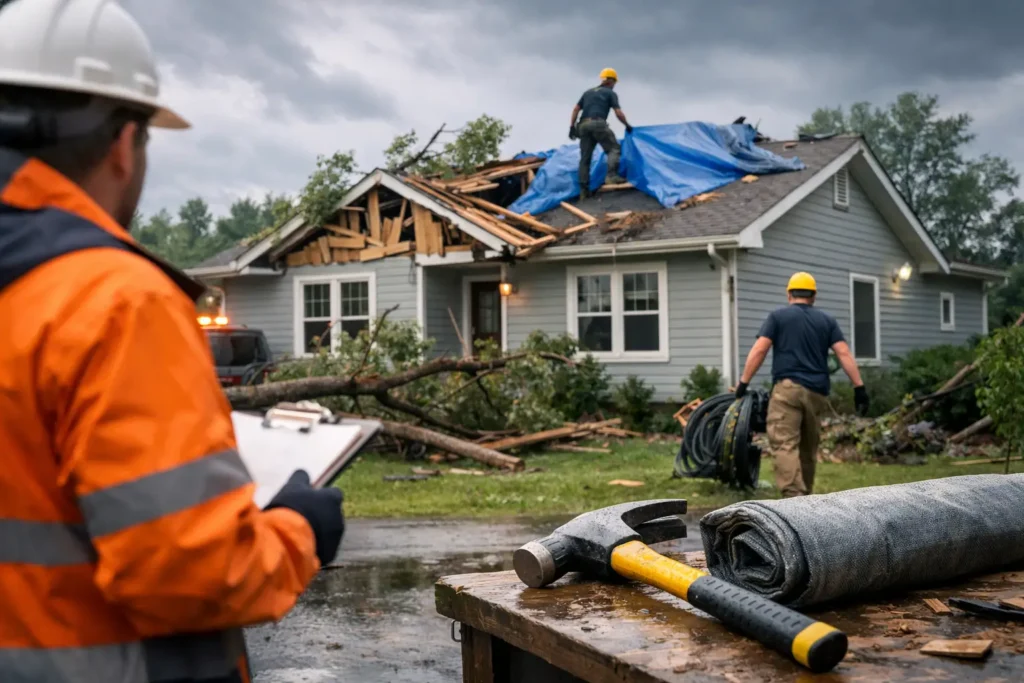
A storm can leave behind more than a visible roof leak or fallen branch. Water may be moving through insulation, wall cavities, flooring, and electrical areas long after the rain stops. Effective storm damage restoration starts with protecting people, stopping further exposure, and documenting the loss before hidden moisture becomes a larger repair.
For Metro Atlanta homeowners, landlords, and property managers, the first hours can affect the full scope of damage. A fast response can help preserve materials, support an insurance claim, and prevent a small opening in the roof or a flooded room from turning into mold growth, damaged framing, or a lengthy business interruption.
Start With Safety, Not Cleanup
Do not enter a property with standing water if there is any chance electrical systems have been affected. Avoid downed power lines, sagging ceilings, unstable trees, broken glass, and areas where floodwater may contain sewage or chemicals. If a ceiling is bulging with water, stay out of the room. The weight can cause a sudden collapse.
Once the immediate danger has passed, take clear photos and video of affected rooms, exterior damage, damaged belongings, and the source of water intrusion if it is visible. Document before moving items whenever it is safe to do so. This record helps establish what happened and gives your insurance carrier a clearer picture of the loss.
Then take reasonable steps to limit additional damage. That may mean moving dry belongings away from a leak, placing a container under active drips, or shutting off water to a broken exterior line. Do not attempt roof work during unsafe conditions or climb onto a wet roof to install a tarp yourself. Emergency stabilization is important, but it must be done safely.
What Professional Storm Damage Restoration Includes
Storm recovery is not just removing wet carpet or patching a hole in the roof. A complete restoration plan addresses the initial emergency, the moisture hidden behind finished surfaces, and the repairs needed to return the property to a safe, usable condition.
Emergency board-up and roof tarping
Wind, hail, and falling limbs can damage shingles, flashing, windows, siding, and doors. Emergency tarping and board-up services help keep rain, pests, and unauthorized entry from adding to the original loss. The goal is not to provide a permanent repair on day one. It is to stabilize the structure so the rest of the restoration can move forward without continued exposure.
A tarp is appropriate for many roof openings, but not every situation is the same. Severe structural damage, active electrical hazards, or a compromised roof deck may require a different approach. A qualified restoration team evaluates the condition before recommending the safest temporary protection.
Water extraction and structural drying
After a storm, visible water is only part of the problem. Moisture can travel under flooring, wick into drywall, saturate insulation, and remain trapped behind cabinets or inside wall cavities. Leaving those materials to air dry is rarely enough, especially in Atlanta’s humid conditions.
Professional crews use extraction equipment to remove standing water, then use moisture meters and thermal imaging to identify where water has spread. Air movers, dehumidifiers, and controlled drying systems are placed based on actual readings, not guesswork. Technicians should monitor the drying process and record moisture levels until affected materials reach an acceptable dry standard.
This matters because drying too slowly can create conditions for mold. Drying too aggressively or without proper containment can also damage certain materials. Hardwood flooring, plaster, cabinetry, and specialty finishes often require a more careful approach than a standard carpeted room.
Removal of unsalvageable materials
Some storm-damaged materials can be dried and saved. Others cannot. Wet insulation, swollen particleboard cabinets, delaminated flooring, and heavily saturated drywall may need removal to reach wet structural components and prevent ongoing deterioration.
The right decision depends on the category of water, how long materials were wet, the material type, and whether contamination is present. Rainwater entering through a roof may begin relatively clean, but water that has mixed with soil, sewage, or outdoor debris requires more extensive cleaning and disposal procedures.
Cleaning, odor control, and reconstruction
Once the structure is dry and clean, the rebuild phase begins. That may involve drywall, paint, flooring, trim, electrical repairs, roofing, or larger reconstruction work. This is where many property owners face an unnecessary handoff between a mitigation company and a separate contractor.
A one-stop restoration partner can manage the project from emergency response through reconstruction, helping keep documentation, scheduling, and scope decisions coordinated. Elevated Operations does not just clean up the mess. Our team can stabilize the property, document the damage, work through the claim process, and complete the repairs needed to bring the space back to life.
Why Fast Drying Protects More Than Your Floors
Storm damage often looks manageable at first. A slow ceiling drip, a damp corner of carpet, or a small puddle near a window may not seem urgent. But porous building materials absorb water quickly, and moisture can move beyond the visible area.
Drywall can wick water upward. Baseboards can trap moisture along the bottom of a wall. Insulation can hold water against framing. Underneath vinyl plank or laminate flooring, water can remain hidden until boards separate, odors develop, or mold appears.
The first 24 to 48 hours are particularly valuable for mitigation. Fast extraction and drying can reduce the amount of demolition required, preserve more of the property, and limit downtime for tenants or businesses. It cannot guarantee that every material will be saved, but waiting almost always narrows the available options.
Protect Your Insurance Claim With Better Documentation
Insurance claims can feel like a second emergency when you are already dealing with a damaged property. Good documentation helps keep the process grounded in facts. Save photos and videos, make a list of affected contents, retain receipts for reasonable emergency expenses, and record conversations with your carrier.
A professional restoration estimate should clearly separate emergency mitigation, cleaning, demolition, drying equipment, and reconstruction where appropriate. Moisture readings, drying logs, photographs, and itemized invoices can help explain why certain work was necessary.
Do not delay mitigation while waiting for every claim question to be answered. Most policies require property owners to take reasonable steps to prevent further damage. At the same time, avoid authorizing broad repairs without understanding the scope, your deductible, and what your insurer has requested. A restoration team experienced in claim coordination can help you make informed decisions without leaving your property exposed.
Common Storm Restoration Mistakes to Avoid
The biggest mistake is treating visible water as the entire problem. Shop vacs, household fans, and open windows may help in a minor spill, but they are not a substitute for moisture mapping and controlled structural drying after significant storm intrusion.
Another mistake is covering damage too soon. New drywall, flooring, or paint installed over wet framing can trap moisture in the assembly. The finished surface may look repaired while the underlying condition worsens.
Property owners also sometimes throw away damaged contents before documenting them. If an item is unsalvageable, photograph it from multiple angles and note its age, brand, and condition first. For commercial properties, keep records of inventory loss, equipment damage, and operational downtime as well.
Finally, do not assume every contractor handles both emergency mitigation and reconstruction. Ask who will manage drying verification, who communicates with the insurer, and who completes the final repairs. Clear accountability prevents gaps that can delay recovery.
When to Call for Immediate Help
Call a restoration professional immediately if water is entering through the roof, ceilings are wet or sagging, a tree has struck the structure, flooring is saturated, windows or doors are breached, or stormwater has entered occupied areas. The same urgency applies to commercial buildings, where wet materials and interrupted operations can create fast-moving costs.
For properties in Atlanta, Marietta, Mableton, Smyrna, and nearby communities, a rapid local response can make the difference between targeted drying and major reconstruction. Look for trained technicians, commercial-grade drying equipment, clear communication, and a provider that can remain accountable through the final repair.
After the storm, focus on safety first and evidence second. Then let qualified professionals locate the moisture you cannot see, protect the structure from further damage, and build a recovery plan that gives you control of the next step.