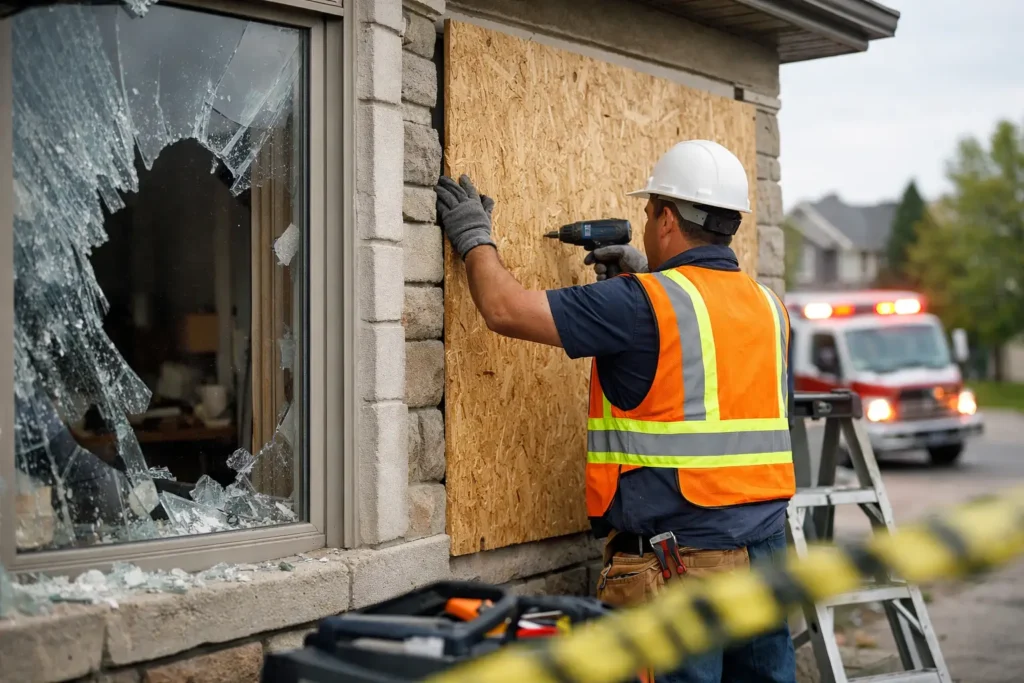
A shattered storefront window, fire-damaged door, or roof opening after a storm creates more than an ugly repair. It leaves your property exposed by the minute. An emergency board up service provides immediate temporary protection so rain, wind, trespassers, animals, and additional damage do not turn one loss into a much larger problem.
The goal is not to make the property look repaired overnight. The goal is to secure it safely, document the condition, and create the controlled environment needed for insurance inspection, mitigation, and permanent reconstruction. When time matters, that first layer of protection can make a major difference in the cost and complexity of recovery.
What an Emergency Board Up Service Prevents
A board-up is a protective measure used after a property opening has been compromised. Technicians secure damaged windows, doors, wall openings, and other accessible entry points with properly fitted materials. If a storm or fire has damaged the roof, temporary tarping may also be needed to stop water from entering the structure.
This work helps prevent secondary damage. A small opening can allow rain to soak drywall, insulation, flooring, and electrical components. Wind can push debris deeper into the building. An unsecured building may also attract theft or vandalism, which can complicate an already stressful insurance claim.
Board-up work also protects people. Broken glass, loose framing, hanging materials, and exposed interiors create safety hazards for occupants, employees, tenants, and visitors. A professional crew evaluates the area before securing it, rather than simply nailing plywood over visible damage.
Temporary protection is not a substitute for structural repair. It is the first step that gives you time to make sound decisions, preserve evidence of the loss, and prevent conditions from worsening while the restoration plan takes shape.
When You Need Board-Up Protection Right Away
Not every damaged window requires a middle-of-the-night response. A small cracked pane in a secure, dry area may be able to wait until normal business hours. But if the damage allows water intrusion, creates an accessible entry point, or leaves the building unsafe, prompt action is the right call.
After fire or smoke damage
A fire can destroy windows, doors, siding, and sections of roofing. Even after firefighters leave, the building may be open to weather and unauthorized entry. Board-up and roof tarping protect the property while fire cleanup, smoke removal, odor control, and reconstruction are planned.
After storm damage
Metro Atlanta storms can bring high winds, fallen limbs, driving rain, and hail with little warning. A broken window or damaged roof can expose an otherwise sound home or commercial space to substantial water damage. Securing the opening before another round of rain is often more urgent than the cosmetic repair itself.
After a break-in, vandalism, or vehicle impact
Whether a vehicle strikes a storefront or an intruder breaks through a door, the property needs to be secured quickly. For businesses, an open entrance can interrupt operations, jeopardize inventory, and create liability concerns. For homes and rental properties, it can leave occupants feeling unsafe and leave the building vulnerable overnight.
After a burst pipe or flooding event
Water damage does not always require board-up, but it can when flooding causes exterior doors, windows, or wall sections to fail. In those cases, the property may need both exterior security and interior water mitigation, including extraction, moisture mapping, drying, and documentation.
What Happens During Emergency Board-Up Service
A qualified restoration team starts with a safety assessment. They look for unstable materials, electrical risks, broken glass, standing water, and areas that should not be entered until cleared by the appropriate authorities. If the structure has suffered major fire or impact damage, some areas may require additional evaluation before work begins.
Next, the crew measures and covers the compromised openings. Properly installed boards should be fitted securely enough to discourage entry and withstand normal weather exposure without causing unnecessary additional damage to the structure. For roof damage, a temporary tarp should be secured to direct water away from the opening, not simply laid over damaged shingles.
Documentation matters just as much as the physical work. Photos, notes, and itemized records can support the insurance claim and establish the condition of the property before cleanup and repairs begin. If water has entered, technicians can also identify affected materials and begin moisture monitoring so hidden damage is not missed.
A good emergency provider will explain what is temporary, what needs immediate mitigation, and what comes next. That clarity matters because board-up is often only the first service required. A property may also need debris removal, water extraction, smoke and soot cleanup, odor treatment, or full reconstruction.
What to Do While You Wait for Help
Your first responsibility is safety. Do not enter a fire-damaged or severely storm-damaged structure until it has been cleared for entry. If there is downed power equipment, a gas odor, active fire risk, or an unstable roof or wall, contact emergency services and keep everyone away from the area.
If it is safe to do so, take these practical steps:
- Photograph the visible damage from a safe distance before moving items or beginning cleanup.
- Move dry, undamaged belongings away from broken windows, leaks, or exposed openings.
- Shut off water at the main valve if a broken pipe is actively flooding the property and you can reach it safely.
- Keep receipts for reasonable emergency expenses, including temporary lodging or protective materials.
- Avoid throwing away damaged materials until your insurer or restoration professional has documented them, unless they create an immediate health or safety concern.
Do not attempt a roof repair during rain, wind, or darkness. Do not use household fans around standing water near electrical outlets. And do not assume that a building is dry simply because water is no longer visible. Moisture can remain behind walls, beneath flooring, and inside insulation long after the surface appears normal.
Board-Up Services and Your Insurance Claim
Most property insurance policies recognize the need to protect a damaged building from further loss. That does not mean every policy covers every cause of damage, so it is wise to review your coverage and report the incident as soon as possible. Flood damage, wear-related failures, and certain roof issues may be handled differently than sudden storm, fire, or accidental damage.
The strongest approach is to document the condition, limit additional damage, and keep the communication organized. An experienced restoration company can provide insurance-ready documentation, photos, measurements, and estimates while coordinating the mitigation and reconstruction process.
This is where a one-stop recovery partner can reduce pressure on property owners. Instead of hiring one company to secure the building, another to dry it, and a third to rebuild it, you can keep the work coordinated under one accountable team. That reduces handoffs and helps ensure temporary protection does not become a forgotten step between cleanup and repairs.
Choosing the Right Emergency Board-Up Provider
Speed matters, but the first available contractor is not always the right fit. Ask whether the company provides 24/7 response, documents the damage before work begins, understands insurance requirements, and can handle the next phase of restoration if it is needed. You want a team that sees the full recovery, not just the plywood.
For commercial properties, confirm that the provider can secure large openings, work around business operations when possible, and communicate clearly with property managers and insurers. For homeowners and landlords, ask how they will protect personal belongings, control moisture, and coordinate permanent repairs after the emergency is stabilized.
Elevated Operations provides emergency protection, mitigation, insurance claim support, and reconstruction for property owners throughout the Atlanta area. With IICRC-certified technicians, commercial-grade equipment, and a stated 60-minute Metro Atlanta response, the focus is on protecting the structure now and moving recovery forward without unnecessary delays.
A damaged property can feel out of control in the first few hours. Securing the opening, documenting the loss, and bringing in qualified help gives you a clear next move: protect what remains, then rebuild with confidence.