
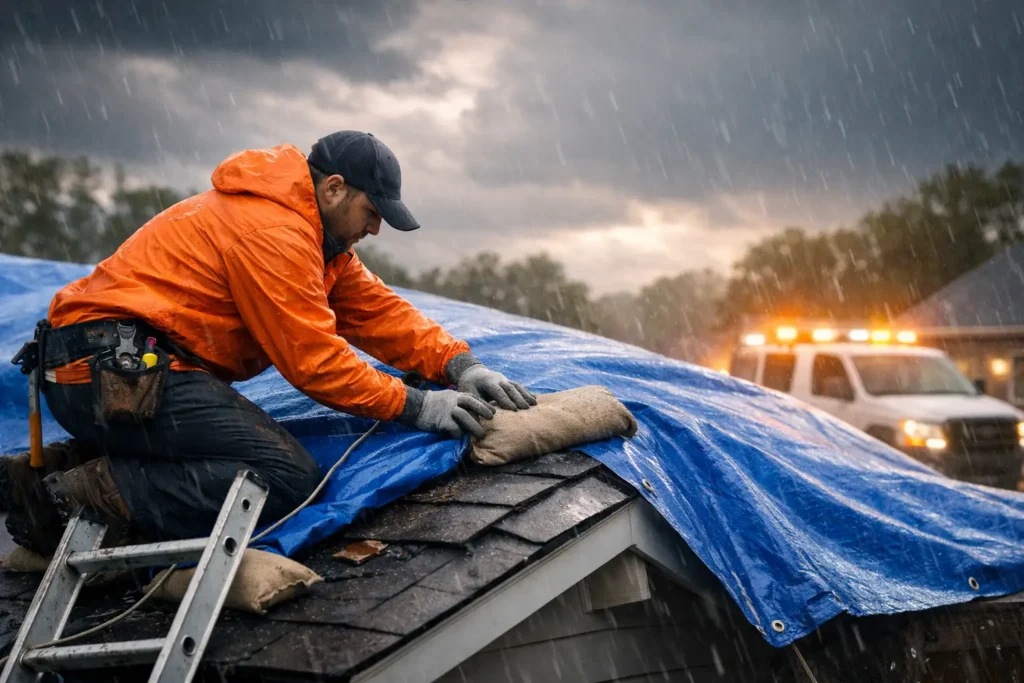
A roof can look like a minor storm issue from the ground, then turn into soaked insulation, stained ceilings, damaged inventory, or a mold risk after the next rain. An emergency roof tarping service gives your property a temporary weather barrier when shingles, decking, flashing, or other roof components have been compromised. The goal is simple: stop additional water from entering while the damage is documented and a permanent repair plan is put in place.
For homeowners, landlords, and commercial property managers, fast action can make a meaningful difference in the size and cost of the loss. A tarp is not a roof repair, but it is often the first protective step that keeps an exposed roof from becoming a much larger interior restoration project.
When Emergency Roof Tarping Is the Right Call
Emergency tarping is appropriate when the roof cannot reliably keep out rain, wind-driven moisture, or debris. That may happen after a severe thunderstorm, hail event, fallen limb, fire response, or impact damage. It can also be necessary after a leak has opened up during heavy rain and the source cannot be safely repaired immediately.
Visible missing shingles are one warning sign, but they are not the only one. A roof may need temporary protection if you see a puncture, displaced flashing, sagging roof material, exposed sheathing, or a tree branch resting on the structure. Inside the property, active drips, spreading ceiling discoloration, wet attic insulation, bubbling paint, and a sudden musty odor can all point to water entering from above.
The decision depends on the condition of the roof and the forecast. If the damage is limited and dry weather is expected, a roofer may be able to schedule a direct repair. If another round of rain is approaching, temporary tarping helps protect the structure while inspections, insurance documentation, estimates, and repairs move forward.
What a Professional Emergency Roof Tarping Service Does
A professional response begins with a safety assessment. Storm-damaged roofing can be unstable, slick, electrically hazardous, or concealed by loose debris. A trained team evaluates whether the roof can be accessed safely, identifies the likely entry points, and determines how broad the protected area needs to be.
The tarp must extend beyond the visible opening so water cannot travel underneath its edges. It is secured to withstand normal weather exposure without creating unnecessary additional damage to the roof. The right installation method varies by roof pitch, material, the location of the damage, and wind conditions. A small puncture on a low-slope commercial roof requires a different approach than missing shingles near a ridge on a steep residential roof.
Good emergency work also includes documentation. Photos of exterior damage, interior water impact, and the temporary protective measures can support the insurance process. If water has already reached the attic, ceilings, walls, or flooring, moisture mapping and drying may be needed at the same time. Covering the roof stops new water, but it does not remove moisture already trapped inside the building.
The First Hour Matters More Than Most Owners Realize
Once a roof opening is exposed to rain, water rarely stays in one place. It can run along rafters, wiring paths, insulation, wall cavities, and framing before it becomes visible on a ceiling. By the time a drip reaches a living room or office, the affected area may be larger than it appears.
That is why temporary protection should be handled as an immediate loss-control measure, not an item to postpone until a full roof replacement decision is made. The faster the entry point is covered, the less likely you are to face secondary damage such as warped drywall, damaged flooring, swollen cabinetry, or microbial growth.
Elevated Operations provides 24/7 emergency response across Metro Atlanta, including areas such as Austell, Douglasville, Marietta, Mableton, Smyrna, and Atlanta. When a storm has exposed your property, the team can help protect the roof, assess interior conditions, document the loss, and coordinate the work that follows.
What You Should Do Before Help Arrives
Your first responsibility is safety. Do not climb onto a damaged roof, especially at night, during rain, or while high winds are still active. A tarp installed incorrectly can pull loose, funnel water into the opening, or place you in serious danger. Stay away from downed power lines and keep people clear of areas where ceilings are bulging or sagging.
From inside, move electronics, furniture, inventory, and valuables away from the active leak if it is safe to do so. Place containers beneath drips, but do not stand on furniture or use ladders near wet electrical fixtures. If water is close to light fixtures, outlets, or your electrical panel, shut off power to the affected area only if you can do it safely and contact a qualified professional.
Take clear photos and videos from a safe location. Capture the visible roof damage from the ground, the interior water damage, any fallen branches or debris, and the date and weather conditions if possible. Keep receipts for reasonable emergency protective measures. This information can be useful when you report the claim.
Tarping, Drying, and Repairs Are Different Jobs
Property owners sometimes expect a tarp to solve the entire issue. It protects the building from additional weather exposure, but it does not restore damaged roofing materials or dry the interior. Treating those services as separate phases helps you make better decisions under pressure.
The emergency phase focuses on stabilization: tarping, board-up where needed, water extraction, and securing the property. Mitigation follows with moisture inspection, structural drying, cleaning, and removal of materials that cannot be saved. Reconstruction or roofing repair comes next, restoring the roof and any affected interiors.
Using separate vendors for each phase can work, but it often creates delays and gaps in communication. A one-stop restoration partner can document the initial loss, manage the drying process, communicate with the insurer, and carry the project into repairs and rebuilding. That continuity is especially valuable when a roof leak has affected more than one part of the property.
Insurance Documentation Without Guesswork
Most property policies expect owners to take reasonable steps to prevent further damage after a loss. Emergency tarping is commonly part of that responsibility, though coverage depends on your specific policy, cause of loss, deductible, and insurer’s findings. Storm damage, wind damage, fallen trees, and long-term maintenance issues may be handled differently.
Report the loss promptly and avoid making permanent repairs before the damage has been properly documented, unless a repair is necessary to prevent further destruction. Temporary protection is usually the right move. Save the tarp invoice, photos, drying records, moisture readings, and any written damage assessment.
Be careful with assumptions about the cause. A roof leak that appears after a storm may involve wind damage, hail impact, aging materials, flashing failure, or more than one issue. A professional inspection and thorough documentation help establish what happened without overpromising an insurance outcome.
Choose Protection That Holds Up Until Repairs Begin
Not every tarp installation provides the same level of protection. Thin plastic sheeting, loose fasteners, and undersized coverage can fail in the next storm. The right temporary solution should account for the roof’s slope, roof material, damaged area, anticipated weather, and the duration before permanent repairs can begin.
Ask whether the provider can evaluate interior moisture as well as exterior damage. Ask how the tarp will be secured, whether photos and documentation will be provided, and what happens if additional rain arrives before the repair date. For commercial properties, it is also worth asking about access control, tenant safety, inventory protection, and continuity planning.
A damaged roof creates urgency, but it should not force you into poor decisions. Protect the opening, control moisture, document the loss, and work with a team that can communicate clearly from the emergency call through reconstruction. The next rainfall should be a weather event, not the moment your property damage gets worse.