A burst supply line can release gallons of water in minutes. A failed water heater can soak flooring, drywall, and belongings before anyone gets home. In Metro Atlanta, emergency water damage restoration is not simply about removing visible water. It is about stopping the loss, finding where moisture traveled, and protecting the building before hidden damage turns into mold, structural deterioration, or a larger insurance claim.
The first few hours set the direction of the entire recovery. Fast action limits absorption into drywall, subfloors, framing, insulation, and contents. Delayed action can turn a manageable cleanup into demolition and reconstruction. That is why the right restoration partner should respond with trained technicians, commercial-grade equipment, clear documentation, and a plan that carries the property from emergency mitigation through final repairs.
What to Do Before the Restoration Team Arrives
Your first priority is safety. If water is near outlets, electrical panels, appliances, or ceiling fixtures, stay out of the affected area until the power can be safely assessed. Never enter standing water when you do not know its source or whether electricity is present.
If it is safe to do so, stop the source. Shut off the main water supply for a burst pipe, turn off the appliance valve for a failed washing machine line, or move dry items away from an active leak. Take photos and short videos before moving belongings when possible. Those details can help document the loss for your insurer.
Avoid using a household vacuum on standing water or running fans without first understanding the category of water and the extent of the damage. Clean water from a supply line may be recoverable with prompt drying. Water from a sewer backup, toilet overflow with contamination, storm runoff, or floodwater requires a different level of protection, cleaning, and disposal. What looks like a small incident can carry health risks and contaminate porous materials.
Emergency Water Damage Restoration in Atlanta Starts With Control
A professional emergency response should be deliberate, not a rushed surface cleanup. At Elevated Operations, the goal is to put property owners back in control with a 24/7 Metro Atlanta response commitment, including a stated 60-minute arrival window when time matters.
The work begins by identifying the source and stabilizing the affected area. Technicians assess safety concerns, document conditions, and determine whether the water is clean, gray, or contaminated. They then use extraction equipment to remove standing water quickly. The faster water leaves carpet, padding, flooring, and structural materials, the better the chance of saving them.
Extraction alone is not restoration. Water often migrates behind baseboards, under flooring, into wall cavities, beneath cabinets, and across lower levels. Moisture meters and thermal imaging help locate damp materials that cannot be judged by sight. This moisture mapping is one of the most important steps in a water loss because dry-looking surfaces can still hold enough moisture to support mold growth or cause materials to fail later.
Drying Is Measured, Not Guessed
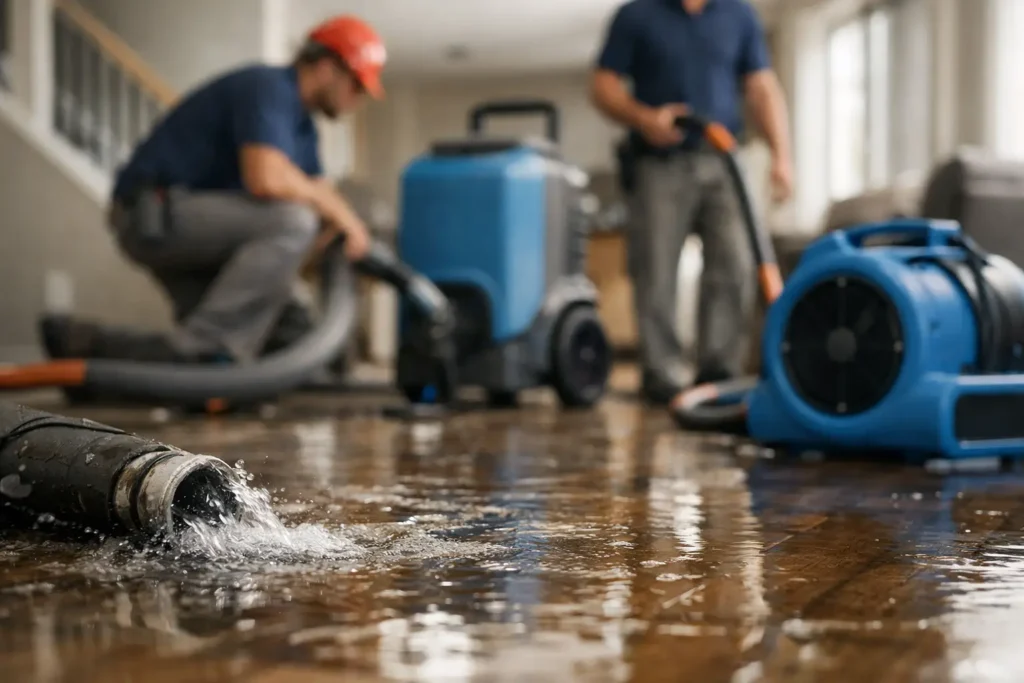
After extraction, restoration technicians place air movers and dehumidifiers based on the materials, square footage, humidity, and moisture readings. The equipment creates controlled airflow and removes water vapor from the air so wet materials can dry effectively.
Daily monitoring matters. Readings should be compared with dry standards for the structure, not based on whether the room feels dry. In some cases, cabinets, drywall, carpet, or insulation can be saved. In others, removing unsalvageable materials is the safer and more cost-effective choice. The right decision depends on the water category, how long materials stayed wet, and whether drying can be verified.
Different Water Losses Require Different Responses
Atlanta property owners face water damage for many reasons, and the right scope changes with the source.
A clean-water pipe break caught quickly may involve extraction, drying, minor drywall access, and repairs. A slow leak behind a wall may require more investigation because damage can be extensive before it becomes visible. Flooded basements often need attention to water intrusion paths, contents, flooring, and potential foundation or drainage concerns.
Sewage backups need a more cautious process. Contaminated water can affect flooring, walls, furniture, and personal property. Materials that cannot be fully cleaned and disinfected may need to be removed. Professional crews use appropriate protective measures, containment, specialized cleaning, and odor control to return the space to a safe condition.
For commercial properties, the stakes can include lost operating time, tenant disruption, inventory exposure, and compliance concerns. A retail space, office, medical facility, or multi-unit building may require phased work to keep unaffected areas operational. Clear documentation and communication are especially valuable when owners, tenants, adjusters, and facility managers all need timely updates.
Insurance Documentation Should Support the Claim, Not Slow Recovery
Many property owners hesitate because they are unsure whether to call their insurer first. In an active water emergency, protecting the property should not wait. Most insurance policies require reasonable steps to prevent further damage, which makes prompt mitigation a practical first move.
Document the source, visible damage, affected rooms, and damaged belongings. Keep receipts for reasonable emergency expenses and avoid discarding materials until they have been documented, unless they pose a safety or contamination concern. A restoration company experienced with claims can provide photos, moisture records, drying logs, equipment documentation, and itemized estimates that help explain why the work was necessary.
Coverage always depends on the policy and cause of loss. A sudden burst pipe is often handled differently than long-term seepage, poor maintenance, or groundwater intrusion. Your restoration team should not promise claim outcomes. They should give you accurate damage documentation, communicate clearly with the insurance process, and help prevent avoidable gaps between mitigation and repair.
One Recovery Plan Is Better Than a Chain of Contractors
Mitigation solves the immediate problem, but property owners are often left with cut drywall, removed flooring, damaged cabinets, or unfinished rooms. Coordinating separate cleanup crews, adjusters, plumbers, electricians, and remodelers can extend an already stressful event.
A one-stop restoration and reconstruction partner reduces that handoff. After drying is verified and damaged materials are addressed, the same recovery plan can move into rebuilding. That may include drywall, paint, flooring, trim, electrical work, cabinets, roofing repairs, or broader remodeling improvements where appropriate. It also creates accountability: the people who understand what happened during mitigation can help ensure the rebuild addresses it correctly.
There are trade-offs. If a homeowner already has a trusted contractor, they may choose to use that contractor for repairs after mitigation. For a small, contained loss, that approach can work well. But when water has affected multiple rooms, created insurance complexity, or requires structural repairs, coordinated mitigation and reconstruction often saves time and reduces miscommunication.
Choosing an Atlanta Restoration Company When Time Is Tight
Urgency should not force you to accept vague answers. Ask whether the company is available around the clock, how quickly it can arrive in your part of Metro Atlanta, and whether its technicians are IICRC-certified. Confirm that the team uses moisture detection and provides drying documentation rather than relying on visual checks alone.
You should also understand who will handle communication, whether the company can work with your insurance claim, and how reconstruction will be managed once the emergency phase is complete. Transparent pricing, a defined scope of work, strong communication, and a workmanship warranty are meaningful signs that a company is prepared to do more than remove water and leave.
Water damage is disruptive, but the next step can be clear. Stop the source if it is safe, protect people from electrical or contaminated-water hazards, document what you see, and call for qualified help immediately. The sooner moisture is measured and controlled, the more options you have to protect your property, your budget, and your return to normal.