

Does homeowners insurance cover ice damage to roof?
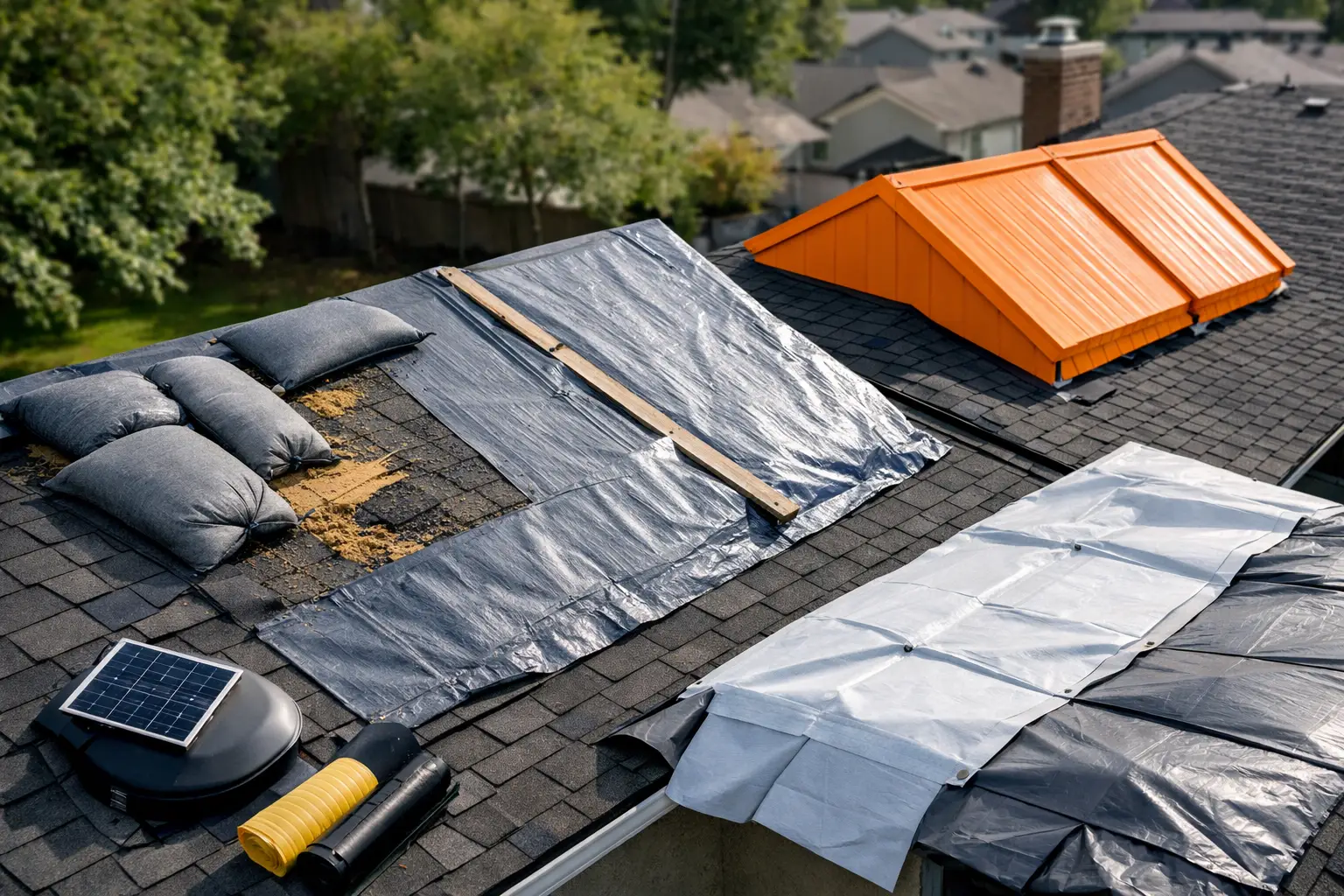
Ice damage to roof is usually a roof leak or ceiling stain caused by ice, snow, or freeze-thaw movement. Homeowners insurance may cover the resulting water damage if the cause is sudden and accidental, but it often excludes neglect, wear, and maintenance issues. The real fix is fast documentation, leak control, and restoration before mold spreads.
What counts as ice damage to roof versus ordinary roof wear?
Ice damage to roof means a cold-weather event forced water where it should not go. That is different from old shingles, failed flashing, or slow seasonal deterioration, and insurers care about that distinction because the cause drives the claim outcome.
The phrase covers more than a visible chunk of ice on the roof. In practice, it usually means an ice dam, freeze-thaw expansion, or snowmelt that backs up under shingles and into the attic or living space.
A homeowner sees the drip or stain first. The roof system tells the real story: clogged drainage, trapped meltwater, vulnerable valleys, and flashing that could not shed water fast enough once temperatures shifted.
This is why the claim question matters. If the damage came from a specific weather event, that is different from a roof that has been letting water in for months. Same leak. Very different insurance logic.
When you document the event, keep the focus on visible conditions, damaged rooms, and the timing relative to the freeze or thaw. That is what helps separate a covered loss from a maintenance problem.
- Ice dam at roof edge blocking drainage
- Water backing up under shingles
- Interior stains, bubbling paint, or ceiling sag
- Attic moisture, wet insulation, and mold risk
- Damage tied to a specific cold-weather event
Does homeowners insurance cover water damage from a leaking roof?
Usually the key issue is the water inside the home, not the roof surface alone. If the leak started suddenly from an ice event, the policy may address resulting damage, but if the roof failed from age or neglect, coverage can change fast.
This is where people get tripped up. They ask whether the roof is covered, but the real claim question is whether the resulting water damage was sudden and accidental.
That distinction is exactly why people search does homeowners insurance cover water damage from a leaking roof. The answer depends on policy language, the cause of loss, and whether there is evidence of long-term deterioration.
If the roof leak happened because ice forced water under otherwise functional roofing, the interior damage may have a better coverage path than a leak caused by worn shingles, open seams, or ignored maintenance.
The cleaner the documentation, the better. Photos, timestamps, weather context, and immediate mitigation all help show that the damage happened as a one-off event rather than a preventable, ongoing problem.
- Claim focus is often interior damage, not roof replacement
- Cause of loss matters more than the water stain itself
- Sudden events are treated differently from wear and tear
- Immediate mitigation helps support the claim
- Weather timing can matter as much as the leak location
Does homeowners insurance cover water damage leaking roof claims after a freeze-thaw event?
Yes, sometimes, but only if the policy sees a covered cause and not a maintenance failure. The freeze-thaw cycle can create a sudden leak that looks minor at first and then turns into bigger ceiling and wall damage inside the house.
This specific question, does homeowners insurance cover water damage leaking roof, comes up because the leak often starts small. Then the thaw hits, the water moves, and the damage shows up somewhere else entirely.
A freeze-thaw event can stress shingles, flashing, gutters, and roof edges. Once water gets in, it can run through framing and insulation before you ever see a ceiling stain.
Insurance adjusters will look for signs that the loss came from a specific weather-related event rather than chronic seepage. That is why the first photos and notes matter so much.
If the roof is actively leaking, the smart move is to control the water first and then preserve evidence. You need both. People who skip the documentation often create claim headaches for themselves later.
- Freeze-thaw can open paths for water intrusion
- Leak location and stain location may not match
- Early mitigation protects the claim and the home
- Adjusters look for sudden event evidence
- Hidden attic damage can be worse than the visible spot
Elevated Operations provides 24/7 water, fire, mold, storm, and sewage damage restoration across Metro Atlanta.
Get a free quoteWhy attic stains and mold risk make ice leaks a restoration problem, not just a roof problem
Once water gets into insulation, drywall, or framing, you are no longer dealing with a simple roof patch. You are dealing with drying, potential mold, and structural materials that can hold moisture long after the drip stops.
This is the part homeowners underestimate. The roof leak may stop when the weather changes, but the building materials keep holding water.
Wet insulation loses performance. Drywall can swell, paint can fail, and wood framing can stay damp in hidden cavities. If the attic is affected, the moisture can spread before you notice a smell or a stain.
Mold does not need a dramatic flood to start. A roof leak from ice can create enough dampness in the right conditions, especially if the attic has poor airflow or the leak sat unnoticed for a while.
So yes, the roof issue matters. But the damage path through the home matters more once water has crossed the building envelope. That is the point where restoration stops being optional.
- Wet insulation holds moisture and hides damage
- Drywall and paint often fail after a leak
- Attics can trap dampness and odor
- Mold risk rises when water sits undetected
- Structural materials may need drying before repair
What to document before you call the insurance carrier
The claim gets easier when you capture the event, the damage, and the response in that order. You do not need a perfect file. You need enough proof to show the loss was real, recent, and tied to the ice event.
People often panic and start cleaning first. Understandable. Also a mistake if you want a clean claim record. Take photos of the roof area if it is safe, the interior stains, damaged belongings, and any visible ice or water pathways.
Write down when you first saw the leak, what the weather was doing, and which rooms were affected. That timeline helps support the story of sudden accidental water damage rather than a long-running problem.
If water is still entering the home, emergency mitigation comes first. If it is safe to do so, you want to stop the spread, protect contents, and avoid creating more damage while you are waiting on the insurer.
The goal is simple: make it easy for the adjuster to understand the source, scope, and urgency. The easier you make that, the less friction you tend to face later.
- Photograph stains, drips, and wet materials
- Capture the roof area only if it is safe
- Note the time you first saw the leak
- Record weather conditions and affected rooms
- Save damaged items until they are inspected
How an Atlanta homeowner should handle roof ice damage fast
Speed matters because water always wins the race to the lowest point. In Metro Atlanta, you may not think of ice as a roof threat until a cold snap creates exactly the kind of leak that spreads into drywall, trim, and insulation.
Once the leak starts, the sequence is the same: stop the active water, document the loss, dry the structure, and then rebuild what cannot be saved. That order matters because skipping the drying step invites mold and secondary damage.
This is also where local response matters. A roof leak does not wait for business hours, and neither does the water running through your ceiling. The practical answer is emergency mitigation followed by proper reconstruction.
Elevated Operations handles water damage restoration, storm damage restoration, and reconstruction for Atlanta metro homeowners, so one team can move from emergency response to the final repair without bouncing you between vendors.
If you are already dealing with a ceiling stain or active drip, the right move is not to guess. It is to get the loss assessed, stabilized, and priced correctly before the damage spreads further.
- Stop the water and protect the area
- Document before major cleanup starts
- Dry hidden spaces, not just visible surfaces
- Repair damaged building materials in order
- Use one team when the loss needs restoration and rebuild
When roof ice damage needs immediate action
| Situation | What to do | Why |
|---|---|---|
| Water dripping from a ceiling after a freeze or thaw | Protect the area, document the leak, and start emergency water mitigation right away | Active dripping means the water path is still open, and every minute can widen the interior damage |
| Stains spreading across drywall or paint | Inspect for hidden moisture in the attic, insulation, and framing | Visible staining often means the water traveled farther than the first wet spot |
| Musty smell or soft drywall after the leak stops | Dry the structure and check for mold growth | Moist materials can stay damp behind surfaces even when the ceiling looks better |
| Insurance confusion about the claim path | Gather photos, timeline notes, and mitigation records before speaking with the carrier | Clear documentation helps show whether the loss was sudden, weather-related, and properly addressed |
Doing it yourself vs bringing in Elevated Operations
| Doing it yourself | With Elevated Operations | |
|---|---|---|
| Finding the true moisture path | You can see the stain, but not always the attic route, insulation saturation, or hidden spread | We inspect the damage path so the leak, the hidden moisture, and the repair scope make sense together |
| Drying and containment | Fans in the wrong place can move damp air around without actually drying the structure | We use water extraction and drying methods aimed at stopping secondary damage and reducing mold risk |
| Insurance paperwork | You are left sorting photos, notes, and claim language while the house is still wet | We help manage the restoration side of the claim and keep the damage documentation organized |
| Reconstruction after the leak | You may end up juggling multiple trades while the damaged area remains unfinished | We provide reconstruction too, so the job can move from emergency response to final repair with one coordinated team |
Frequently Asked Questions
What is the first thing I should do after ice damage to roof starts leaking?
Move people and belongings away from the wet area, stop any active water you safely can, and take photos before major cleanup. Then get the space inspected for hidden moisture. The faster you document and stabilize the loss, the easier it is to prevent mold and claim confusion.
What does ice damage to roof mean for a homeowner who just sees a stain?
It usually means the roof leak has already crossed from the outside into the home. A stain can be the first sign of attic moisture, wet insulation, or drywall saturation, so the visible spot is rarely the full story.
Does homeowners insurance cover water damage from a leaking roof if the roof is old?
Maybe, but age and maintenance are the big problems. If the leak is tied to long-term wear, repeated seepage, or neglected repairs, coverage can be limited. If the loss was sudden and accidental, the claim may be viewed differently.
How long can I wait before getting roof leak damage checked?
Not long if water is still entering or materials are already wet. Delays increase the risk of mold, warped drywall, and larger reconstruction needs. If you are unsure what is wet behind the surface, get it assessed before the damage spreads.
How much will roof ice damage restoration cost?
It depends on how much water entered, what materials were affected, and whether reconstruction is needed. The honest answer is that every loss is different, so book a call for a free quote. Elevated Operations can help assess the damage and map the next steps.
Get a free, no-obligation restoration estimate
Elevated Operations provides 24/7 water, fire, mold, storm, and sewage damage restoration across Metro Atlanta.
Get a free quoteCall (770) 404-6895Last updated October 5, 2026