
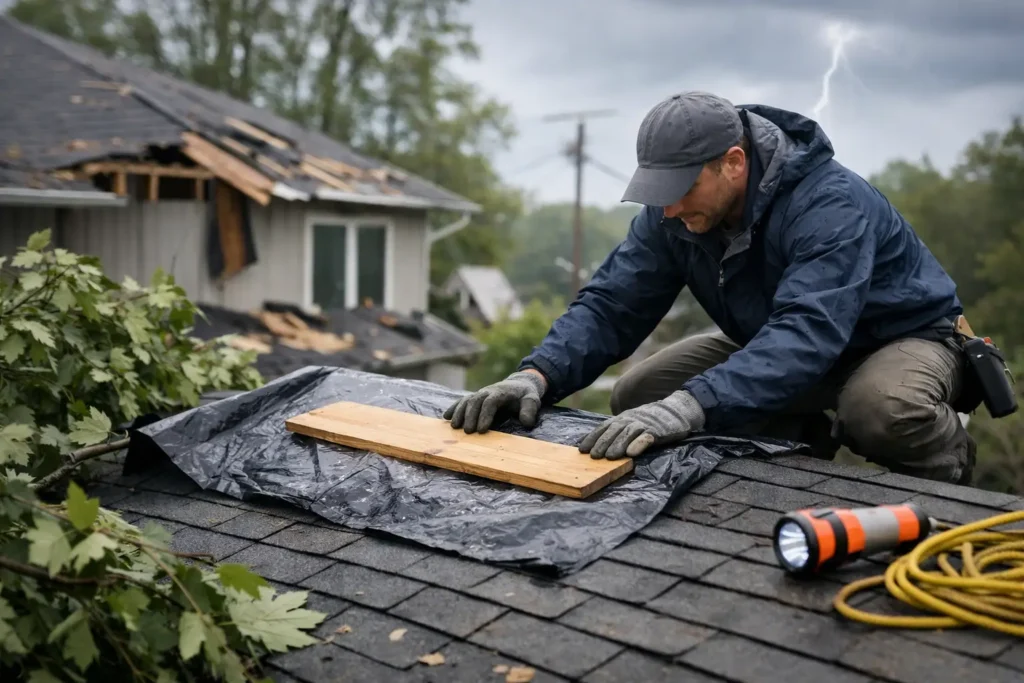
A storm can turn a small roof opening, broken window, or flooded entryway into a much larger property loss before the rain even stops. Effective storm repairs are not just about replacing what broke. They begin with protecting the structure, controlling water, documenting the damage, and making sure hidden moisture does not create the next problem.
For Metro Atlanta homeowners, landlords, and commercial property managers, the first few hours matter most. Wind-driven rain can travel behind siding, under flooring, through ceiling cavities, and into insulation. A fallen limb may damage roofing, gutters, electrical service, or framing at the same time. Fast action protects your property, supports your insurance claim, and gives you more control over what happens next.
Storm Repairs Start With Safety and Damage Control
Do not enter a damaged area until you have considered basic safety risks. Downed power lines, standing water near electrical outlets, sagging ceilings, unstable trees, broken glass, and compromised roofs can turn a cleanup task into an emergency. If there is an immediate threat to people, leave the area and contact the appropriate emergency service or utility provider first.
Once the property is safe to access, prevent additional damage without putting yourself at risk. Move furniture, electronics, inventory, and personal belongings away from active leaks if you can do so safely. Place containers beneath drips, but avoid climbing onto a wet roof or attempting a temporary repair during high winds. A professionally installed emergency tarp or board-up is far safer and more reliable than a quick fix that shifts in the next gust.
Take photos and video before moving damaged items whenever possible. Capture wide shots of each affected room, exterior damage, visible water paths, damaged belongings, and any tree impact. Then make a simple written record of what happened, including the date, approximate time, and when you first noticed the damage. This documentation can make the insurance conversation much clearer later.
Why Water Control Cannot Wait
The most obvious storm damage is not always the most expensive part of the loss. A missing shingle or cracked window may be visible, but water that reaches drywall, subflooring, insulation, cabinets, and framing can continue damaging the property after the weather clears.
Wet materials do not all dry at the same rate. Surface water may disappear quickly while moisture remains trapped below laminate flooring, behind baseboards, or inside wall cavities. That is why professional restoration teams use moisture meters and thermal imaging rather than relying on what looks dry. The goal is to identify the full water footprint, remove excess moisture, and verify that materials are actually returning to a safe drying standard.
Delaying extraction and structural drying can lead to swollen wood, warped floors, stained ceilings, deteriorated drywall, corrosion, odors, and mold growth. In a commercial building, it can also mean damaged inventory, interrupted operations, unsafe work areas, and a longer shutdown. Quick mitigation is often the difference between restoring materials and replacing them.
The first 24 hours are about stabilization
A strong response usually follows a practical order: secure openings, stop or contain water intrusion, extract standing water, protect salvageable contents, and begin controlled drying. The repair work comes after the property has been stabilized and the extent of damage is understood.
This order matters. Replacing drywall before the framing is dry can trap moisture inside the wall. Installing new flooring over a wet subfloor can create a second failure. Good storm recovery is not rushed craftsmanship. It is decisive action paired with correct diagnostics.
What Professional Storm Damage Restoration Should Include
Storm losses vary, but a complete recovery plan should address both immediate mitigation and the repairs required to return the property to normal. Some jobs need only a roof tarp, window board-up, and targeted drying. Others require removal of wet building materials, roof repairs, electrical evaluation, drywall replacement, flooring installation, painting, and reconstruction.
For a property owner, coordinating separate emergency cleanup crews, roofers, insurance representatives, and remodeling contractors can create gaps, delays, and conflicting scopes of work. A one-stop restoration and reconstruction partner keeps the project connected from the first emergency call through final repairs.
Look for a provider that can explain what is damaged, what can be saved, what must be removed, and why. You should receive clear documentation of moisture readings, affected materials, drying equipment, and completed work. This is especially valuable when the insurance adjuster needs evidence of the emergency actions taken to prevent further loss.
At Elevated Operations, the focus is not simply to clean up the mess. The team works to stabilize damage, document the loss, coordinate with insurance, and complete the reconstruction work so property owners are not left searching for another contractor when mitigation ends.
Storm Repairs and Your Insurance Claim
Most property policies require owners to take reasonable steps to prevent additional damage after a covered event. That can include arranging emergency board-up, tarping, water extraction, or drying. Waiting for an adjuster before protecting an exposed roof or removing standing water may allow the loss to become worse.
Call your insurer promptly, open a claim, and save the claim number. Keep copies of photos, receipts, emails, estimates, and notes from conversations. If you purchase emergency supplies or arrange temporary protective work, retain those records. Avoid throwing away heavily damaged materials until they have been photographed and, when practical, reviewed by the insurer or restoration team.
Insurance coverage depends on your policy, the source of damage, deductibles, exclusions, maintenance history, and the condition of the property before the storm. For example, wind damage that allows rain inside may be handled differently from long-term roof deterioration that was already allowing leaks. An experienced restoration provider can help document the storm-related damage and prepare insurance-ready information, but it should not promise coverage before the carrier evaluates the claim.
Ask for a repair plan, not a vague estimate
A useful scope of work identifies the affected areas and the sequence of repairs. It should address emergency protection, water mitigation, demolition if necessary, drying verification, structural repairs, finishes, and any needed upgrades to restore the space.
For rental properties and commercial sites, ask how the work will affect occupancy and operations. Sometimes a contained work area, phased reconstruction, or temporary relocation of equipment can reduce disruption. Other times, rapid full closure is the safer choice. The right approach depends on the extent of damage, building use, and safety conditions.
Hidden Damage to Watch for After a Storm
Not every problem appears on the day of the storm. Check your property over the next several days for new ceiling stains, bubbling paint, musty odors, soft drywall, loose flooring, dripping around windows, or water collecting near the foundation. Examine attics and upper-floor ceilings when it is safe to do so, especially after a roof impact or wind event.
Outside, look for displaced shingles, bent flashing, damaged gutters, cracked siding, broken seals around windows, and tree limbs resting against the structure. Do not assume a roof is fine because the leak stopped. Wind-driven rain may only enter under certain conditions, and a small opening can remain hidden until the next storm.
Mold is another reason not to rely on appearance alone. It needs moisture, a food source, and time. Rapid drying reduces that opportunity, while leaving wet carpet padding, insulation, or wall materials in place can create a concealed growth issue later.
When to Call for Emergency Storm Help
Call for professional help immediately when water is actively entering the property, a roof or window opening is exposed, a tree has struck the building, ceilings are sagging, water has reached electrical systems, or flooding affects multiple rooms. The same is true when you cannot determine how far moisture has traveled.
For smaller issues, such as a minor gutter problem with no interior water damage, a scheduled repair may be appropriate. The trade-off is simple: if the structure is dry and protected, you may have time to compare repair options. If water is still entering or materials are wet, emergency mitigation should come first.
Storm damage is disruptive, but you do not have to guess at the next step. Protect the property, document what you see, and bring in qualified help before a manageable repair becomes a larger reconstruction project.