
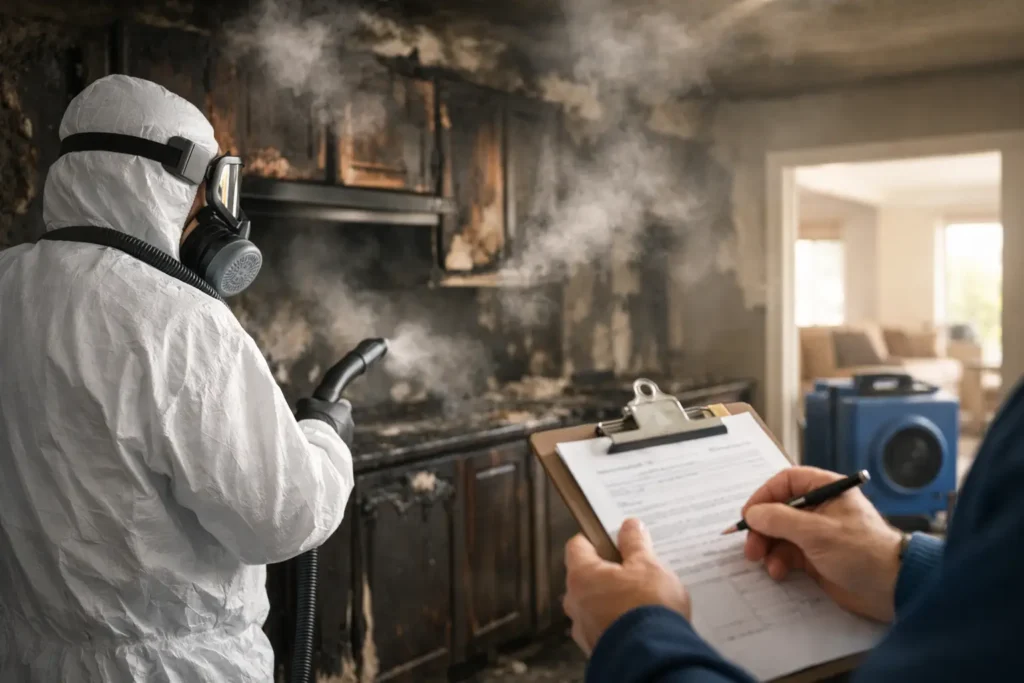
A fire can be out in minutes, yet the damage keeps moving through the property long after the flames are gone. Smoke travels through HVAC systems, settles inside cabinets, clings to fabrics, and leaves corrosive soot on surfaces that may look untouched. Effective smoke remediation is not a quick wipe-down or a scented spray. It is a controlled process to remove contamination, protect materials, address odor at its source, and prepare the property for safe repairs.
For Metro Atlanta homeowners, landlords, and business managers, the first priority is simple: protect the building from additional loss. Fast, professional action can make the difference between cleaning a surface and replacing it.
Why smoke damage needs immediate attention
Smoke is made up of tiny particles, gases, and residues created by burning materials. What burned matters. A kitchen fire involving cooking oils leaves a different residue than a fire involving plastics, upholstery, wiring, wood, or insulation. Each type of smoke can require a different cleaning method.
Soot is especially destructive because it is acidic and abrasive. It can discolor walls, corrode metal, etch glass, damage electronics, and permanently stain porous materials. The longer it remains in place, the more difficult and expensive it becomes to remove.
Odor is another issue that should not be underestimated. Smoke odor does not just sit in the air. It can penetrate drywall, framing, insulation, carpets, upholstery, clothing, and ductwork. Covering it with fragrance may make a room smell better briefly, but it does not remove the particles causing the problem.
There is also a health concern. Fine smoke particles can irritate the eyes, nose, throat, and lungs. People with asthma, allergies, or respiratory conditions may be especially sensitive. Until affected areas have been evaluated and cleaned, avoid spending unnecessary time inside the property.
What professional smoke remediation includes
A complete restoration plan starts with identifying where smoke traveled and what materials can be cleaned, sealed, or replaced. This is why the work should begin with a detailed inspection rather than a one-size-fits-all cleaning approach.
Damage assessment and documentation
Technicians inspect the fire-affected area as well as nearby rooms, attics, crawl spaces, closets, and HVAC components. They look for visible soot, odor migration, heat damage, and water damage from fire suppression efforts.
Documentation matters for insurance claims and for planning reconstruction. Photos, itemized scope details, moisture readings, and records of affected materials help establish what happened and what work is necessary. For commercial properties, this documentation can also support business continuity decisions and tenant communications.
Securing the structure
Before cleanup begins, the property may need emergency board-up, roof tarping, or temporary protection for broken windows and damaged doors. Rain, wind, pests, and unauthorized entry can turn a fire loss into a much larger claim.
If the fire department used water to extinguish the fire, structural drying is often part of the initial response. Wet insulation, flooring, drywall, and framing can create mold concerns if they are not addressed quickly. Smoke cleanup and water mitigation frequently need to happen together.
Soot removal with the right method
Improper cleaning can grind soot deeper into a surface or spread it to clean areas. Dry soot may require specialized HEPA vacuuming and dry cleaning sponges before any wet cleaning begins. Oily or protein-based residues may need carefully selected degreasers and detailed hand cleaning.
Contents also need individual evaluation. Nonporous items such as glass, metal, and some hard plastics are often recoverable. Upholstered furniture, mattresses, paper goods, insulation, and heavily affected textiles may not be. The decision depends on contamination level, material type, cost, sentimental value, and whether cleaning can realistically restore safe use.
Odor control at the source
Real odor removal starts after residue is removed. Depending on the property and the materials affected, technicians may use HEPA air filtration, hydroxyl treatment, thermal fogging, ozone treatment in unoccupied spaces, or sealants for properly cleaned structural surfaces.
These tools are not interchangeable. Ozone, for example, can be useful in certain controlled situations but should not be used around occupants, pets, or plants. It also cannot replace physical cleaning. If soot is still on the walls, in the carpet, or inside the ducts, the odor will likely return.
HVAC evaluation and cleaning
Heating and cooling systems can distribute smoke particles to rooms far from the fire. The system should remain off until a qualified restoration professional determines whether it can be safely operated. Replacing filters alone is rarely enough after meaningful smoke exposure.
Ductwork, air handlers, vents, and returns may require cleaning or specialized treatment. This step is particularly valuable for properties where the fire was contained to one room but the smell has spread throughout the building.
What property owners should do before help arrives
Do not enter the property until fire officials say it is safe. Once entry is allowed, take photos or video for your records, but do not disturb debris more than necessary. Avoid touching soot-covered walls, furniture, or electronics with bare hands.
Do not attempt to wash painted walls with household cleaners, and do not use a standard vacuum on soot. Both actions can spread contamination or force residue farther into the material. Avoid turning on the HVAC system, washing smoke-damaged clothing with unaffected laundry, or applying candles, sprays, and perfumes to cover odor.
If it is safe to do so, remove undamaged valuables from affected areas and store them in a clean, dry location. Keep receipts for emergency expenses, including temporary lodging, boarding, or essential purchases. Contact your insurance carrier promptly, but remember that you can also work with a restoration company that helps document the damage and communicate the mitigation scope.
When cleaning is enough and when reconstruction is needed
Not every smoke-damaged surface needs to be torn out. A light soot film on sealed, nonporous surfaces may clean well with the correct process. But porous materials can hold contamination and odor deep below the surface. Drywall, insulation, carpet padding, acoustic ceiling tile, and unfinished wood may require removal when smoke exposure is severe.
Reconstruction becomes necessary when fire, heat, water, or contamination has compromised building materials. That can mean replacing drywall and insulation, repainting sealed surfaces, installing new flooring, repairing electrical components, rebuilding cabinets, or restoring roofing and framing.
Using one partner for emergency mitigation and reconstruction reduces handoffs at a stressful time. The remediation team understands what was removed, what was protected, and what repairs are needed to bring the property back. Elevated Operations carries that work from emergency response through insurance coordination and rebuilding, so owners are not left managing separate cleanup and construction teams.
Why certified remediation makes a practical difference
Smoke damage can look simple from a distance. A wall may appear lightly stained, while the insulation behind it carries heavy odor. A room may look clean after a contractor wipes the surfaces, yet corroding soot remains inside electronics or HVAC components.
IICRC-certified technicians use established restoration methods, commercial-grade equipment, and material-specific cleaning processes to make decisions based on conditions rather than appearances. They can identify secondary water damage, isolate affected work areas, filter airborne particles, and document the project in a way insurers and property owners can follow.
Speed matters, but so does restraint. The best smoke remediation plan does not automatically replace everything or promise that every item can be saved. It identifies what can be restored safely, removes what cannot, and keeps the work focused on returning the property to a clean, functional condition.
After a fire, the goal is not to make the building merely look better for the moment. It is to remove what the fire left behind, protect the structure from further damage, and give you a clear path back to normal.