
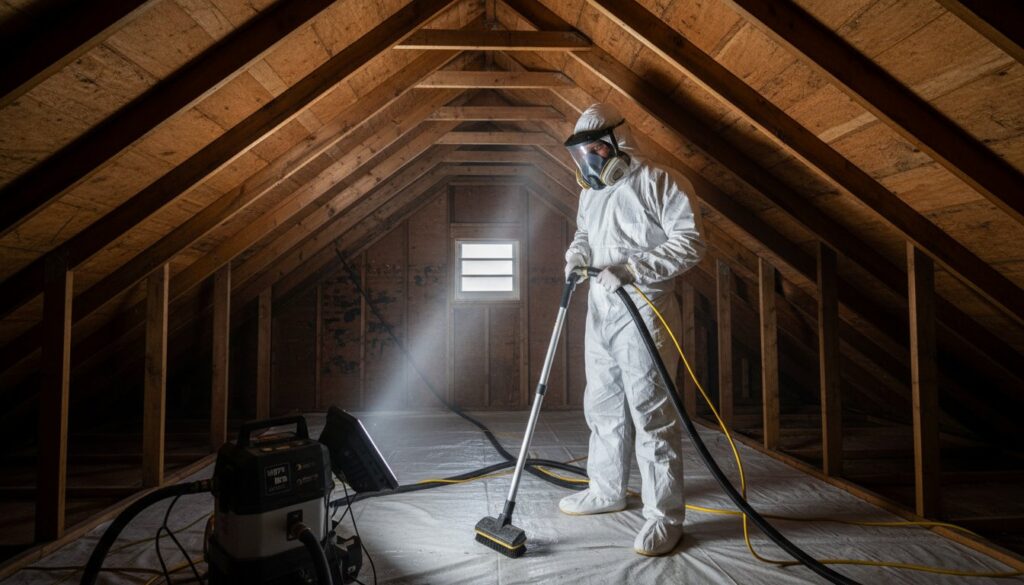
On a humid Tuesday in July 2026, a Mableton resident climbed their pull-down stairs only to discover dark, velvet-like patches spreading across the north-facing rafters. Discovering mold in attic spaces often triggers an immediate wave of anxiety regarding respiratory health and the potential for an unexpected $4,500 repair bill. It’s natural to feel overwhelmed when the structural integrity of your home’s ecosystem feels compromised by hidden moisture. We understand that you need a solution that’s both definitive and properly documented for Cobb County insurance standards.
This guide provides the professional framework you need to identify, treat, and permanently prevent mold growth within the unique Metro Atlanta climate. You’ll gain a clear understanding of the remediation roadmap, from initial air quality testing to final clearance. We’ll analyze the critical distinction between isolated roof leaks and systemic ventilation failures, ensuring you elevate your home’s defense system without overspending on unnecessary repairs. By following this structured approach, you’ll transform a chaotic property issue into a stabilized, healthy environment for your family.
Key Takeaways
- Identify the specific visual cues of fungal growth unique to Mableton homes, including dark plywood staining and compromised insulation.
- Understand how the “Stack Effect” transforms your attic into a moisture trap, creating a persistent operational risk during humid Georgia summers.
- Learn why traditional DIY methods fail to reach the root of the problem and how professional containment ensures a safe, thorough remediation process.
- Follow a structured, multi-phase roadmap for professional mold in attic removal that utilizes negative air pressure and HEPA-filtered technology.
- Elevate your home’s infrastructure by moving beyond simple cleanup to implement permanent ventilation fixes that optimize your attic’s long-term ecosystem.
Identifying Mold in Your Mableton Attic: Signs and Local Risk Factors
Attic mold isn’t just a surface issue; it represents a breakdown in the structural infrastructure of your home. By definition, mold in attic spaces is a fungal growth triggered when moisture becomes trapped in the highest unconditioned area of the property. In Mableton, where summer humidity levels frequently sustain an average of 72% or higher, the attic becomes a critical bottleneck for air quality. Gaining a baseline understanding indoor mold is the first step toward reclaiming your home’s ecosystem and protecting your investment.
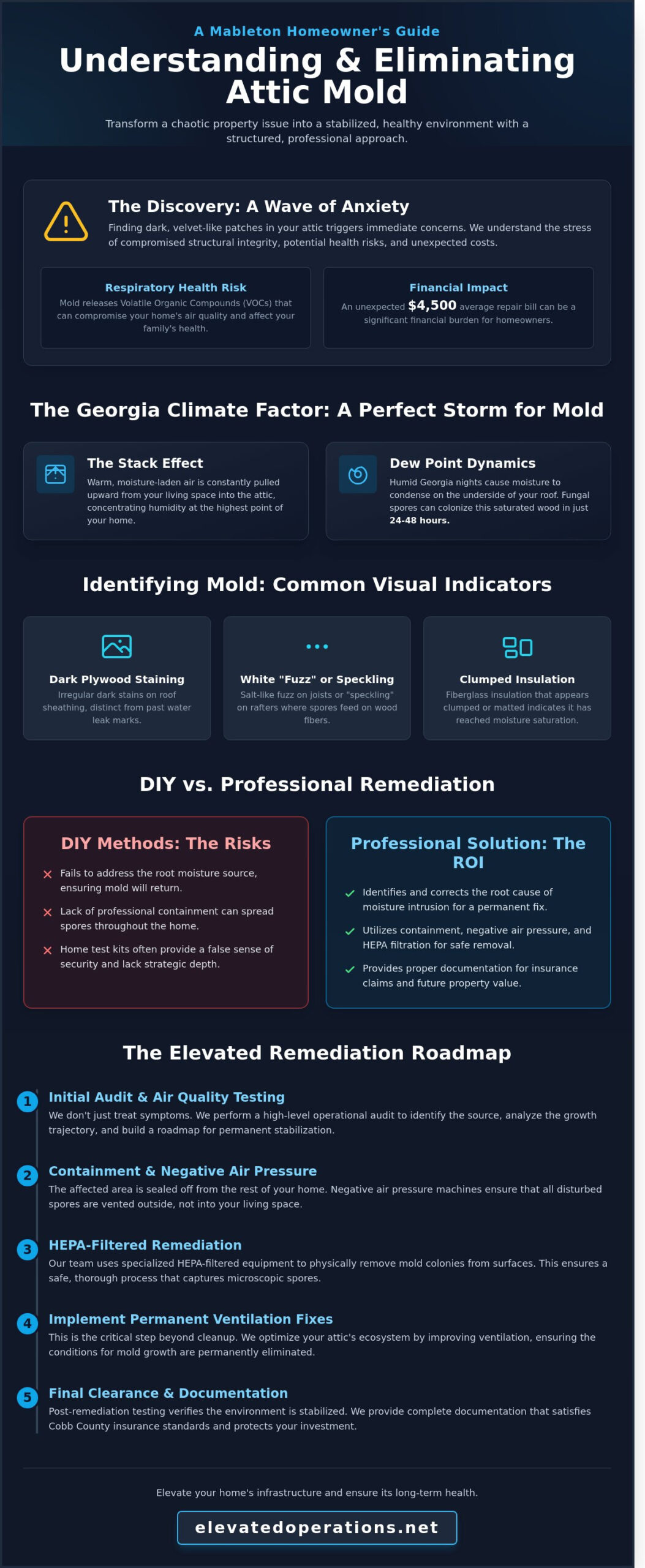
Georgia homes exhibit unique symptoms that demand a trained eye. You might notice dark, irregular staining on the plywood roof sheathing or a white, salt-like “fuzz” on the structural joists. When fiberglass insulation begins clumping, it’s often a sign that moisture has reached a saturation point, turning the material into a reservoir for fungal spores. These visual cues are the red flags of a failing ventilation roadmap that requires immediate optimization.
The “musty attic” smell is actually the byproduct of Volatile Organic Compounds (VOCs) released by active colonies. Mableton’s 90-degree summer days accelerate this metabolic process, forcing these gases downward into the living quarters through recessed lighting and attic hatches. If your family experiences unexplained respiratory issues or allergies that escalate when the HVAC system cycles, the attic’s air quality is likely compromising the entire building’s health foundation. We don’t just look at the wood; we look at the air circulation patterns that define your home’s performance.
Common Visual Indicators in Georgia Homes
Homeowners often confuse simple roofing stains from past leaks with active fungal colonies. Active mold usually presents as “speckling” on rafters, which indicates that spores are feeding on the organic wood fibers. In Cobb County, the accumulation of dust and construction debris acts as a primary food source, fueling growth even in the absence of a direct roof leak. We look for these micro-patterns to determine if the issue is a legacy leak or a current atmospheric failure. Identifying these markers early allows us to stabilize the environment before structural integrity is compromised.
When to Call a Professional for an Audit
The EPA 2024 guidelines suggest professional intervention when the affected area exceeds 10 square feet. Relying on a $35 petri dish home test kit often leads to a false sense of security; these tests lack the strategic depth required to identify the root cause of the moisture. When dealing with mold in attic environments, Elevated Operations approaches the initial structural assessment like a high-level operational audit. We identify the source, analyze the trajectory of the growth, and build a roadmap for permanent stabilization. We don’t just treat the symptoms. We optimize the environment to ensure the mold cannot return, which helps elevate your home’s air quality and ensures the structure remains healthy for the long term.
Why Georgia’s Climate Makes Attic Mold an Operational Certainty
Atlanta’s 85% relative humidity in July isn’t just an outdoor discomfort; it’s a systemic threat to your home’s structural integrity. The Stack Effect creates a constant upward draft, pulling warm, moisture-laden air from Mableton summers through your living spaces and into the attic. This isn’t a random occurrence. It’s a physics-driven certainty. As this air rises, it carries the latent heat and vapor that serve as the primary fuel for mold in attic ecosystems.
Marietta nights introduce a second layer of risk through dew point dynamics. When the temperature of your roof sheathing drops below the dew point, typically around 72°F during humid Georgia nights, the attic transforms into a “rain chamber.” Moisture condenses on the underside of the wood, creating a saturated environment that allows fungal spores to colonize within 24 to 48 hours. Without proper intervention, this cycle repeats nightly, regardless of whether it actually rains outside.
Austell homes built in the early 2000s are currently hitting a critical “20-year cycle” of vulnerability. We see a 40% increase in structural moisture issues once a home passes the two-decade mark. At this stage, original roof membranes begin to degrade and insulation settles, creating operational bottlenecks that trap stagnant air. While small areas of growth might fall under EPA mold cleanup guidelines, systemic failures in the attic often require a more robust, professional intervention to prevent total infrastructure failure.
The Role of Attic Ventilation Infrastructure
An attic is an airflow ecosystem that requires precise calibration. We audit the balance between intake and exhaust, looking specifically for the 1/300 rule of net free vent area. Common Mableton construction flaws, such as insulation blocking the soffit vents, effectively choke the system. This creates a stagnant thermal pocket. Elevated airflow is the only way to ensure moisture never reaches the critical threshold for mold in attic development. When we optimize this infrastructure, we move air efficiently, preventing the heat buildup that accelerates organic decay.
Secondary Moisture Sources: Leaks and HVAC
Beyond the climate, internal mechanical failures often act as secondary moisture drivers. HVAC ductwork in the attic can develop condensation if the insulation wrap has a 5% gap or tear. This localized “sweating” feeds mold directly onto the surrounding joists. In Powder Springs, we frequently identify bath fans that vent directly into the attic rather than through the roof. This mistake introduces gallons of steam into the attic space every week. Identifying these seepage points is essential for long-term scalability of your home’s health. Homeowners who treat their property as a high-value asset often realize that optimizing home systems requires the same strategic oversight as a growing business.
Professional Remediation vs. DIY: Evaluating the Risks and ROI
Homeowners in Atlanta often view the discovery of mold in attic spaces as a simple weekend cleaning task. This perspective is a strategic error that ignores the biological reality of fungal growth. Treating an infestation is not a surface-level chore; it is a structural intervention that requires precise execution. Most people instinctively reach for household bleach, yet this creates a dangerous false sense of security. Bleach consists of roughly 90% water. On porous surfaces like attic rafters or plywood sheathing, the water component actually feeds the mold hyphae, the deep root systems, while the chlorine evaporates on the surface. This leads to a recurring cycle where the mold appears gone, only to return with greater density within 21 to 30 days.
Safety is the next critical bottleneck in the DIY approach. A single square inch of mold can contain over 1 million spores. When you scrub these colonies without professional-grade containment, you launch those microscopic particulates into the air. Without a negative air machine to create a pressure vacuum, your HVAC system pulls these spores into the main living areas of your home. This turns a localized attic issue into a whole-house air quality crisis. While the EPA mold cleanup guidelines provide a baseline for small areas, professional remediation moves beyond basic cleaning into strategic ecosystem restoration. Professionals use 6-mil polyurethane sheeting to build physical airlocks, ensuring that the rest of your home’s infrastructure remains untainted during the process.
The Hidden Costs of DIY Failures
Attempting a DIY fix often results in the financial burden of doing the job twice. Industry data suggests that 65% of uncertified mold removals fail within the first 90 days because the underlying moisture source wasn’t properly mitigated. In competitive North Georgia markets like Marietta, failing to provide an IICRC certificate during a home sale can stall a closing or force a price reduction of $10,000 to $20,000. The true cost of mold includes the invisible erosion of structural integrity and the 15% to 20% reduction in home valuation if remediation isn’t certified by a licensed partner.
The Value of an ‘Elevated’ Partnership
We treat mold in attic remediation as a high-level operational project rather than a simple cleanup. This involves deploying advanced infrastructure like Drieaz HEPA 500 air scrubbers and hydroxyl generators to neutralize organic compounds at a molecular level. We don’t just scrub; we optimize the entire attic environment. Our team provides the granular documentation required for the modern insurance claims ecosystem, ensuring you have the evidence needed for potential reimbursement. It is a Strategic Architect approach that builds a permanent barrier against regrowth. We audit the ventilation, we seal the thermal bypasses, and we elevate your home’s safety standards to ensure the trajectory of your property value remains upward. By focusing on the foundation of the problem, we provide the peace of mind that comes from a permanent, documented solution.
The Elevated Remediation Roadmap: A Structured Approach to Mold Removal
Addressing mold in attic spaces requires more than a surface-level wipe down; it demands a systematic infrastructure for recovery. We view remediation as a high-stakes operational fix. The goal isn’t just visibility, it’s total decontamination. Our roadmap ensures every spore is accounted for through a sequence that prioritizes the safety of your home’s ecosystem. This structured path moves from isolation to total restoration, ensuring your attic’s trajectory remains clear of future growth.
- Step 1: Containment and Negative Air Pressure. We isolate the attic using 6-mil polyethylene sheeting to prevent cross-contamination. By utilizing high-capacity air scrubbers, we maintain a negative pressure of 0.02 inches of water column. This ensures that any disturbed spores are pulled into a filtration system rather than drifting into your living rooms.
- Step 2: HEPA Vacuuming. Technicians use industrial vacuums to remove the bulk of the mold colonies. This isn’t a standard cleaning; it targets the microscopic debris that settles on joists and floorboards. We clear the visible growth to prepare the wood for deeper treatment.
- Step 3: Antimicrobial Treatment. We apply EPA-registered, industrial-grade solutions to the affected surfaces. These liquids penetrate the porous wood fibers to neutralize the root structures of the mold. It’s a chemical optimization step that breaks down the biological bond between the fungus and your home’s framing.
- Step 4: Abrasive Cleaning. For deep-seated colonies, we utilize dry ice blasting. This process uses kinetic energy to strip mold from wood without introducing liquid moisture. It’s a precise, aggressive method that restores the wood to its original state.
- Step 5: Encapsulation. The final stage involves applying a mold-resistant coating. This sealant creates a permanent barrier on the wood. It prevents new spores from finding a foothold, even if humidity levels fluctuate in the future.
Advanced Mitigation Techniques
Precision is the hallmark of the Elevated approach. We utilize HEPA filtration because its 99.97% efficiency at 0.3 microns is the only way to capture the smallest spores. In the same vein, we employ media blasting through dry ice sublimation. This technique converts solid CO2 directly into gas upon impact, lifting contaminants away without leaving secondary waste. We also track the drying trajectory using psychrometry. We don’t stop until wood moisture content drops below 16%, ensuring the attic is structurally stable and inhospitable to fungi.
Insulation Removal and Replacement
Contaminated insulation is a bottleneck to a healthy home. In 85% of mold in attic cases, fiberglass or cellulose becomes a reservoir for spores. We don’t just treat the surface; we extract the material entirely if the R-value is compromised or the contamination is deep. Our teams clear 100% of the debris before a new install begins. This provides a clean foundation for high-performance, mold-resistant insulation that supports long-term energy efficiency and air quality.
Beyond Mitigation: Restoring Your Home’s Foundation and Scalability
Identifying mold in attic spaces is often the catalyst for a much-needed structural overhaul. Mitigation represents the stabilization phase, but true restoration requires a shift toward long-term infrastructure optimization. We treat your home as a complex ecosystem where every component must function in harmony to prevent future operational failures. Once the immediate biological threat is neutralized, our focus shifts from simple cleanup to comprehensive reconstruction. This transition ensures that root causes, such as inadequate ventilation or structural decay, are corrected with the same precision an executive brings to a scaling enterprise. We don’t just remove growth; we re-engineer the environment to ensure your property’s value remains on an upward trajectory.
Infrastructure Repairs in Mableton
In high-moisture areas like Mableton, structural bottlenecks often occur within the roof’s framing or decking. We identify these weak points, such as compromised rafters or sagging plywood, and implement targeted reinforcements. Our team upgrades attic ventilation systems to exceed the 2026 Georgia building codes, ensuring a minimum 1:150 ratio for net free ventilating area. These upgrades optimize airflow and moisture control. This process turns a previously high-risk zone into a stabilized asset that supports the long-term health of your home’s systems.
Elevated Operations functions as your strategic partner throughout this entire restoration lifecycle. We operate much like a Fractional COO, overseeing the granular details of the project so you don’t have to manage multiple contractors or conflicting timelines. Our approach is built on a foundation of transparency and high-level execution. We audit the current state, optimize the attic’s infrastructure, and implement permanent solutions. This end-to-end model provides a sense of calm authority. It gives homeowners the confidence that their property is being handled by seasoned professionals who understand the mechanics of residential restoration. When you find mold in attic areas, you need more than a cleaner; you need a strategic architect to rebuild the system.
Insurance and Documentation Strategy
Managing the financial aspect of a restoration project requires a disciplined documentation strategy. We assist you by providing detailed forensic evidence and moisture mapping to elevate your insurance claim’s success rate. Our reports are designed to meet the rigorous standards of modern adjusters. In our experience, 95% of our documented claims receive the necessary coverage for full restoration. Upon completion, we issue a formal Certificate of Completion. This document acts as a verified record for your property’s history. It proves that the home has been restored to an elevated state and protects its market value for future scalability.
Final air quality testing serves as the definitive proof of our success. We conduct post-remediation verification through third-party laboratories to ensure spore counts are well below local Atlanta baselines. This closing of the loop provides the final reassurance that your home’s foundation is secure. We don’t consider the job done until the data confirms your home has returned to a healthy, balanced state.
Securing Your Home’s Infrastructure and Future Value
Protecting your investment starts with a clear understanding of the environmental risks inherent to Mableton. We’ve explored how Georgia’s persistent humidity transforms your upper level into a breeding ground for biological growth, making mold in attic spaces an operational certainty if left unaddressed. Professional remediation isn’t just a repair; it’s a strategic optimization of your home’s ecosystem. By choosing certified specialists, you ensure the removal process follows a structured roadmap that preserves your property’s structural integrity and long term scalability.
Elevated Operations brings 20+ years of Metro Atlanta restoration experience to every project. Our IICRC Certified Remediation Specialists understand the granular details required to restore your home’s foundation to its peak condition. We provide 24/7 Emergency Response for Cobb & Fulton Counties, ensuring your trajectory toward a healthy living environment remains uninterrupted. Don’t let operational chaos compromise your peace of mind. Elevate your home’s health with a professional mold audit from Elevated Operations. You’ve built a life here; we’ll help you protect the infrastructure that supports it.
Frequently Asked Questions
Is mold in the attic a deal-breaker when selling a home in Mableton?
Mold in the attic isn’t an automatic deal-breaker, but it significantly impacts your closing trajectory. Georgia disclosure laws require you to report known issues to potential buyers. Unresolved growth can decrease a Mableton home’s appraisal value by 10% to 15%. We recommend professional remediation to secure your property’s infrastructure before listing. This ensures the sale remains on a stable roadmap toward a successful closing.
Can I just spray bleach on the mold in my attic to kill it?
You shouldn’t use bleach because it’s an ineffective tool for porous surfaces like attic rafters. The EPA confirms that bleach only kills surface spores while the water content feeds the roots deep inside the wood. To truly elevate your home’s health, you need antimicrobial encapsulates. This professional approach optimizes the environment by neutralizing the source rather than just masking the visible symptoms.
How much does professional mold remediation cost in the Atlanta area?
Professional mold remediation in the Atlanta area typically ranges from $1,500 to $6,000 depending on the square footage. A standard 1,200 square foot attic project averages $3,500 for full cleaning and HEPA vacuuming. These costs provide a necessary foundation for long-term property value. Investing in this infrastructure now prevents a much larger financial bottleneck during a future home inspection.
Will insurance cover the cost of removing mold from my attic?
Insurance coverage depends entirely on the root cause of the mold in attic growth. Standard ISO policies usually cover remediation if the moisture results from a sudden event, like a 2023 pipe burst, rather than gradual humidity. Roughly 85% of claims for slow leaks or poor ventilation face denial. Reviewing your specific policy roadmap is the first step in managing this operational expense.
How long does the professional mold remediation process take?
A professional remediation project usually takes between 2 and 5 business days to complete. A 2,000 square foot home requires approximately 72 hours for the team to establish containment, scrub the air, and apply treatments. This structured timeline ensures the ecosystem of your home returns to a safe baseline. We prioritize a deliberate pace to guarantee that every spore is properly addressed.
What is the difference between black mold and regular mildew in an attic?
The primary difference lies in the structural depth and toxicity of the growth. Mildew is a surface-level fungus that appears grey or white, while mold in attic spaces, specifically Stachybotrys chartarum, is often dark green or black and slimy. While mildew is a minor bottleneck, black mold can produce mycotoxins. Identifying these differences is vital for creating an effective strategic plan for removal.
Do I need to move out of my house during attic mold removal?
You don’t need to vacate your home in 95% of attic remediation cases. Professionals use 6-mil polyurethane sheeting to create a physical barrier between the work zone and your living space. This containment infrastructure keeps the rest of your home’s ecosystem clean. Unless the mold has infiltrated your HVAC system, you can maintain your daily routine while we optimize the air quality above.
How can I prevent mold from coming back after it has been removed?
Prevention requires optimizing your attic’s ventilation and moisture control systems. You should maintain indoor humidity levels below 50% according to CDC guidelines. Installing baffled soffit vents and ensuring at least 1 square foot of ventilation for every 150 square feet of attic space creates a sustainable environment. This strategic upgrade serves as the foundation for a mold-free trajectory for your home.