How Does Water Damage Restoration Work in Georgia?
Water damage restoration in Georgia works in five phases: inspection and water-category assessment, water extraction, structural drying and dehumidification, cleaning and sanitizing, then reconstruction. Elevated Operations, an IICRC-certified contractor in Mableton, follows the IICRC S500 standard and can begin within 60 minutes across Metro Atlanta. Call today for a free inspection.
What Are the Steps in the Water Damage Restoration Process?
The water damage restoration process follows five IICRC-defined phases: inspection and assessment, water extraction, drying and dehumidification, cleaning and sanitizing, and reconstruction. Each phase has to be completed and verified before the next begins, because rebuilding over materials that are still wet traps moisture and leads to mold.
Inspection & Water-Category Assessment
Technicians locate the source, map the moisture with meters, and classify the water as Category 1 clean, Category 2 gray, or Category 3 black. This assessment sets the scope, the safety requirements, and the documentation the insurance claim will need.
Water Extraction
Truck-mounted and portable extractors remove standing water fast, because the longer water sits the further it wicks into subfloor, drywall, and wall cavities. Rapid extraction is what keeps a loss from climbing into a higher, more expensive class.
Structural Drying & Dehumidification
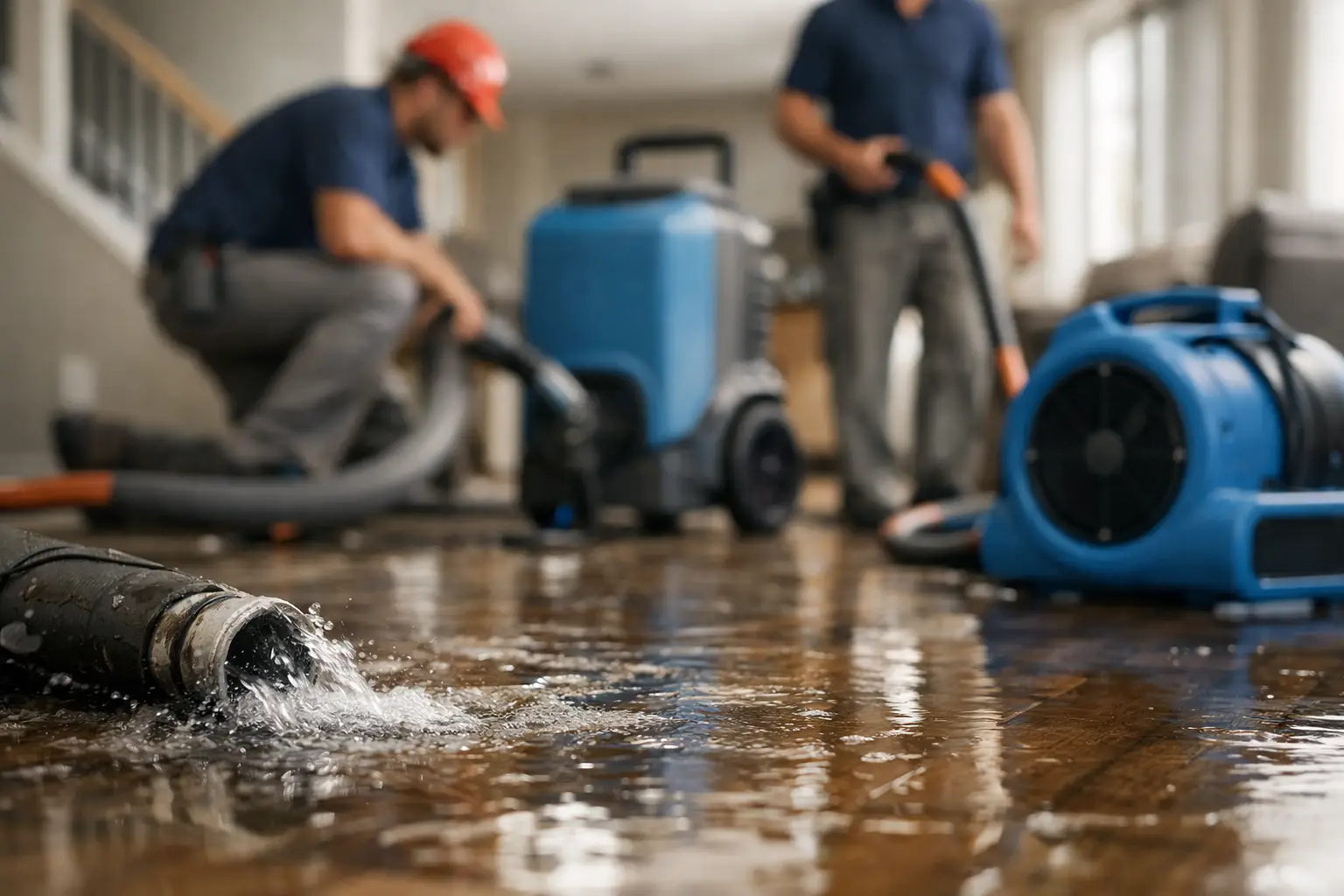
Commercial air movers and dehumidifiers run day and night while technicians take daily moisture readings. The equipment stays until the readings confirm the structure has returned to a dry standard, not just until surfaces feel dry.
Cleaning, Sanitizing & Deodorizing
Affected surfaces and salvageable contents are cleaned and treated with antimicrobial products, and odor is neutralized. On Category 2 and 3 losses this step is critical, since gray and black water leave behind bacteria that drying alone does not remove.
Restoration & Reconstruction
Finally, the home is rebuilt: drywall, flooring, cabinetry, and paint are restored to pre-loss condition. Because Elevated Operations completes this in-house, there is no gap while a separate contractor bids and mobilizes for the rebuild.
Why Does the Water Category Shape the Whole Process?
The water category, set in the first phase, changes every step that follows. Category 1 clean water mainly needs extraction and drying; Category 2 gray water adds cleaning and some removal; Category 3 black water from sewage or flooding requires disinfection, protective equipment, and disposal of porous materials that cannot be safely dried and reused.
This is why the assessment phase matters so much: it decides whether carpet and drywall can be dried in place or must be removed. The IICRC S500 standard defines these categories by contamination, not volume, so two rooms with the same amount of water can follow very different processes. In Metro Atlanta, older plumbing and heavy summer storms make Category 3 sewage backups a recurring reason the process expands beyond simple drying.
How Long Does Each Phase Take?
Inspection and extraction usually happen the same day the crew arrives. Structural drying is the longest phase, typically three to five days, and reconstruction depends on how much material was removed. A contained clean-water loss can finish in under a week, while a saturated or contaminated loss with rebuild takes longer.
Timelines are driven by physics, not by scheduling: materials release moisture at their own pace, and rushing the drying phase is what causes hidden mold later. Daily moisture monitoring is how a professional crew knows when drying is genuinely complete. Because Elevated Operations targets a 60-minute response across Cobb, Fulton, DeKalb, Douglas, Clayton, Henry, and Paulding counties, the clock on drying starts sooner, which shortens the overall timeline.
Dealing with water damage right now? The process starts with a fast inspection, and the first hour matters most.
Get a Free InspectionHow Does Elevated Operations Run the Restoration Process in Metro Atlanta?
Elevated Operations runs the full process with one IICRC-certified crew from the first inspection through the final rebuild, documenting every phase for the insurance claim and billing the carrier directly. A 60-minute response, moisture-verified drying, and in-house reconstruction keep the job on a single accountable timeline.
Handing a loss between a mitigation company and a general contractor is where most delays and disputes happen. Keeping extraction, drying, and reconstruction under one roof removes that gap, and the same documentation that guides the work also supports the claim. Every completed repair carries a 12-month workmanship warranty. For homeowners who also need to understand coverage, our guide on whether insurance covers water damage in Georgia explains what a standard policy will and will not pay.
What Does the Restoration Process Look Like at a Glance?
The table below summarizes the five phases, what happens in each, and the typical timing, so homeowners know what to expect from the first call through the final rebuild. Actual timelines depend on the water category and how saturated the structure is.
| Phase | What Happens | Typical Timing |
|---|---|---|
| 1. Inspection & assessment | Source located, moisture mapped, water category set | Same day |
| 2. Water extraction | Standing water removed with commercial extractors | Same day |
| 3. Drying & dehumidification | Air movers and dehumidifiers run until readings confirm dry | 3–5 days typical |
| 4. Cleaning & sanitizing | Antimicrobial treatment, odor control, contents cleaning | 1–2 days |
| 5. Reconstruction | Drywall, flooring, and finishes restored to pre-loss | Varies by scope |
Sources
What Do Real Georgia Restoration Timelines Look Like?
Three common Metro Atlanta losses show how the same five-phase process plays out differently: a clean-water pipe burst, a slow leak found late, and a Category 3 sewage backup. The phases are the same, but the drying and cleaning scope, and the total time, change with the water category.
Clean-Water Pipe Burst
Extraction and drying dominate, cleaning is minimal, and materials are often saved. A contained loss like this can move through all five phases in under a week when caught quickly.
Slow Leak Found Late
Weeks of saturation mean longer drying and more demolition in the cleaning phase. Reconstruction is heavier because subfloor and cabinetry often have to be replaced rather than dried.
Category 3 Sewage Backup
The cleaning and sanitizing phase expands significantly: contaminated porous materials are removed and disposed of, and disinfection is required before any drying or rebuild can safely proceed.
Frequently Asked Questions
The drying phase, which is usually the longest, typically takes three to five days, while inspection and extraction happen the same day the crew arrives. Reconstruction time depends on how much material was removed. A small, contained clean-water loss can complete all five phases in under a week, while a heavily saturated or Category 3 loss with significant rebuild takes longer. Daily moisture readings, not a fixed schedule, determine when drying is truly finished.
Not on your own. During the inspection and extraction phases, technicians move and protect salvageable contents and identify anything that has to be removed for drying access. On Category 2 and 3 losses, porous items that have absorbed contaminated water may need to be discarded, but that decision is documented for the insurance claim rather than left to the homeowner to sort out alone.
Certified technicians take moisture readings with meters throughout the drying phase and compare them against a dry standard for that material, rather than judging by whether a surface feels dry to the touch. Drying equipment stays in place until those readings confirm the subfloor, drywall, and framing have returned to normal moisture levels, because sealing up a structure that is still wet is what leads to hidden mold later.
With Elevated Operations, yes. The same IICRC-certified team that handles extraction and drying also completes the reconstruction of drywall, flooring, cabinetry, and finishes, and every completed repair carries a 12-month workmanship warranty. Keeping the process under one roof avoids the common gap where a mitigation company dries the home and a separate general contractor has to be hired and scheduled weeks later.
Elevated Operations provides 24/7 emergency response with a 60-minute arrival target across Cobb, Fulton, DeKalb, Douglas, Clayton, Henry, and Paulding counties. Starting extraction quickly is the single most effective way to limit damage, because water spreads and mold begins to develop within the first day or two. The sooner the inspection and extraction phases begin, the shorter the overall drying and reconstruction timeline tends to be.
See the Restoration Process Start With a Free Metro Atlanta Inspection
Elevated Operations responds to water damage calls across Cobb, Fulton, DeKalb, Douglas, Clayton, Henry, and Paulding counties in under 60 minutes, with IICRC-certified technicians, moisture-verified drying, direct insurance billing, deductible assistance up to $1,000, and a 12-month workmanship warranty on every restoration project.
Get a Free Inspection24/7 Emergency Line: (770) 404-6895IICRC-Certified · Direct Insurance Billing · 12-Month Warranty · 4.9 Stars (35+ Reviews) · Serving Cobb, Fulton, DeKalb, Douglas, Clayton, Henry & Paulding CountiesContent reviewed and last updated: September 2026 · Elevated Operations, LLLP · Mableton, GA · Serving Metro Atlanta