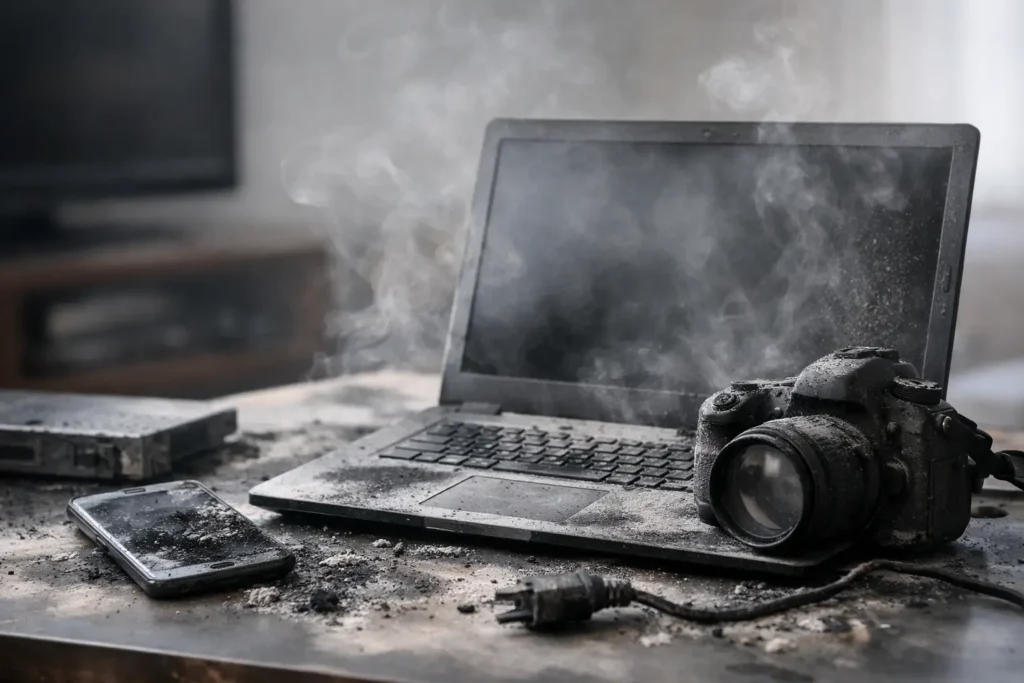
A fire can be out, the room can look calm, and your phone charger, TV, computer, or control panel can still be at risk. Smoke damaged electronics are not always visibly burned. Fine soot can settle inside vents, circuit boards, outlets, and appliances, where it may cause corrosion, overheating, or failure days or weeks later.
The right next step is usually not to test the device. It is to protect people, preserve the evidence for insurance, and prevent a recoverable item from becoming a total loss. Smoke cleanup is not simply about wiping black residue from a surface. It requires a careful assessment of what was exposed, how much contamination is present, and whether the equipment can be safely cleaned, tested, and returned to service.
Why Smoke Damaged Electronics Need Fast Attention
Smoke carries more than a burnt smell. Depending on what burned, it can contain dry soot, oily soot, acidic residues, melted plastics, and microscopic particles that are small enough to enter a device through ordinary cooling vents and seams. A television may look clean on the outside while soot has collected on the internal power supply or circuit board.
Those residues can attract moisture from the air. In Metro Atlanta’s humidity, that combination can accelerate corrosion on metal connections and electrical components. The result may be intermittent problems at first: a flickering screen, a breaker that trips, a laptop that will not charge, or an appliance that starts and then shuts off. In more serious cases, turning on contaminated equipment can create a shock or fire hazard.
The level of risk depends on the fire source, the amount of smoke, whether water or fire-suppression chemicals reached the item, and the value and complexity of the equipment. A sealed, low-cost device in a nearby room may be replaceable. A commercial server, home theater system, security panel, medical device, or specialized business equipment deserves a documented professional evaluation before anyone attempts to power it up.
What to Do With Smoke-Damaged Electronics First
Start with safety. If fire officials, your electrician, or your restoration team have not cleared the area for entry, stay out. Fire damage can affect wiring behind walls, outlets, and electrical panels even when the visible damage seems limited.
Once it is safe to enter, disconnect electronics from power only if you can do so without touching wet surfaces, damaged cords, or compromised outlets. Do not turn devices on to see whether they work. Avoid plugging in chargers, resetting tripped breakers repeatedly, or using appliances that were exposed to smoke or firefighting water.
Photograph each affected item before moving or cleaning it. Capture the room, the item in place, visible soot, serial numbers, model labels, and any damaged cords or accessories. Keep a simple inventory with the item description, approximate age, purchase price if known, and observed condition. This documentation gives your insurance carrier and restoration team a clearer record of the loss.
If an item is heavily coated in soot, place it in a clean, dry location away from high humidity and active construction dust. Do not stack devices together or seal them in plastic while they are damp or still warm. A dry, climate-controlled space is best until a qualified technician can inspect them.
What Not to Do After Smoke Exposure
The instinct to clean up quickly is understandable. Unfortunately, several common cleanup methods can push contamination farther into a device or damage delicate surfaces.
Do not use a household vacuum with a brush attachment on ports, vents, keyboards, or circuit areas. Standard vacuums can create static electricity, and aggressive brushing can grind soot into screens, finishes, and connectors. Do not blow compressed air into an electronic device either. It may force soot deeper inside where it is harder to remove.
Skip paper towels, wet wipes, glass cleaner, bleach, and all-purpose sprays. Soot can be oily and abrasive. Rubbing it across a screen or plastic casing may scratch the surface, while liquid cleaners can enter openings and create a new electrical problem. Never spray any cleaner directly on a device.
It is also wise not to rely on smell as the test for safety. An item may no longer smell smoky and still have corrosive residue inside. The opposite can be true as well: an item can retain odor in its casing without having suffered critical electrical damage. Inspection and appropriate testing matter more than appearance alone.
Can Electronics Be Restored?
Sometimes, yes. Restoration is most successful when equipment is removed from service quickly, kept dry, and handled by technicians who understand electronic contamination. The process may include detailed documentation, controlled HEPA vacuuming around exterior surfaces, specialized cleaning methods for components, corrosion assessment, odor treatment, and functional testing after the item is safe to energize.
Not every item is a good restoration candidate. Equipment directly exposed to flames, heavy soot, water, extinguisher chemicals, or severe heat may need replacement. The same is often true for inexpensive consumer devices when the cost of evaluation and specialized cleaning approaches the replacement value.
However, replacement is not always the automatic answer. High-value equipment, business electronics, audiovisual systems, network hardware, and control systems can be worth evaluating. Restoring a commercial point-of-sale system or a property security system may reduce downtime, provided testing confirms it is safe and reliable. For landlords and property managers, that can mean protecting both the building and ongoing operations.
The Electrical System Needs Attention Too
Devices are only part of the picture. Smoke can affect outlets, switches, wiring, breaker panels, HVAC controls, garage-door openers, smart-home equipment, and hardwired smoke alarms. These components may not be obvious during the first walkthrough, especially if walls and ceilings have soot staining.
An electrician should evaluate electrical components when there has been fire, heat exposure, water intrusion, or visible soot around outlets and panels. Restoration professionals can document contamination and clean affected structural surfaces, but electrical repairs and safety verification should be handled by qualified electrical professionals.
This is especially critical before reconstruction closes up walls or ceilings. If contaminated wiring pathways, junction boxes, or electrical controls are missed, the property owner may face avoidable repairs later. Thorough documentation, cleaning, and inspection early in the project help keep the recovery process controlled.
Protecting Your Insurance Claim
Insurance carriers may ask for an inventory, photographs, proof of ownership, and an assessment of whether affected electronics can be repaired or must be replaced. Do not discard damaged items until your carrier has documented them or authorized disposal, unless they create an immediate safety concern. If disposal is necessary, photograph the item thoroughly first and retain labels, serial numbers, and any available receipts.
Be specific when listing losses. “Computer” is less useful than “Dell laptop, model number, serial number, smoke exposure in upstairs office, will not power on after fire.” For commercial claims, include the function of the item and the operational impact. A damaged router, security recorder, or refrigerated-display controller may affect far more than its purchase price.
A full-service restoration team can help organize the scene, document the damage, coordinate with your insurer, and move from smoke removal into reconstruction when repairs are needed. Elevated Operations helps Metro Atlanta property owners manage that sequence without having to coordinate separate cleanup and rebuilding teams during an already difficult loss.
When to Call for Professional Help
Call promptly when smoke has affected multiple rooms, HVAC systems, electrical panels, appliances, business equipment, or electronics with visible soot around vents and connections. Professional help is also appropriate when there is lingering odor, firefighting water, a sewage backup mixed with fire damage, or uncertainty about what is safe to use.
The first 24 to 48 hours can make a meaningful difference. Early containment limits soot transfer to clean areas. Proper cleaning helps reduce odor and corrosion risks. Clear documentation protects the claim and gives you a sound basis for repair-or-replace decisions.
If you are standing in a smoke-affected property, focus on one decision at a time: keep the power off, document what you see, and get the area assessed before putting electronics back into service. That measured response protects your property now and prevents a hidden smoke problem from becoming the next emergency.