
Storm Damage Restoration in Metro Atlanta – Emergency Tarping Through Full Rebuild
Storm damage restoration in Metro Atlanta covers emergency board-up and roof tarping, water extraction from wind-driven rain, and full reconstruction after severe weather. Elevated Operations, LLLP sends IICRC-certified technicians across Cobb, Fulton, DeKalb, Douglas, Clayton, Henry, and Paulding counties with a 60-minute response guarantee, direct insurance billing, and a 12-month warranty.
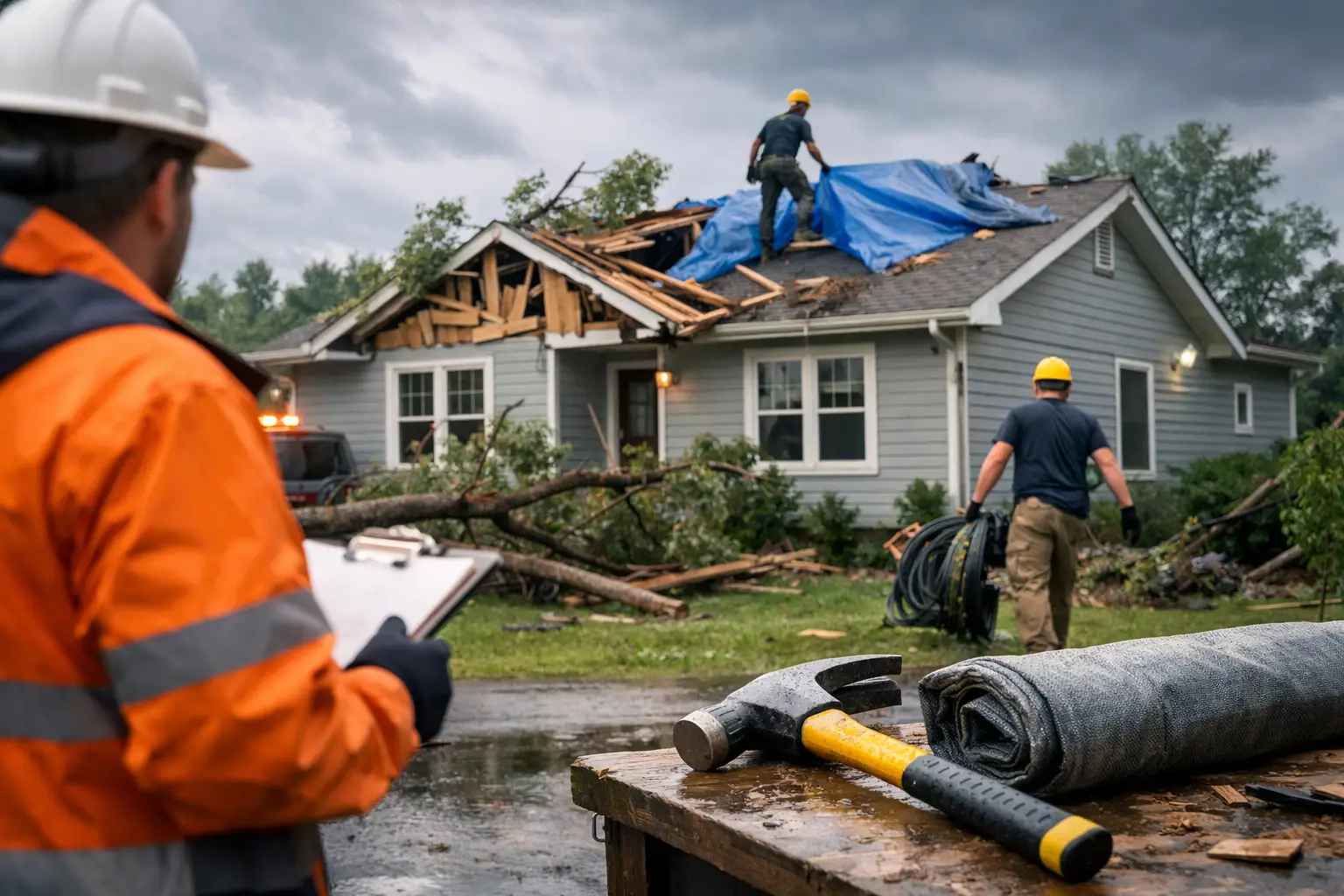
What Does Storm Damage Restoration Actually Involve in Metro Atlanta?
Storm damage restoration covers everything from the first emergency tarp on a damaged roof to the last piece of drywall hung after reconstruction. Elevated Operations follows a phased process, emergency mitigation, water extraction, drying, and reconstruction, drawing on the same ANSI/IICRC S500 standard used for any water-related loss, since most storm damage in Metro Atlanta involves wind-driven water intrusion.
Whether a storm caused wind damage, water intrusion, or both decides how the claim and the restoration scope get built. A torn shingle and a fallen tree through the roof both start with emergency tarping, but only one of them typically requires structural framing repair before reconstruction can begin.
What Determines the Cost of Storm Damage Restoration in Metro Atlanta?
The cost of storm damage restoration in Metro Atlanta depends on whether the damage is wind, water, or both, how much of the roof or structure is affected, and whether a separate flood policy applies. Elevated Operations provides a free on-site inspection and a written quote before any work begins, and bills insurance directly on covered claims.
Wind and hail damage represents the largest share of homeowners insurance claims by cause, ahead of water damage and freezing, according to the Insurance Information Institute (Insurance Information Institute, “Facts + Statistics: Homeowners and Renters Insurance,” ISO/Verisk data, 2018-2022 dataset). That is one of the reasons Elevated Operations builds every storm damage estimate to distinguish wind coverage from flood exclusions before submitting it to your adjuster.
When Should You Call for Storm Damage Restoration Right Now?
Four situations send most Metro Atlanta storm calls to Elevated Operations. If any of these match what just happened at your property, stop assessing the roof yourself and call.
A Tree Fell on Your Roof or a Storm Tore Off Shingles
An exposed roof needs emergency tarping immediately. Every hour of delay after a storm passes increases the chance of wind-driven rain getting into the attic and ceiling below.
Wind-Driven Rain Got Into Your Home
Water that entered through a damaged roof, window, or siding needs extraction and drying started quickly, following the same 24 to 48 hour mold-prevention window as any other water loss.
You Have Storm Debris Against Your Structure
Downed limbs, fencing, or debris resting against siding or a roof can hide additional damage underneath. A full assessment checks for damage the debris itself is currently covering.
Your Insurance Adjuster Needs a Storm Damage Estimate
A written scope of work that separates wind damage from any flood-related damage keeps a storm claim moving with the correct coverage applied to each part of the loss.
Storm Just Hit Your Metro Atlanta Property?
IICRC-certified crews respond within 60 minutes, 24 hours a day, starting with emergency roof tarping and board-up. Get a free quote and a written scope of work before any equipment gets set up.
Wind Damage vs. Flood Damage After a Storm – What’s the Difference?
Wind damage and flood damage are covered by two different insurance policies, not the same claim. Wind and hail damage to a roof, siding, or windows is typically covered under a standard homeowners policy. Rising floodwater is excluded from most homeowners policies and requires separate flood insurance.
Whether a storm loss falls under a homeowners policy or requires a flood claim depends on how the water got into the structure. The table below is the framework Elevated Operations uses on site to help a homeowner understand which coverage applies to which part of the damage.
| Damage Type | Common Cause in a Metro Atlanta Storm | Typical Insurance Path | Elevated Operations Approach |
|---|---|---|---|
| Wind Damage | Torn shingles, broken windows, downed fencing or siding | Standard homeowners policy, wind and hail coverage | Emergency board-up, tarping, roofing and siding reconstruction |
| Wind-Driven Water Intrusion | Rain entering through a wind-damaged roof or window | Standard homeowners policy, water damage coverage | Extraction, structural drying, dehumidification, then reconstruction |
| Flood Damage | Rising water from overflowing creeks or storm drainage in low-lying areas | Separate flood policy through NFIP or a private carrier | Extraction, sanitizing, and reconstruction billed against the flood policy |
A single storm can produce both a wind claim and a flood claim on the same property, which is why Elevated Operations documents the entry point of every affected area separately before submitting an insurance estimate.
How Does Metro Atlanta’s Severe Weather Pattern Affect Storm Damage Restoration?
Metro Atlanta sits inside an active severe weather corridor for the Southeast, with spring severe thunderstorm season and the remnants of Gulf and Atlantic hurricanes each fall pushing wind and heavy rainfall into the region. That seasonal pattern shapes when Elevated Operations sees the most storm damage calls.
The National Weather Service forecast office serving Metro Atlanta, based in Peachtree City, Georgia, tracks severe thunderstorm and tornado activity that peaks in spring across North and Central Georgia. These storms bring straight-line wind damage and hail that account for much of the roof and siding damage Elevated Operations restores across Cobb, Fulton, and the surrounding counties.
Late summer and early fall bring a second storm risk as the remnants of Gulf Coast and Atlantic hurricanes track inland and weaken into tropical storms by the time they reach Metro Atlanta. These systems drop sustained heavy rainfall rather than the short, intense wind bursts typical of spring storms, which shifts the damage pattern toward water intrusion and localized flooding rather than roof and siding damage.
Metro Atlanta’s red clay soil and mix of older drainage infrastructure in established neighborhoods across Cobb, Fulton, and DeKalb counties can worsen localized flooding during heavy rain events, since compacted clay drains slower than sandy soil. Newer developments in Henry and Paulding counties generally have more modern stormwater drainage, which changes how quickly floodwater recedes after a storm passes.
How Do You Avoid Storm-Chaser Scams After a Storm in Georgia?
Storm-chaser contractors follow major weather events into Metro Atlanta, going door to door with lowball verbal quotes, collecting deposits, and disappearing before the work is finished or the insurance claim is settled. Four checks protect a homeowner from that pattern before a contract gets signed.
What Other Restoration Services Does Elevated Operations Provide in Metro Atlanta?
Storm damage rarely stays a single-trade problem. Elevated Operations pairs storm damage restoration with water extraction, emergency board-up, and full reconstruction under one crew, so a homeowner is not coordinating a roofer, a restoration company, and a general contractor separately.
Common Questions About Storm Damage Restoration in Metro Atlanta
Elevated Operations guarantees a boots-on-the-ground response within 60 minutes of your call, 24 hours a day, across Cobb, Fulton, DeKalb, Douglas, Clayton, Henry, and Paulding counties. During widespread severe weather events, crews prioritize active water intrusion and roof breaches first, so calling as soon as it is safe to do so keeps a property earlier in the response queue.
Wind and hail damage, a torn roof, broken windows, or siding damage, is typically covered under a standard Georgia homeowners policy. Flood damage from rising water is generally excluded and requires a separate flood insurance policy through the National Flood Insurance Program or a private flood carrier. Elevated Operations documents the entry point of the damage to help determine which coverage applies.
Emergency tarping and board-up happen the same day as the initial response. A contained wind and water loss, one damaged roof section and a room of water intrusion, usually takes one to three weeks from extraction through reconstruction. A larger loss involving structural roof damage or multiple rooms can run several weeks to a few months depending on scope.
For a contained loss, a tarped roof section and a dried, contained water intrusion, most households stay in the home while repairs proceed. A larger structural loss, or a loss requiring extensive drying equipment throughout the home, sometimes calls for temporary relocation until the structure is dry, safe, and structurally sound for occupancy.
Wind damage, a torn roof, broken window, or damaged siding, is usually covered under a standard homeowners policy. Flood damage from rising water, whether from an overflowing creek or widespread stormwater, is excluded from most homeowners policies and requires a separate flood insurance policy. Elevated Operations documents which type of damage occurred at each affected area of the property.
Yes. Elevated Operations performs a free on-site inspection and provides a written scope of work and quote before any equipment gets set up beyond the initial emergency tarping needed to stop further damage. That written scope is the document Elevated Operations submits to your insurance adjuster to keep the claim moving.
Elevated Operations serves the Metro Atlanta region, including Cobb, Fulton, DeKalb, Douglas, Clayton, Henry, and Paulding counties, with mobile dispatch from a Mableton, Georgia base. That coverage area spans the full seven-county Metro Atlanta service area for both spring severe thunderstorm season and the remnants of Gulf and Atlantic hurricanes each fall.
Dealing With Storm Damage in Metro Atlanta Right Now?
Elevated Operations responds across Cobb, Fulton, DeKalb, Douglas, Clayton, Henry, and Paulding counties in under 60 minutes, with IICRC-certified technicians, direct insurance billing, deductible assistance up to $1,000, and a 12-month warranty on every completed restoration project.
IICRC-Certified · Direct Insurance Billing · 12-Month Warranty · Serving Cobb, Fulton, DeKalb, Douglas, Clayton, Henry & Paulding Counties