Mold Remediation in Metro Atlanta – Removal, Containment, and Source Correction
Mold remediation in Metro Atlanta removes existing mold growth, contains spores from spreading during the work, and corrects the moisture source that let the mold grow in the first place. Elevated Operations, LLLP sends IICRC-certified technicians across Cobb, Fulton, DeKalb, Douglas, Clayton, Henry, and Paulding counties with a 60-minute response guarantee, direct insurance billing, and a 12-month warranty.
What Does Mold Remediation Actually Involve in Metro Atlanta?
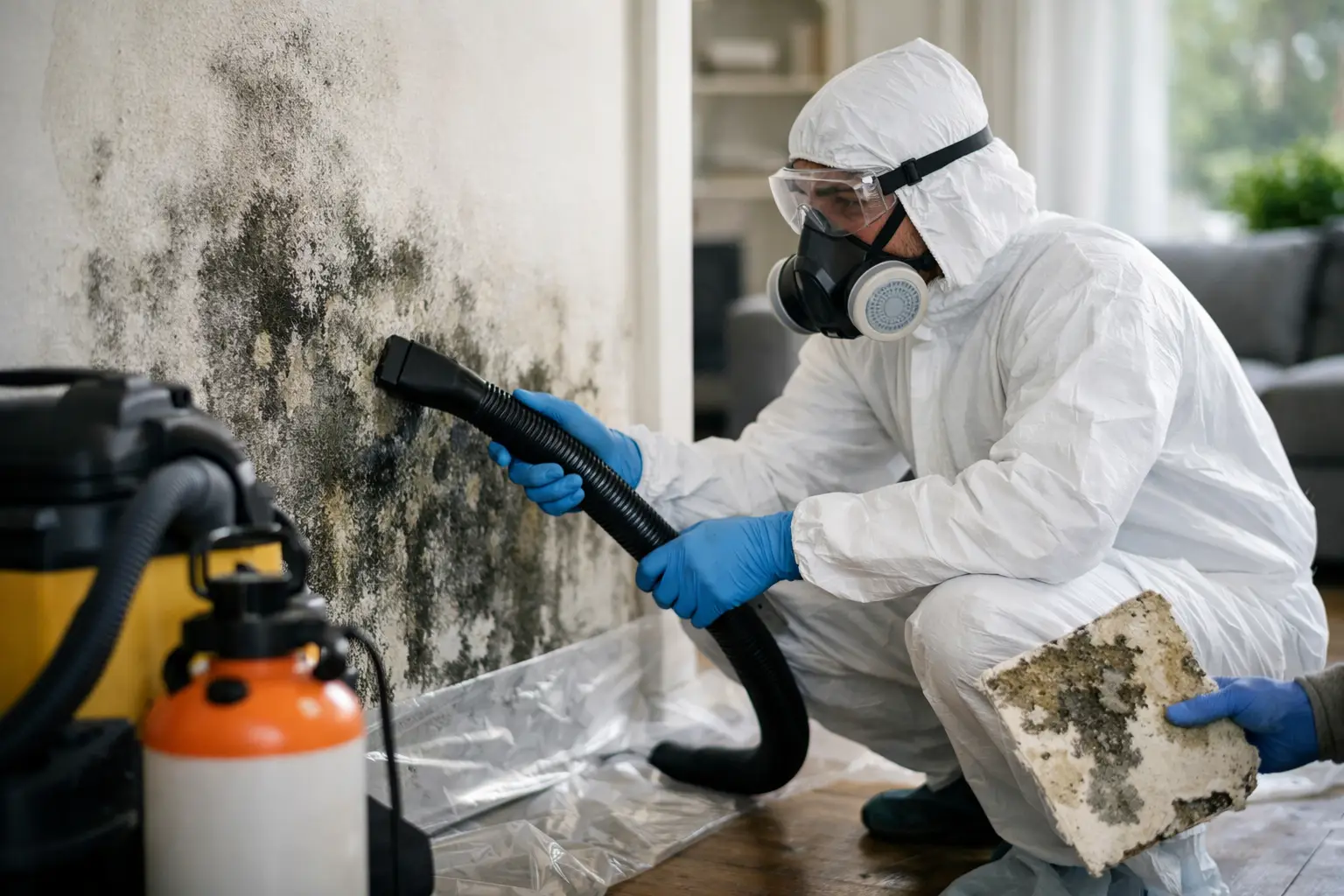
Mold remediation covers everything from sealing off an affected room to the final air-quality verification once cleanup is done. Elevated Operations follows a phased process, containment, removal, air scrubbing, and source correction, built around the ANSI/IICRC S520 standard that governs how licensed remediation contractors handle mold-affected homes and businesses.
How much mold has spread, and whether the moisture source is still active, decides how aggressive containment has to be. A small bathroom ceiling spot and a crawl space with mold across the entire subfloor both start with an inspection, but only one of them requires a full negative-air containment tent.
What Determines the Cost of Mold Remediation in Metro Atlanta?
The cost of mold remediation in Metro Atlanta depends on the square footage affected, whether the mold reached a crawl space or attic versus a single room, and how many materials need removal rather than surface treatment. Elevated Operations provides a free on-site inspection and a written quote before any work begins.
Mold growth follows moisture, and the EPA notes that mold can begin growing on a damp surface within 24 to 48 hours (EPA, “A Brief Guide to Mold, Moisture, and Your Home,” last updated February 18, 2026). That short window is why Elevated Operations treats fast water response as the first line of defense against a much larger mold remediation bill later.
When Should You Call for Mold Remediation Right Now?
Four situations send most Metro Atlanta calls to Elevated Operations for mold. If any of these match what is happening at your property right now, stop scrubbing with bleach and call.
You See Visible Mold Growth
Black, green, or white patches on drywall, grout, or wood are a sign to stop and call rather than scrub with bleach, which can spread spores into the air without solving the underlying moisture problem.
Your Crawl Space Smells Musty
A musty odor in a crawl space almost always means moisture is present, even without visible mold on the surfaces you can see. Elevated Operations inspects the vapor barrier, insulation, and framing for hidden growth.
You Had Recent Water Damage
Any area that stayed wet longer than 24 to 48 hours after a leak, flood, or high humidity event is a candidate for mold growth, whether or not it is visible yet.
A Family Member Has Unexplained Respiratory Symptoms
Persistent coughing, congestion, or allergy-like symptoms that improve when someone leaves the home can point to indoor mold. A professional inspection identifies whether mold is present and where.
Found Mold in Your Metro Atlanta Home or Business?
IICRC-certified crews respond quickly across all seven service counties. Get a free inspection and a written scope of work before any containment goes up.
DIY Mold Cleanup vs. Professional Mold Remediation – What’s the Difference?
DIY mold cleanup and professional mold remediation are not interchangeable, even though both remove visible mold. DIY cleanup wipes a surface. Professional remediation contains the area, removes colonized material, scrubs the air, and fixes the moisture source so the mold does not return.
Whether a homeowner can safely handle a mold spot themselves depends almost entirely on size and location. The table below is the framework Elevated Operations technicians use on site to explain when a job needs professional containment.
| Mold Situation | Common Cause in Metro Atlanta Homes | Recommended Approach | Professional Remediation Needed? |
|---|---|---|---|
| Small surface spot, under 10 sq ft | Bathroom ceiling condensation, a minor grout stain | Cleaning with proper ventilation and antimicrobial product | Often optional, but source correction still matters |
| Moderate growth, 10 to 100 sq ft | Undetected slow leak, poor bathroom ventilation over time | Containment, removal of affected material, air scrubbing | Usually, especially if drywall or insulation is involved |
| Crawl space or attic-wide growth | Chronic humidity, vapor barrier failure, poor ventilation | Full containment, tear-out, HEPA filtration, source correction | Yes, DIY cleanup cannot safely contain a space this size |
Georgia’s humid subtropical climate means the line between a manageable spot and a spreading problem can move faster than in drier regions, which is why Elevated Operations recommends a professional inspection any time visible growth exceeds a small, isolated area.
How Does Metro Atlanta’s Humid Climate Affect Mold Growth?
Metro Atlanta’s humid subtropical climate keeps indoor and crawl space humidity elevated for much of the year, which is the single biggest local factor behind mold calls across Cobb, Fulton, DeKalb, and the rest of the seven-county service area. Crawl space foundations and red clay soil both compound the humidity problem.
Georgia’s climate holds summer humidity well above the comfort range most HVAC systems are sized for, based on the 30-year climate normals maintained by NOAA’s National Centers for Environmental Information for the 1991-2020 period. That sustained humidity is why an under-ventilated bathroom, laundry room, or crawl space in Metro Atlanta can develop mold faster than the same space would in a drier climate.
Crawl space foundations, common in homes built across Marietta, Decatur, Douglasville, and other established neighborhoods before slab-on-grade construction became standard, trap ground moisture and humid air underneath the living space. A missing or damaged vapor barrier lets that moisture rise into floor joists and subfloor, where mold can establish without ever being visible from inside the home.
Metro Atlanta’s red clay soil compacts and drains slower than sandy soil, which keeps ground moisture near foundations and crawl spaces longer after rain. That slower drainage is one reason mold calls in the region often trace back to a crawl space rather than a visible leak inside the living space, especially in homes with limited crawl space ventilation.
How Do You Avoid Mold Remediation Scams in Georgia?
Mold remediation attracts contractors who inflate test results, oversell containment for a small spot, or perform testing and remediation as the same company, which creates a conflict of interest. Four checks protect a Metro Atlanta homeowner before signing a remediation contract.
What Other Restoration Services Does Elevated Operations Provide in Metro Atlanta?
Mold rarely shows up without a water problem behind it. Elevated Operations pairs mold remediation with water damage restoration, crawl space moisture correction, and reconstruction under one crew, so the moisture source and the mold get fixed in the same project.
Common Questions About Mold Remediation in Metro Atlanta
Elevated Operations prioritizes active water intrusion tied to mold growth with a 60-minute response guarantee, 24 hours a day, across Cobb, Fulton, DeKalb, Douglas, Clayton, Henry, and Paulding counties. Non-emergency mold inspections, like a musty crawl space with no active leak, are typically scheduled within a few days depending on demand.
Coverage depends on the cause. Georgia homeowners policies generally cover mold that results from a sudden, covered water event, such as a burst pipe, but exclude mold caused by long-term humidity, poor ventilation, or neglect. Elevated Operations documents the cause of the moisture to support your claim and bills the carrier directly on covered losses.
A contained spot in a bathroom or closet typically takes two to four days from containment through removal and air-quality verification. A crawl space or attic with widespread growth can run one to two weeks depending on square footage and whether source correction, like a vapor barrier or ventilation fix, is part of the scope.
For a contained, small-area job, most households stay in the home while containment is set up in the affected room. Larger jobs involving whole-house HVAC contamination or extensive crawl space work sometimes call for limiting access to the work area, particularly for anyone with asthma, allergies, or a compromised immune system, since removal work can temporarily disturb spores.
Mold removal is the physical step of taking mold off a surface. Mold remediation is the full process: containment to stop spores from spreading, removal of affected material, HEPA air scrubbing, and correcting the moisture source. Elevated Operations follows the complete ANSI/IICRC S520 remediation process, not just a surface wipe-down.
Yes. Elevated Operations performs a free on-site inspection and provides a written scope of work and quote before any containment goes up. If the inspection reveals a larger affected area once walls or flooring are opened, that change gets documented and approved before additional work proceeds, so there are no surprise charges once containment comes down.
Elevated Operations serves the Metro Atlanta region, including Cobb, Fulton, DeKalb, Douglas, Clayton, Henry, and Paulding counties, with mobile dispatch from a Mableton, Georgia base. That coverage area includes Marietta, Smyrna, Sandy Springs, Atlanta, East Point, and College Park, plus the rest of the cities and neighborhoods across the seven-county Metro Atlanta service area.
Found Mold in Your Metro Atlanta Property?
Elevated Operations responds across Cobb, Fulton, DeKalb, Douglas, Clayton, Henry, and Paulding counties with IICRC-certified technicians, direct insurance billing, deductible assistance up to $1,000, and a 12-month warranty on every completed remediation project.
IICRC-Certified · Direct Insurance Billing · 12-Month Warranty · Serving Cobb, Fulton, DeKalb, Douglas, Clayton, Henry & Paulding Counties