
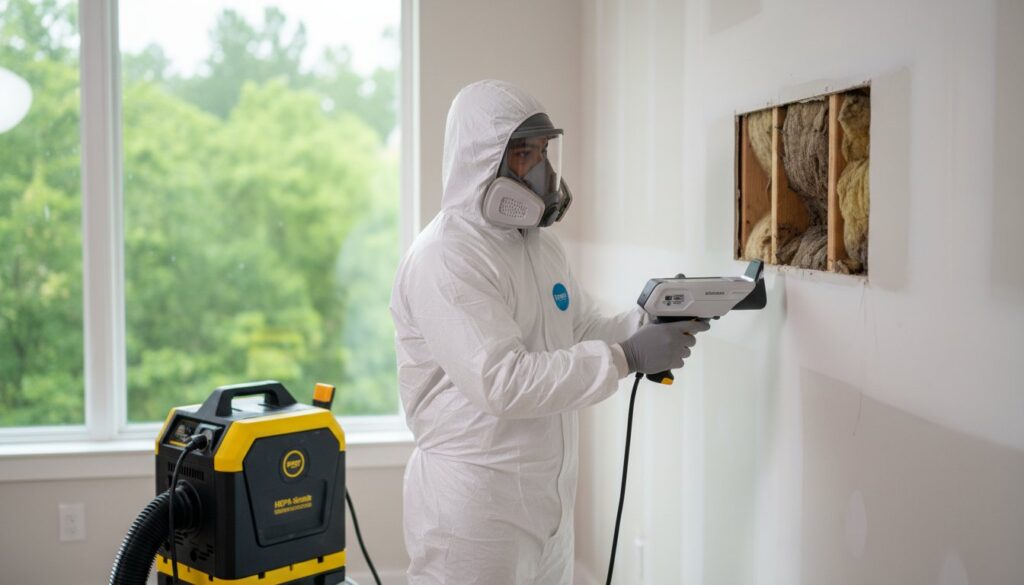
The most significant risk in a mold outbreak isn’t the fungus growing on your drywall; it’s the operational failure of hiring an unqualified contractor to address it. That initial discovery unleashes a cascade of legitimate concerns. You worry about the health impacts of toxic spores on your family, the silent, creeping damage to your home’s infrastructure, and the confusing process of navigating an insurance claim in Georgia.
This guide was created to provide a clear roadmap out of that chaos. Here, you will discover the structured, professional methodology of a premier mold remediation service, one designed to systematically restore your property’s health and your peace of mind. We will equip you with the knowledge to not only eliminate the immediate threat but also to implement a long-term prevention strategy, secure full documentation for your insurer, and ultimately elevate your property’s value back to its pre-loss condition in the Mableton and Marietta area. This is your strategic plan for a healthy home.
Key Takeaways
- Discover why common DIY methods fail to address mold at its source and may leave the underlying root structure intact within your walls.
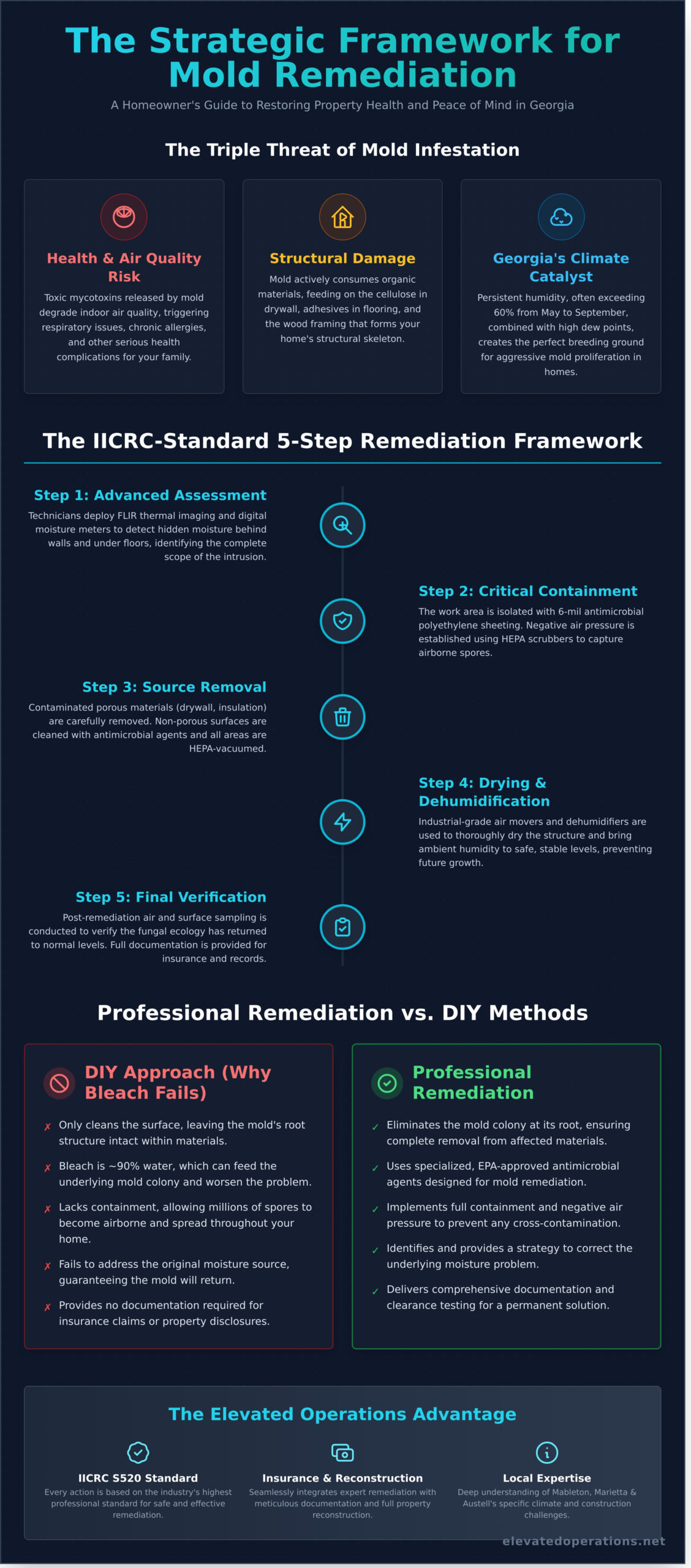
- Understand the 5-step strategic framework a professional mold remediation service uses to ensure containment, removal, and future prevention.
- Identify the specific climate and drainage challenges in Mableton and Marietta that make local properties highly susceptible to mold growth.
- Learn the advantage of a single-partner approach that integrates both expert remediation and full property reconstruction for a seamless recovery.
Understanding Mold Remediation Service in the Georgia Climate
In Metro Atlanta, addressing a mold issue is not a simple cleaning task; it’s a strategic intervention against a persistent environmental adversary. The humid subtropical climate, where relative humidity frequently surpasses 60% from May through September, creates a perfect breeding ground for fungal growth within residential properties. A professional mold remediation service executes a structured process built on containment, removal, and, most critically, moisture control. This is the fundamental difference between superficial ‘removal’ and comprehensive ‘remediation’. While removal might scrub away visible signs, remediation addresses the underlying water source to prevent recurrence, protecting your property’s foundation and your family’s health.
Mold remediation is the scientific process of returning a building’s fungal ecology to normal, healthy indoor levels. It’s a discipline that requires a deep understanding of building science, microbiology, and local environmental pressures. The comprehensive process of Mold growth, assessment, and remediation involves identifying the moisture source, isolating the contaminated area to prevent cross-contamination, and using specialized equipment to eliminate spores from the air and affected materials. This systematic approach ensures the problem is solved at its root, not just cosmetically concealed.
The Health and Structural Risks of Mold Infestation
Beyond the unsightly appearance, mold poses a direct threat to both your family’s well-being and your home’s structural integrity. Certain mold species release mycotoxins, microscopic compounds that can degrade indoor air quality (IAQ) and trigger respiratory issues, allergic reactions, and other health complications. Simultaneously, mold actively consumes the organic materials it grows on. It compromises your property’s infrastructure by feeding on the cellulose in drywall, the adhesives in flooring, and the wood framing that forms your home’s skeleton. For Metro Atlanta homeowners, key warning signs include a persistent musty odor after heavy summer thunderstorms or the appearance of dark spots on baseboards in basements and crawl spaces.
Why Georgia Humidity is a Catalyst for Mold Growth
The persistent humidity in Georgia is the primary driver of mold proliferation. During Mableton’s humid summer months, the high ‘dew point’ becomes a critical factor. When warm, moisture-laden air comes into contact with cooler surfaces-like concrete basement walls or attic insulation-it condenses, creating the sustained dampness mold requires to thrive. Your HVAC system plays a dual role in this battle. When properly maintained, it is your greatest ally, dehumidifying the air. If neglected, however, contaminated ductwork or a clogged condensate line can become a distribution network, spreading spores from one room to the entire house. This vulnerability is particularly pronounced in the historic districts of Marietta, where older homes built before modern vapor barriers were standard often lack the necessary defenses against moisture intrusion, making them prime candidates for a professional mold remediation service.
The Elevated Remediation Framework: Our 5-Step Strategic Process
Effective mold remediation is not about demolition; it’s about strategic restoration. We view every project as a roadmap to return your property to a state of healthy equilibrium. This isn’t just our philosophy; it’s a system built on the Institute of Inspection, Cleaning and Restoration Certification (IICRC) S520 Standard for Professional Mold Remediation. This standard is the operational foundation for every action we take. We apply our “Operations as the Foundation” approach to your home’s health, ensuring every step is executed with precision and documented meticulously for insurance claims and future property value.
Step 1 & 2: Assessment and Advanced Containment
The first operational challenge is identifying the full scope of the moisture intrusion. Mold often hides behind walls and under floors. Our technicians deploy advanced diagnostic tools, including FLIR thermal imaging cameras to detect temperature anomalies indicative of moisture and digital moisture meters to pinpoint hidden dampness bottlenecks. Once the affected zone is defined, we establish critical containment. This involves:
- Physical Barriers: We install 6-mil antimicrobial-treated polyethylene sheeting to isolate the work area, preventing spore migration.
- Negative Air Pressure: A specialized HEPA air scrubber is strategically placed to exhaust air from the contained area, ensuring that microscopic spores (often smaller than 5 microns) are captured, not circulated throughout your home.
Step 3, 4 & 5: Removal, Drying, and Final Verification
With the environment secured, our certified team begins the core remediation process. This phase is where a professional mold remediation service demonstrates its true value. While the EPA guide to mold in your home offers a solid starting point for understanding mold, our process executes remediation with engineering-level controls. We systematically remove mold-infested porous materials like drywall and insulation, placing them in 6-mil disposal bags to prevent cross-contamination. Next, we stabilize the moisture ecosystem. We deploy commercial-grade LGR dehumidifiers and high-velocity air movers to aggressively dry the structure, targeting a relative humidity below 50% to inhibit future growth. The final step is our commitment to accountability: Post-Remediation Verification (PRV). We engage a third-party, certified Industrial Hygienist to conduct air and surface sampling. This independent clearance testing provides unbiased, scientific proof that your property’s air quality has been returned to a normal fungal ecology. This level of third-party-verified reporting is a core component of our process. You can review our project documentation standards to see how we build a robust case for your property’s long-term health.
Professional Remediation vs. DIY: Why Bleach is Not a Strategy
The impulse to handle a mold problem with a bottle of bleach is a common one. It feels like a quick, decisive action against an unwelcome intruder. But this approach is a fundamentally flawed strategy, one that mistakes surface-level cleaning for a systemic solution. The truth is, bleach is ineffective on porous materials like drywall, wood, and grout. Its chemical structure, which is over 90% water, often feeds the underlying root system (the hyphae) while only whitening the visible surface mold. This is the ‘Iceberg Effect’: you’ve addressed the 10% you can see, leaving the 90% of the problem intact and ready to regrow.
Viewing this issue through an operational lens, a professional mold remediation service acts as a Fractional COO for your home’s environmental health. We don’t just clean; we diagnose the systemic failure, design a remediation roadmap, and execute a plan that restores the foundational integrity of your property. You shouldn’t have to become an expert in mycology and building science; you just need a trusted partner to manage the complex operational details required for a permanent solution.
The Hidden Costs of Improper Mold Removal
A failed DIY attempt isn’t a minor setback; it’s a compounding operational debt. The initial $20 spent on cleaning supplies can quickly escalate into a multi-thousand-dollar project when the mold returns with greater intensity, often accompanied by secondary water damage from the very bleach solution used to treat it. For property owners in communities like Mableton, the liability is significant. Failure to properly remediate and disclose a known mold issue can lead to legal complications and diminish a property’s market value by as much as 25%, turning a manageable issue into a substantial financial bottleneck.
The Science of HEPA and Antimicrobial Treatments
Effective remediation is a science, not a guess. Standard household vacuums are incapable of containing microscopic mold spores, which can be as small as 3-5 microns. Attempting to vacuum them without proper filtration aerosolizes these spores, spreading them through your HVAC system and creating new colonies throughout your property. Professional remediation is built on non-negotiable standards, including the use of High-Efficiency Particulate Air (HEPA) vacuums and air scrubbers that capture 99.97% of airborne particles down to 0.3 microns. This disciplined approach, which follows established EPA mold remediation guidelines, is what separates a temporary fix from a permanent solution. After containment and removal, the process is completed with EPA-registered antimicrobial treatments that eliminate any remaining fungi and make surfaces inhospitable to future growth. It’s a poised, professional execution designed to elevate your home’s infrastructure back to a state of health and stability.
Local Insights: Navigating Mold Issues in Mableton, Marietta, and Austell
Understanding the Metro Atlanta environment is the first step toward effective mold prevention. Our region’s unique climate and geology create a specific set of challenges for homeowners, particularly in Cobb County. With an average annual rainfall exceeding 50 inches, the dense Georgia red clay soil becomes quickly saturated, leading to significant hydrostatic pressure against foundations. This isn’t a generic problem; it’s a localized operational bottleneck that requires a strategic response.
Homes in Mableton, Austell, and Marietta don’t just face water from above. They face a persistent threat from below. The combination of heavy rain, poor soil drainage, and high humidity creates a perfect storm for foundation seepage and the development of a problematic crawl space ecosystem.
Crawl Space Encapsulation: A Strategic Defense
The traditional vented crawl space is a flawed design for the Southern climate. Open vents, intended for drying, instead invite in Georgia’s notoriously humid air. This moisture condenses on cooler floor joists and ductwork, creating the ideal environment for fungal growth. We view crawl space encapsulation not as a repair, but as essential infrastructure optimization. A professionally installed vapor barrier and a dedicated crawl space dehumidifier seals out this humidity, protecting your home’s structural foundation and elevating its air quality.
Basement and Attic Vulnerabilities in Marietta
Marietta’s diverse housing stock, from historic homes near the Square to mid-century ranches, presents unique vulnerabilities. Many homes built between 1960 and 1990 feature attics with insulation and ventilation that are inadequate for modern energy standards and our climate’s demands. This imbalance leads to attic condensation, especially during winter months. Properties in areas with dense tree canopies and varied elevation, like those near Kennesaw Mountain, often experience higher ambient moisture, which further complicates attic and basement health. A proper mold remediation service will diagnose these architectural weak points first.
Before you need a comprehensive mold remediation service, you can perform a foundational audit of your property’s exterior drainage. A systematic check is the most effective way to identify and mitigate risks before they escalate. It’s about proactive management, not reactive crisis control.
Use this checklist to audit your property’s drainage infrastructure:
- Gutter System Integrity: Are gutters free of debris? Do they overflow during heavy rain? Check for leaks at the seams, which can saturate fascia boards and walls.
- Downspout Trajectory: Ensure all downspouts extend at least 6 feet away from the foundation. The discharge point must not create pools of water near your home.
- Landscape Grading: Does the soil slope away from your foundation? A negative grade, where the ground slopes toward the house, directs thousands of gallons of water directly against your basement or crawl space walls.
- Window Well Condition: Are window wells clear of leaves and dirt? A clogged well can fill with water, creating immense pressure on basement windows.
Identifying these issues is the critical first step. Correcting them is a high-leverage action that protects your property’s long-term value. If your audit reveals significant drainage bottlenecks, it may be time to implement a more robust solution. Schedule a comprehensive moisture and drainage assessment to elevate your home’s operational foundation.
Elevated Operations: Your Partner in Property Restoration and Reconstruction
Selecting a mold remediation service is only the first step in a much larger journey of property recovery. The immediate threat must be neutralized, but what comes next? Many companies stop at cleanup, leaving you with a sanitized but deconstructed space and the new, complex task of finding reliable builders. We see the bigger picture. At Elevated Operations, we aren’t just a cleanup crew; we are the Strategic Architects of your property’s complete restoration. We provide a single, unified roadmap from initial crisis to final reconstruction, ensuring your property doesn’t just recover. It’s elevated.
Property emergencies don’t adhere to business hours. That’s why our IICRC-certified teams are on call 24/7, ready to deploy to Mableton and the greater Atlanta area to establish control and begin the mitigation process immediately. This isn’t just about speed; it’s about strategic intervention to minimize secondary damage and lay a stable foundation for the work ahead.
From Mitigation to Rebuilding: A Seamless Transition
Once the mold is gone, our work is just beginning. Our in-house reconstruction teams take over, translating the mitigation plan into a rebuilding blueprint. This eliminates the delays and communication bottlenecks that occur when you’re forced to manage multiple disconnected contractors. A single point of contact oversees the entire project, from structural repairs and drywall to final finishes. This unified approach typically reduces project timelines by 25-30% compared to the traditional, multi-vendor model. Our comprehensive services include:
- Full-service carpentry and structural repairs
- New flooring installation
- Professional interior and exterior painting
- Drywall replacement and finishing
Because mold issues often stem from water intrusion, our expertise is interconnected. Learn more about our Water Damage Restoration Atlanta services to see how we build a resilient operational infrastructure for your property.
Assistance with Insurance Documentation
Navigating an insurance claim can feel like untangling a web of complex requirements. We provide the “professional plumbing” for the process, ensuring a smooth flow of information from the incident to your final reimbursement. Our team methodically documents every step with a level of detail designed to satisfy the most stringent carrier requirements. This includes comprehensive photo documentation, detailed moisture logs, and precise reports that justify every action taken. For Mableton residents, this partnership-oriented approach transforms a stressful administrative burden into a structured, manageable process, maximizing your claim’s potential for a successful outcome.
Don’t let property damage disrupt your life or business. It’s time to rise above the daily grind of managing a crisis. Partner with Elevated Operations for a structured plan that takes you from damage assessment to a fully restored property, all under one expert roof. Your vision for recovery becomes our operational mission.
Elevate Your Property’s Future Health
Protecting your property in Mableton and Marietta isn’t just about cleaning; it’s about strategic defense against a persistent threat. You now understand that Georgia’s climate demands more than surface-level fixes and that DIY bleach solutions fail to address the root cause of mold infiltration. A truly effective approach requires a disciplined, professional framework built on proven science and strategic execution.
That is the foundation of our work. With over 20 years of restoration infrastructure experience, our IICRC Certified Remediation Specialists deliver a definitive mold remediation service designed for long-term results. We don’t just treat symptoms; we restore your property’s operational integrity. Our teams are ready with 24/7 emergency response across Metro Atlanta to protect your asset at a moment’s notice. Ready to move from reactive fixes to a proactive strategy? Elevate your property health-Request a Strategic Mold Assessment today. Let’s build a healthier foundation for your property, together.
Frequently Asked Questions About Mold Remediation
Is mold remediation covered by homeowners insurance in Georgia?
Homeowners insurance in Georgia typically covers mold remediation only if the mold resulted from a “covered peril,” like a sudden pipe burst. Policies generally exclude damage from long-term issues such as slow leaks, poor maintenance, or high humidity. It’s essential to review your specific policy documents or contact your agent, as coverage can vary significantly between providers. Documenting the water source is critical for a successful claim.
How long does the professional mold remediation process take in a typical Marietta home?
The professional mold remediation process for a typical Marietta home usually takes between one and five days. A smaller, contained project like a bathroom might only take a day or two. Larger or more complex situations, such as a contaminated basement or crawlspace, require more time for proper containment, air filtration, material removal, and detailed cleaning. Your remediation team will provide a precise project timeline after their initial assessment.
Can I stay in my house during the mold remediation service?
Whether you can stay in your house during remediation depends entirely on the project’s scope. For small jobs isolated to a single room, you can often remain in the home. However, for extensive remediation involving the HVAC system or multiple areas, professionals will almost always recommend temporary relocation. This protocol ensures your family’s safety from airborne spores and cleaning agents, especially for those with respiratory sensitivities.
What is the difference between black mold and other types found in Mableton?
The primary difference is not color but the potential for certain species, like Stachybotrys chartarum (black mold), to produce mycotoxins. However, all types of mold found in Mableton homes can trigger allergies and respiratory problems. Any visible mold growth, regardless of its color, indicates a moisture problem that requires professional attention. It’s a mistake to downplay a mold issue because it isn’t black; all mold should be remediated safely. For specific guidance on dealing with this particular threat, our comprehensive black mold remediation checklist for Mableton homeowners provides a detailed strategic approach to assessment and recovery.
How much does mold remediation service typically cost in Metro Atlanta?
The cost for a mold remediation service in Metro Atlanta typically ranges from $1,500 to $4,000 for an average project, based on 2023 industry data. A minor job in a contained area might cost as little as $500. Conversely, extensive contamination affecting structural components or an entire crawl space can exceed $10,000. The final price depends on the square footage of the affected area, the materials involved, and the project’s complexity.
Will the mold come back after a professional remediation service?
Mold will not come back after professional remediation, provided the underlying moisture source has been fully corrected. A reputable service doesn’t just remove the mold; it identifies the root cause of the moisture intrusion. True remediation is a two-part solution: eliminating the current growth and implementing a strategy to prevent water or humidity from creating a hospitable environment for mold in the future. Without fixing the leak or humidity, mold will inevitably return.
Do I need a mold inspection before hiring a remediation company in Cobb County?
Yes, obtaining a mold inspection before hiring a remediation company in Cobb County is a critical best practice. An independent, third-party mold assessment professional or industrial hygienist provides an unbiased evaluation of the problem’s scope. This report acts as a precise roadmap for the remediation team and prevents a conflict of interest. It ensures you only pay for the work that is truly necessary and provides a baseline for post-remediation clearance testing.
How can I prevent mold growth in my Georgia crawl space?
The most effective way to prevent mold in a Georgia crawl space is to control humidity through full encapsulation. This process involves sealing foundation vents, installing a 12-mil or thicker vapor barrier across the ground and up the walls, and running a commercial-grade dehumidifier. You should also ensure gutters and downspouts direct water at least six feet away from your foundation and that the ground slopes away from the home to prevent water intrusion.