
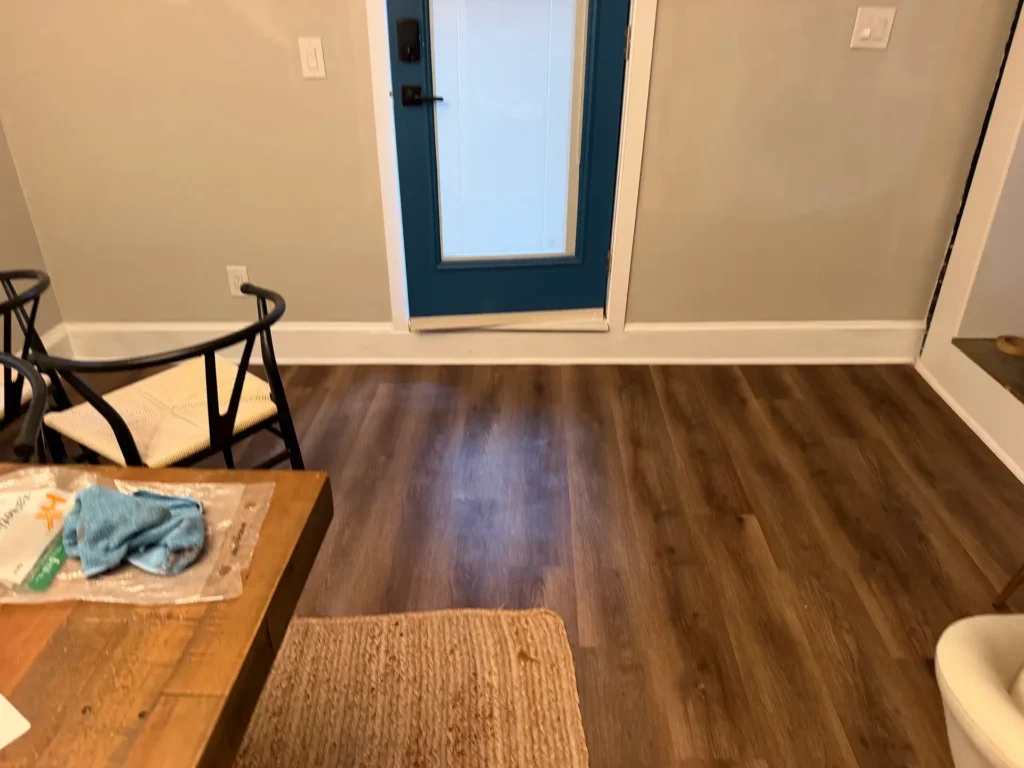
In a Decatur home, water damage showed up at an exterior door threshold and along the wall in two rooms. The repair involved replacing the affected flooring in both rooms, repairing damaged wall material, and carrying out mold mitigation on the affected wall area. The cupped baseboard and separated trim were visible signs of a problem that extended beyond the surface.
Written by Chris Kwangwari · Owner & Founder, Elevated Operations · IICRC-Certified Specialist
Related Questions People Ask Next
Why can a baseboard cup or pull away from a wall after water damage?
Moisture can be absorbed by wood trim and the material behind it, causing swelling or distortion. A change in the baseboard may be a clue to check the nearby wall and floor, not just replace the trim.
Why might water damage affect more than one room?
Water can move beneath flooring or along connected building materials. The visible wet area does not always show the full extent, so adjoining spaces should be assessed before repairs are limited to one room.
Should a damaged wall be rebuilt before mold mitigation?
No. If mold mitigation is needed, that work should happen before repairing and closing the wall. Covering an affected area without addressing it can leave a moisture problem concealed behind the finished surface.
Does homeowners insurance cover water damage repair?
Coverage depends on the cause of the loss and the policy. Sudden, accidental water damage may be covered, while gradual leaks, flooding, or sewer backup without applicable coverage may be excluded; the homeowner is generally responsible for the policy deductible.
What the damage actually was
The homeowner noticed water damage at an exterior door threshold and along a wall in two rooms. The baseboards and door trim near the exterior door had cupped and separated from the wall because of moisture. The affected flooring was removed and replaced, damaged wall material was repaired, and mold mitigation was completed on the affected wall area.
That sequence matters: trim damage, soft or changing floor surfaces, and wall damage are not always separate problems. They can be clues that water has affected several connected materials. A trim board can be the first obvious sign, even when moisture has also reached the flooring edge or wall behind it.
In this project, the flooring work extended to two rooms. A room’s doorway does not necessarily stop moisture from moving underneath the floor or along a shared wall. The repair scope followed the affected flooring and wall materials rather than treating only the most noticeable spot.

What visible damage may tell you
| Visible clue | What it may indicate | What to check next |
|---|---|---|
| Cupped baseboard | Moisture has affected trim or the area near the floor | Nearby wall surface, corners, and flooring edge |
| Trim separating from the wall | Material may have swollen or shifted | The wall behind the trim and the door threshold |
| Soft or changed flooring | Moisture may have reached flooring or material beneath it | Nearby rooms and the flooring perimeter |
| Damage at a threshold | Water is showing at a transition point | The door area, adjoining wall, and connected floor |
These signs do not identify the original source by themselves. They do help show why a surface-only repair can miss damage that needs attention first.
Find the water source before rebuilding
Replacing damaged boards or repainting a wall can make a room look better temporarily. But if the source of moisture is still active, the same materials, or new ones, can be damaged again. A lasting repair starts by investigating where water came from and how far it travelled.
For a homeowner, the first step is a careful visual check. Look for changes around exterior doors and thresholds, along baseboards, at wall corners, and where flooring meets the trim. Note any soft spots, lifting edges, staining, or musty odor. Avoid pulling up flooring or opening a wall yourself if the area may contain mold or concealed moisture.
A restoration inspection should consider more than what is visible. The ANSI/IICRC S500 water damage restoration standard provides professional guidance for assessing water damage and drying building materials. Moisture readings should be compared with appropriate dry reference materials, and the affected area should be mapped so the repair plan follows the actual moisture, not just the stain.
In this Decatur project, the documented facts establish where damage appeared and what repairs were completed; they do not establish a specific water source. That distinction matters. A threshold can be where damage becomes noticeable without proving that water entered through the door. The source should be identified through inspection rather than assumed.
For help assessing a loss in the area, see Elevated Operations’ Decatur restoration page or its service information for water damage restoration.
Why mold mitigation came before the rebuild
Mold mitigation was carried out on the affected wall area before the wall repair was completed. That order helps ensure the affected area is addressed before new finish material covers it.
The EPA explains that moisture control is central to mold prevention and advises drying wet materials within 24–48 hours where possible. Mold may be hidden behind drywall or beneath flooring, so a clean-looking surface does not necessarily confirm that the underlying area is dry or unaffected. If mold mitigation is needed, cleaning or removing the affected material and addressing the moisture condition should come before rebuilding.
For a homeowner, the practical rule is simple: don’t paint over a damaged wall or install new flooring until the area has been assessed and any required mitigation is complete. Elevated Operations’ mold remediation service covers the process for addressing affected areas.
The work completed in this Decatur home
The work addressed both the visible finishes and the affected wall area:
- Removed and replaced the affected flooring in two rooms.
- Repaired damaged wall material.
- Carried out mold mitigation on the affected wall area.
- Replaced the flooring so it now meets the repaired exterior door threshold.
- Addressed the baseboard and exterior-door trim that had cupped and separated from the wall.
The result is a continuous new floor surface leading to the repaired threshold, with the affected wall material repaired as part of the work. The homeowner later left a five-star Google review, highlighting the crew’s scheduling and professionalism.
What to photograph and save for an insurance claim
If water damage appears in your home, document what you can before moving or removing damaged materials, as long as it is safe to do so. Clear records can help your insurer understand where damage appeared and how the repair scope developed.
Take:
- One wide photo of each affected room to show the overall area.
- Close-ups of the threshold, baseboards, separated trim, wall damage, and flooring changes.
- Photos that show how the affected areas connect between rooms.
- Pictures of damaged materials during removal, if work is underway.
- Copies of inspection notes, moisture readings, written scopes, invoices, and any communication with your insurer.
Report the loss promptly and check your policy or contact your insurer about coverage and claim requirements. Sudden, accidental damage is often treated differently from gradual leakage; flood damage and sewer backup may require separate coverage or an endorsement. The homeowner typically pays the deductible, and coverage decisions depend on the specific policy and circumstances. Keep receipts and avoid discarding damaged materials before you understand what documentation your insurer requires.

Author
Chris Kwangwari is the owner and founder of Elevated Operations, serving residential and commercial property owners across Metro Atlanta. The company provides water damage restoration, mold mitigation, and reconstruction services.
Need water damage repair in Decatur?
Elevated Operations serves Decatur and communities across Metro Atlanta. For an inspection and guidance on next steps, call (770) 404-6895. Elevated Operations’ trust points include IICRC-certified technicians, an in-house Licensed General Contractor, direct insurance billing, a 12-month workmanship warranty, BBB A+ accreditation, and 5.0 stars from 70+ Google reviews.
View the Decatur restoration page · See areas served
Elevated Operations, LLLP · Mableton, GA · (770) 404-6895 · Serving Cobb, Fulton, DeKalb, Douglas, Clayton, Henry and Paulding counties.