
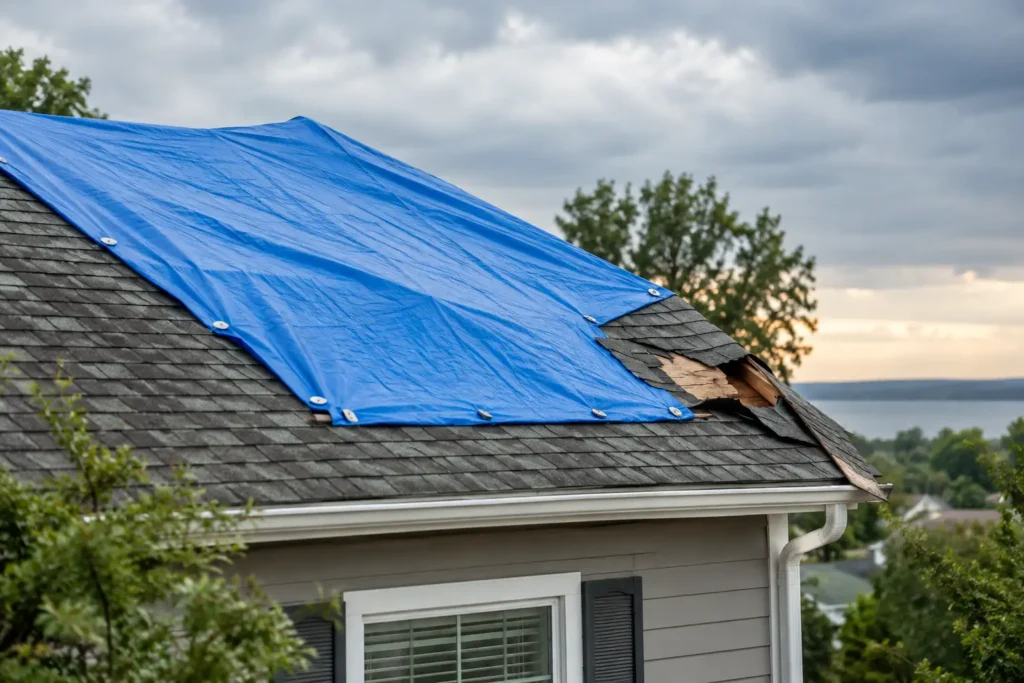
A roof can look mostly intact from the driveway and still leave your property exposed. The most serious signs Smyrna roofs need tarping often show up after a fast-moving thunderstorm, a fallen limb, or high winds that lift shingles just enough to let rain reach the decking, insulation, and ceilings below. A tarp is not a repair, but it can be the difference between a contained roof claim and extensive water damage throughout the building.
When the roof has been compromised, time matters. Rainwater does not stay in one place. It follows framing, collects in insulation, stains drywall, feeds mold growth, and can eventually affect electrical components. Emergency tarping creates a temporary weather barrier while the damage is documented, the insurance process begins, and permanent repairs are planned.
Signs Smyrna Roofs Need Tarping Right Away
The clearest reason to tarp a roof is visible damage that has created an opening. Missing shingles after strong wind, punctures from branches, displaced flashing, exposed roof decking, or holes caused by debris all demand prompt protection. Even a small opening can admit far more water than most property owners expect during the next Georgia downpour.
A tree limb resting on the roof is another urgent warning sign. The limb may have cracked shingles, damaged the underlayment, or punctured the structure beneath it. Do not assume the roof is safe because there is no immediate drip indoors. Water can travel through layers of roofing and attic materials before becoming visible in a room.
Interior symptoms matter just as much as exterior damage. A fresh ceiling stain, damp spot around a light fixture, bubbling paint, sagging drywall, or water dripping from an attic vent may mean the roof covering has failed. If the leak began after a storm, a temporary tarp may be needed before the next round of rain makes the problem larger.
You may also need tarping when wind has lifted shingles without fully tearing them off. Creased, curled, or flapping shingles can allow wind-driven rain beneath the roof surface. This is especially common along ridges, edges, valleys, and around penetrations such as vents, skylights, and chimneys. These areas handle a high volume of runoff, so minor-looking damage deserves a professional assessment.
Do Not Wait for a Major Ceiling Leak
One of the costliest mistakes after roof damage is waiting for obvious indoor flooding. By the time water is dripping into a living room or office, it may have already saturated insulation and traveled across multiple framing members. Wet materials do not always look dramatic at first, but moisture trapped behind drywall or above ceilings can create expensive secondary damage.
Pay attention to musty odors in the attic or upper floor, damp insulation, darkened roof decking, and unexplained humidity after a storm. These can indicate a slow intrusion rather than a catastrophic opening. A tarp may still be appropriate, depending on the location and extent of the damage, while a qualified team determines whether structural drying is also needed.
For commercial property managers, roof exposure can threaten more than the building envelope. Water can damage inventory, tenant spaces, ceiling grids, equipment, records, and electrical systems. In an occupied building, an emergency tarp can help protect operations while the source of the intrusion is addressed.
What Roof Tarping Can and Cannot Do
A professionally installed tarp is a temporary protective measure. It is designed to shed rain and reduce additional intrusion until permanent roofing repairs can be completed. Proper installation matters because a tarp that is loosely placed, poorly secured, or installed over debris can fail in high wind and cause further damage.
Tarping does not repair rotten decking, replace missing shingles, correct a failed flashing system, or reverse water damage that has already occurred. If water has entered the structure, the right response may also include moisture mapping, removal of wet materials, commercial drying equipment, and documentation for your insurance claim.
It also depends on conditions. If winds remain dangerous, lightning is active, or the roof is structurally unstable, no one should be climbing onto it. The priority is safety. A trained emergency response team can evaluate the property, identify immediate hazards, and determine the safest way to protect the opening.
When to Call for Emergency Help
Call for emergency tarping when a storm has caused a visible opening, when water is actively entering the property, or when debris has struck the roof. You should also call if shingles have blown away in a concentrated area, flashing has detached, or a ceiling begins to stain or sag shortly after severe weather.
If you can safely do so from the ground, take clear photos of the roofline, fallen branches, visible debris, and any interior water damage. Save screenshots of weather alerts and note when you first noticed the issue. This information can support an insurance claim and help restoration professionals understand the timeline of the loss.
Avoid climbing onto the roof, walking through a wet attic, or placing buckets near electrical fixtures. Move furniture, electronics, documents, and valuables away from the affected area if it is safe to do so. If water is near outlets, light fixtures, or a breaker panel, keep people clear and seek professional guidance immediately.
A Faster Response Limits the Damage
Roof damage rarely stays limited to the roof. A temporary opening can expose framing, insulation, drywall, flooring, and belongings to every additional rainfall. The sooner the property is secured, the more control you retain over the scope of repairs and the insurance claim.
Elevated Operations provides emergency board-up and tarping as part of a complete property recovery process for Smyrna-area owners. That means the work can move from initial protection to moisture inspection, cleanup, insurance coordination, and reconstruction without forcing you to manage separate vendors during a stressful loss.
A professional response should include more than covering a hole. Ask whether the damage will be photographed, whether interior moisture will be checked, how the tarp will be secured, and what happens if rain returns before permanent repairs are complete. Clear answers help prevent surprises later.
Protect the Property, Then Plan the Repair
After the roof is secured, the next step is determining what is damaged beneath the surface. Roofing materials may need replacement, but the interior may also need drying or repairs. Moisture meters and thermal imaging can help identify water that has traveled beyond the visible stain, reducing the risk of hidden damage being overlooked.
There is also a practical insurance reason to act quickly. Most policies expect property owners to take reasonable steps to prevent further loss after a covered event. Emergency tarping can demonstrate that you acted to protect the building while the claim is being evaluated. Keep copies of photos, invoices, estimates, and communication related to the emergency service.
A storm-damaged roof can feel like one more problem you cannot control. You can control the next move: protect the opening before the next rainstorm turns a manageable repair into a larger restoration project.