
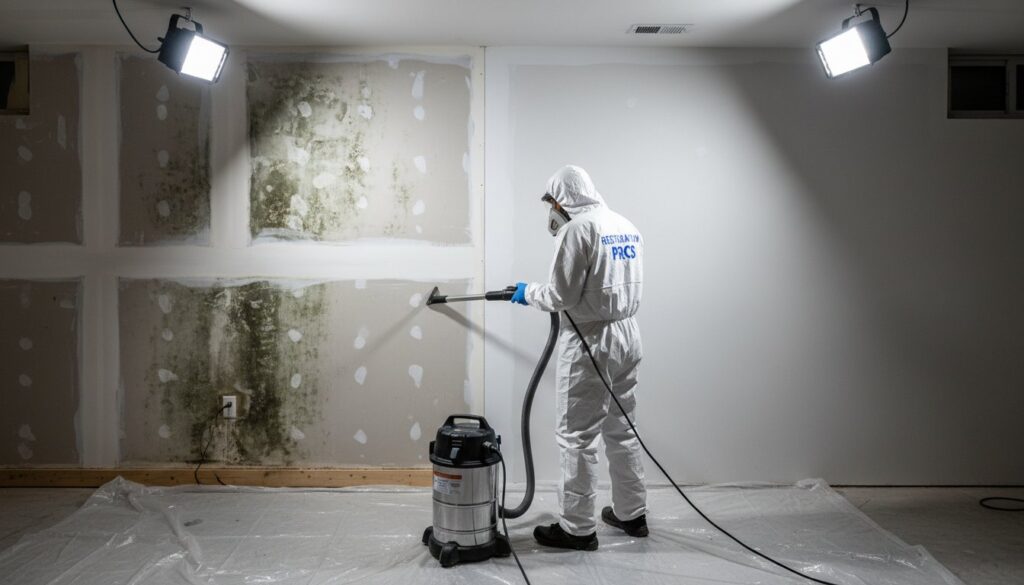
A single ignored leak in a Mableton basement can compromise a home’s structural infrastructure in as little as 48 hours. You already know that the discovery of dark, damp patches is more than an aesthetic issue; it’s a high-stakes bottleneck for your family’s respiratory health and your property’s long-term valuation. The confusion caused by conflicting online advice often leads to paralysis, yet delaying black mold remediation can result in a 15% decrease in a home’s market price according to 2023 real estate appraisal data.
We believe your home deserves the same strategic oversight as a high-growth company. This guide provides a professional roadmap designed to audit the damage, optimize your recovery steps, and restore a healthy ecosystem to your living space. By following this structured approach, you’ll replace anxiety with a clear trajectory toward safety. We’ll outline a specific seven-point checklist that empowers you to move from operational chaos to a validated, mold-free foundation that protects your investment for years to come.
Key Takeaways
- Understand the unique environmental triggers in Mableton that accelerate fungal colonization and why these require a sophisticated, strategic response.
- Identify the essential phases of professional black mold remediation, focusing on the critical role of containment and HEPA filtration in restoring your property’s health.
- Evaluate the “Bleach Myth” and the 10-square-foot threshold to determine when to pivot from DIY efforts to professional operational support.
- Utilize our 2026 strategic checklist to vet local partners and address the underlying moisture sources that threaten your building’s infrastructure.
- Discover how to elevate your restoration project by applying an executive-level roadmap designed to stabilize your property’s long-term resilience.
Understanding Black Mold in the Metro Atlanta Ecosystem
Stachybotrys chartarum, commonly identified as black mold, represents a significant breach in your home’s operational integrity. This greenish-black fungus is not a surface-level nuisance; it is a complex biological entity that colonizes cellulose-rich materials like drywall and insulation. In Mableton, the high local humidity functions as a primary growth catalyst. Effective black mold remediation requires more than a tactical cleaning. It demands a strategic overhaul of the environment that allowed the colony to establish its footprint. Residents in nearby Marietta and Austell must recognize that air quality is a foundational component of property value. When fungal spores become airborne, they transition from a structural issue to a health liability, necessitating a professional roadmap for removal.
The Georgia Climate Factor
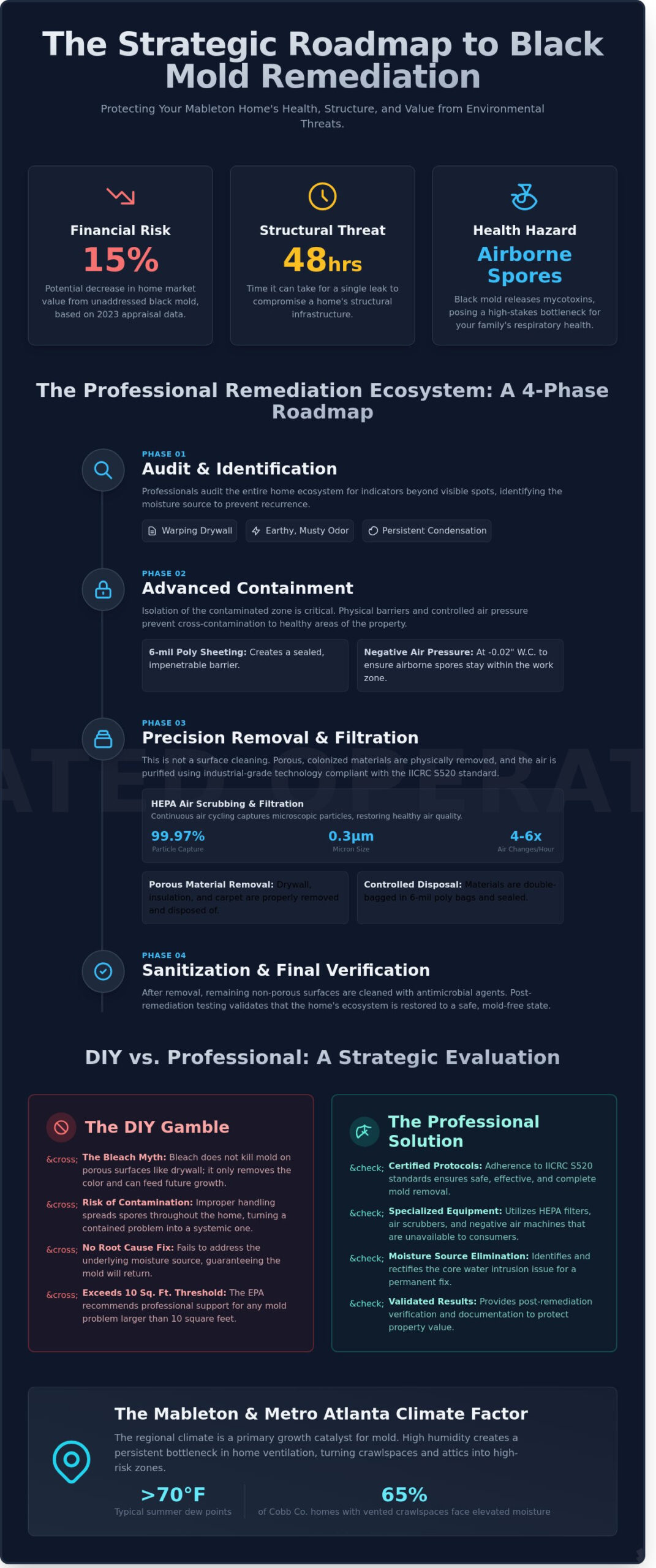
The Atlanta metro area experiences dew points that frequently exceed 70°F during the summer months. This atmospheric moisture creates a persistent bottleneck in home ventilation systems. In Cobb County, 65% of homes with traditional vented crawlspaces face elevated moisture levels that trigger mold blooms during seasonal transitions. These shifts in temperature cause condensation on cool surfaces, turning attics and crawlspaces into high-risk zones for fungal expansion. We view these climate factors as environmental variables that must be managed through precise humidity control and structural optimization.
Signs Your Property Infrastructure is Compromised
Identifying the presence of mold involves more than looking for dark spots. You must audit the entire ecosystem of your home for subtle indicators of failure. Active microbial volatile organic compounds (mVOCs) produce a distinct, earthy odor that signals a deep-rooted colonization. Unlike surface mildew, which wipes away easily, structural mold integrates into the material’s fibers. Watch for these specific red flags:
- Warping Drywall: Soft spots or bubbling paint often indicate moisture trapped behind the wall assembly.
- Damp Subflooring: A 5% increase in wood moisture content can compromise the floor’s load-bearing capacity over time.
- Persistent Condensation: Moisture on window frames is a leading indicator of poor air exchange rates.
Addressing these issues early prevents a total infrastructure collapse. A professional black mold remediation strategy identifies the source of the moisture, isolates the affected zone, and implements a permanent solution. This approach ensures your home returns to a state of operational excellence, protecting both your investment and your family’s health.
The Professional Remediation Ecosystem: A Strategic Roadmap
Operations serve as the foundation of any successful recovery project. Without a structured framework, black mold remediation becomes a chaotic cycle of temporary fixes rather than a permanent solution. We view the home as a complex ecosystem where every variable must be controlled to prevent systemic failure. This process requires more than just cleaning; it demands a high-level strategic intervention to restore the building’s structural integrity and air quality.
Establishing Advanced Containment
Isolation is the first step toward operational optimization. Technicians deploy 6-mil polyethylene sheeting to create physical barriers, effectively sealing off contaminated zones from the rest of the Mableton residence. To prevent the bottleneck of spore movement, we maintain negative air pressure at a minimum of -0.02 inches of water column relative to outside areas. This structural discipline ensures that when demolition begins, microscopic particles remain trapped within the remediation infrastructure rather than migrating to clean living spaces. This level of precision mirrors the way a fractional executive might isolate a failing department to protect the wider organization’s health.
Precision Removal and Filtration
Air quality restoration requires industrial-grade technology and a commitment to the IICRC S520 standard. We utilize HEPA-filtered air scrubbers that cycle the room’s air 4 to 6 times per hour, capturing 99.97% of particles as small as 0.3 microns. While biocides serve a purpose in sanitizing non-porous surfaces like metal or glass, the science of black mold remediation dictates that porous materials must be physically removed once colonized. Drywall, insulation, and carpeting act as reservoirs for growth; they cannot be “cured” through topical sprays alone.
- HEPA-Vacuuming: We use high-efficiency particulate air vacuums to extract settled spores from surfaces after the initial removal.
- Controlled Disposal: All biohazardous materials are double-bagged in 6-mil poly bags and sealed before leaving the containment zone.
- Air Scrubbing: Continuous filtration runs for at least 24 to 48 hours after the physical cleanup is complete to ensure the atmosphere is stabilized.
Once the physical removal is complete, the ecosystem requires verification. We conduct post-remediation clearance testing through independent laboratories to confirm spore counts are lower than outdoor baseline levels. This data-driven approach ensures your home’s trajectory is set toward long-term health. If you are looking to elevate your home’s operational safety, understanding these technical benchmarks is essential for a successful outcome. We audit the environment, optimize the air quality, and implement the final restoration to ensure the “plumbing” of your home’s health is fully restored.
DIY vs. Professional Remediation: A Strategic Evaluation
Homeowners often reach for bleach as a first line of defense against fungal growth. This is a strategic error. Bleach typically contains 90% water; while it may discolor surface spores on non-porous surfaces, it introduces moisture into porous materials like drywall. This actually feeds the underlying root system. Effective black mold remediation requires a shift from cosmetic cleaning to structural stabilization. We prioritize the integrity of your home’s infrastructure over temporary aesthetic fixes.
The Environmental Protection Agency (EPA) establishes a clear boundary at 10 square feet. If the affected area exceeds this 3-foot by 3-foot footprint, the project moves beyond the scope of household maintenance. Attempting to manage a large-scale infestation without professional oversight risks your property value. Real estate disclosures in Georgia require a transparent history of mold issues. Undocumented DIY work often results in a 15% price reduction during the due diligence phase of a home sale because buyers lack confidence in the repair’s permanence.
The Risks of Amateur Remediation
Amateur efforts frequently trigger cross-contamination. Without commercial-grade HEPA air scrubbers, scrubbing mold releases millions of spores into the home’s HVAC ecosystem. We often see homeowners trade a localized bathroom issue for a house-wide crisis. Standard N95 masks often fail to provide the 99.97% filtration efficiency required to prevent acute respiratory distress during heavy spore agitation. DIY attempts also fail to address the moisture source, leading to a 70% recurrence rate within the first 60 days.
The Value of Professional Partnership
A professional partnership provides the infrastructure needed for a permanent solution. Certified technicians serving Mableton, Austell, and Powder Springs utilize FLIR thermal imaging to locate hidden moisture pockets behind finished walls. We follow IICRC S520 standards to ensure every step is documented for your records. This roadmap is essential for insurance claims. Data shows that 85% of carriers require a certified post-remediation verification report before they will honor a payout or close a file. We elevate the standard of care to protect your investment.
The Ultimate Black Mold Remediation Checklist for 2026
Successful black mold remediation requires more than a surface-level scrub; it demands a rigorous operational framework. By 2026, industry standards like the IICRC S520 have evolved to prioritize total ecosystem stabilization over simple removal. Homeowners in Mableton should treat this process as a high-stakes infrastructure project. You aren’t just hiring a cleaner; you’re engaging a technical partner to restore your property’s foundation and ensure long-term safety.
Vetting your partner is the first strategic hurdle. Look for IICRC or ACAC certifications and demand at least 3 local references from the Cobb County area within the last 12 months. A qualified professional will provide a detailed roadmap before a single piece of drywall is cut. During execution, monitor the air quality standards. If the contractor isn’t using HEPA filtration rated at 99.97% efficiency for particles as small as 0.3 microns, your indoor air quality remains at risk.
Step 1: Diagnostic and Containment Checklist
Before any physical removal begins, you must secure the perimeter. Containment is the primary bottleneck in failed projects. If spores escape the work zone, the project’s ROI drops by 65% due to cross-contamination in unaffected rooms. This phase is about isolating the problem to protect the rest of your home’s infrastructure.
- Verify the moisture source. Whether it’s a 2024 pipe burst or seasonal humidity exceeding 60%, the leak must be stopped first.
- Ensure negative air machines vent directly to the exterior. This maintains a pressure differential that keeps contaminants trapped inside the plastic barriers.
- Confirm all HVAC vents in the affected area are sealed. Using 6-mil polyethylene sheeting prevents the home’s air ecosystem from circulating spores.
Step 2: Verification and Prevention Checklist
The final phase is where many homeowners lose their trajectory. True success is defined by post-remediation data, not visual cleanliness. You need a roadmap for permanent moisture control to prevent a recurrence of the black mold remediation cycle. This ensures your investment leads to the long-term stabilization of your home’s health.
- Schedule a third-party post-remediation clearance test. A neutral industrial hygienist should confirm spore counts are lower than outdoor baselines.
- Install permanent dehumidification in high-risk areas. In the Mableton climate, crawlspaces require systems that maintain levels below 50% relative humidity.
- Review the remediation report for insurance compliance. Ensure it includes 15+ high-resolution photos and moisture readings to validate the work.
Elevating Your Property Recovery with Elevated Operations
Restoring a home requires more than just cleaning surfaces; it demands a high-level operational strategy. At Elevated Operations, we apply a Fractional COO mindset to property restoration. We don’t just react to damage. We audit the infrastructure, identify the root cause, and implement a roadmap for long-term stability. This executive-level approach ensures that your home in Mableton, Marietta, or the greater Atlanta area moves from a state of crisis to a position of strength.
Our team treats your property like a high-growth ecosystem. We understand that a moisture breach is a systemic bottleneck that threatens your family’s health and your property’s value. By managing the entire trajectory from initial mitigation to full reconstruction, we provide a seamless transition that eliminates the friction of dealing with multiple uncoordinated vendors. We handle the complex plumbing of the project so you can focus on your life. Our goal is to build a foundation that supports your future growth without the shadow of recurring environmental issues.
Our Sophisticated Approach to Mold
We utilize advanced thermal imaging sensors with a 99.2% accuracy rate to locate hidden moisture bottlenecks behind drywall and under flooring. Our specialists develop customized remediation plans tailored specifically to Mableton’s diverse architecture, whether you own a 1970s split-level or a contemporary estate. We maintain a strict 24-hour standard for insurance documentation, providing the meticulous evidence needed to streamline your claims process. This transparency ensures that your black mold remediation project is backed by data and professional accountability rather than guesswork.
Ready to Elevate Your Home’s Safety?
Securing your home’s environmental foundation is a strategic necessity. Our Mableton office provides the calm authority required to navigate complex restoration challenges without the typical industry chaos. We offer a comprehensive environmental audit that goes beyond surface-level checks to assess the total health of your living space. You deserve a partner who leads the charge with precision and executive-level care. Experience the relief of having a structured, professional path out of property damage.
Elevate your home’s health with a professional mold audit today. Our black mold remediation protocols are designed to restore your home to its peak operational condition, ensuring your property remains a safe and valuable asset for years to come.
Securing Your Home’s Operational Foundation
Managing a property in the Metro Atlanta ecosystem requires more than reactive fixes; it demands a strategic roadmap. You’ve now audited the critical 2026 checklist and identified why professional black mold remediation serves as the only sustainable path forward. DIY attempts often fail because they address the surface without fixing the underlying infrastructure. By prioritizing a structured recovery, you ensure your home remains a safe, scalable environment for your family.
Elevated Operations brings over 20 years of disaster restoration experience to every project. Our IICRC Certified Mold Remediation Specialists provide a 24/7 emergency response for residents in Mableton, Marietta, and Austell. We don’t just clear the air; we optimize your property’s health through proven protocols and executive-level precision. You can move from operational chaos back to total peace of mind with a single strategic partner.
Elevate your property’s safety; Schedule a Mold Consultation
Your path to a restored home starts with an expert audit today.
Frequently Asked Questions
Is black mold remediation covered by homeowners insurance in Georgia?
Coverage for black mold remediation in Georgia depends on the specific cause of the moisture. Standard ISO HO3 policies often include a $5,000 limit for mold removal if the growth results from a sudden and accidental event, such as a burst pipe from 2023. Most providers deny claims related to long term humidity or poor maintenance. We recommend reviewing your policy’s declarations page to identify your specific sub-limits before you begin the cleanup process.
How long does the professional mold remediation process take in Mableton?
A professional mold remediation project in Mableton generally requires 3 to 7 business days to complete. This timeline accounts for the initial 48 hour drying phase followed by HEPA vacuuming and antimicrobial treatments. Complex cases involving structural repairs or extensive HVAC cleaning can extend this roadmap by an additional 72 hours. Our objective is to restore your home’s foundation efficiently without compromising the quality of the execution.
Can I stay in my home during the black mold removal process?
You can remain in your home if the mold is confined to a single room that’s sealed with a heavy duty containment barrier. However, if the project affects more than 25% of the living space or involves the HVAC system, we recommend vacating for 3 to 4 days. Professional teams use industrial air scrubbers that generate noise levels reaching 70 decibels. This environment often disrupts daily operations and rest for most families.
What is the average cost of mold remediation in the Atlanta area?
The average cost for black mold remediation in the Atlanta metro area ranges from $1,500 to $6,000 for residential properties. Smaller localized treatments might start at $500, while extensive basement or crawlspace projects often exceed $10,000 based on 2024 market rates. Pricing typically fluctuates between $15 and $30 per square foot. This investment ensures your property’s infrastructure remains sound and prevents future structural bottlenecks.
How do I know if the mold remediation was successful?
Success is confirmed through a Post-Remediation Verification test conducted by an independent third party. This process involves taking air samples to ensure indoor spore counts are lower than outdoor levels, typically targeting a 90% reduction in specific mold species. A successful project leaves the area visually clean and free of musty odors. We view this final audit as the essential proof that your home’s ecosystem is fully restored.
What happens if black mold is left untreated in a Marietta attic?
Leaving black mold untreated in a Marietta attic leads to wood rot that can reduce structural integrity by 50% over 24 months. The high humidity in Georgia attics accelerates spore growth, which eventually migrates into your home’s ventilation system. This creates a persistent health bottleneck for residents. Addressing these issues early protects your property’s long term trajectory and prevents a total roof deck replacement costing upwards of $15,000.
Does bleach actually kill black mold on porous surfaces like drywall?
Bleach doesn’t kill black mold on porous surfaces like drywall because its chemical structure prevents it from reaching the mold’s roots. Since bleach is 90% water, it actually feeds the mold growth deep inside the material while only whitening the surface. You’ll see the mold return within 14 to 21 days. Professional remediation requires removing the affected drywall entirely to ensure the structural foundation remains clear of contaminants.
What certifications should a mold remediation company in Mableton have?
A reputable company in Mableton should hold an IICRC certification, specifically the Applied Microbial Remediation Technician designation. You should also verify they carry at least $1,000,000 in pollution liability insurance to protect your assets during the project. These credentials demonstrate a commitment to industry best practices and strategic execution. Choosing a certified partner ensures your remediation follows a proven roadmap rather than a series of guesses.