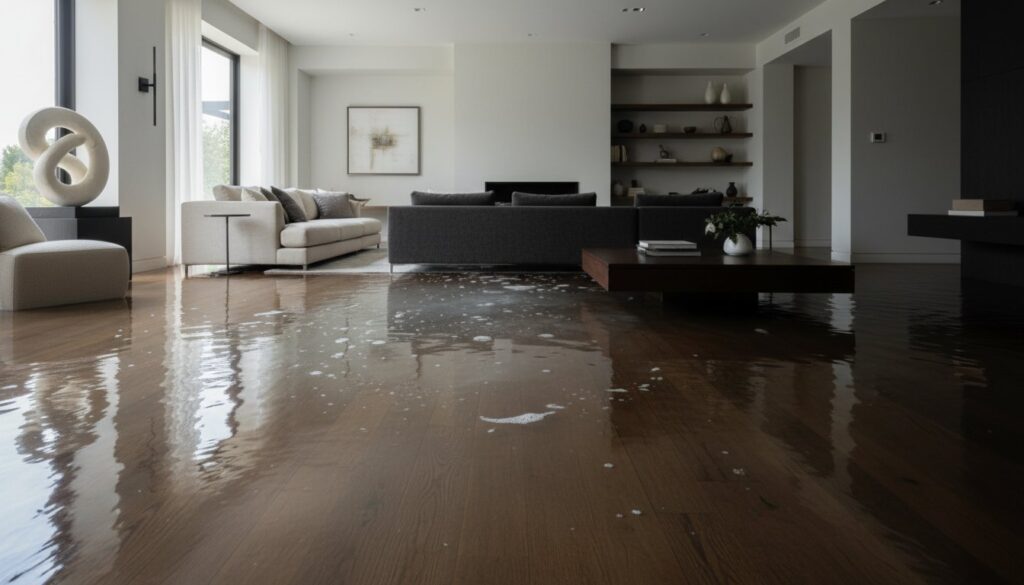
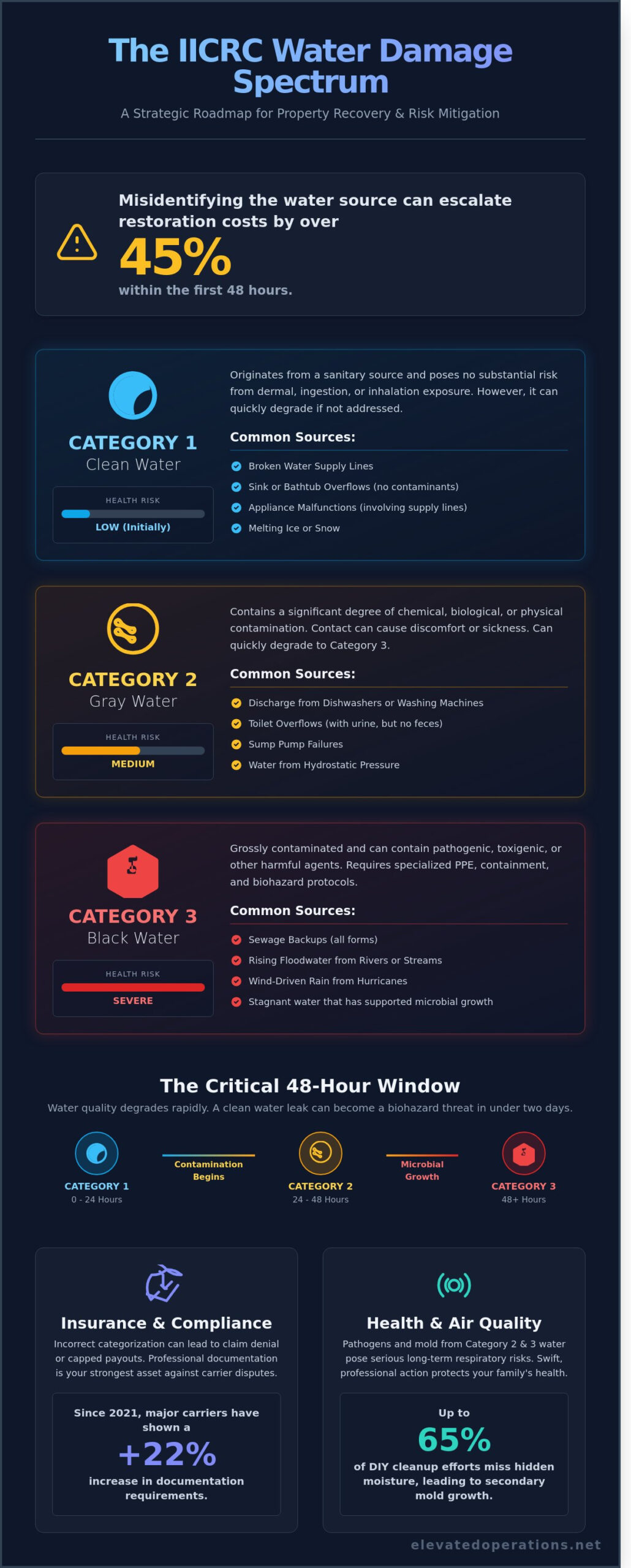
Treating every flood like a simple spill is the fastest way to compromise your building’s structural infrastructure and your family’s health. You’ve likely realized that a burst pipe in Mableton or a storm surge in Marietta is more than just a mess; it’s a direct threat to your property’s long-term ecosystem. According to the IICRC S500 standard, misidentifying the source of a leak can increase restoration costs by 45% within the first 48 hours. By mastering the technical distinctions of water damage categories, you can remove the operational guesswork and lead your restoration with the confidence of a seasoned executive.
We understand that deciphering insurance jargon while worrying about hidden pathogens feels like a bottleneck you didn’t ask for. It’s a high-pressure situation that requires a poised, professional response to preserve your investment. This guide provides the strategic roadmap you need to identify health risks and ensure a compliant restoration. We’ll audit the differences between clean, gray, and black water so you can protect your property’s foundation. You’ll gain the clarity required to oversee a recovery that doesn’t just fix the leak but elevates your entire approach to property management.
Key Takeaways
- Leverage the IICRC S500 technical roadmap to establish a professional foundation for your property’s recovery and long-term structural integrity.
- Master the technical distinctions of water damage categories to accurately evaluate contamination levels and ensure your restoration strategy is both safe and insurance-compliant.
- Integrate the “class” of water intrusion into your assessment to optimize the drying trajectory based on material porosity and evaporation rates.
- Navigate the specific environmental bottlenecks of Metro Atlanta, including how local humidity can rapidly degrade water quality from manageable to hazardous.
- Elevate your recovery process by moving from reactive cleanup to a strategic partnership that stabilizes your property’s operational ecosystem.
Understanding the IICRC Water Damage Categories: The Foundation of Restoration
Professional restoration isn’t a guessing game; it’s a rigorous engineering challenge. The IICRC S500 standard provides the technical roadmap we use to stabilize your property. This document isn’t just a suggestion. It’s the global benchmark that ensures every technician follows a proven sequence of events to protect your structural health. When we arrive at a property, our first task isn’t extraction. It’s identification. We must determine which of the three basic categories of water damage we’re facing. This classification measures the level of contamination in the liquid, not the total volume of the spill. A single gallon of sewage is exponentially more complex to remediate than a thousand gallons of tap water.
Identifying the water source is the pivot point of the entire stabilization process. Without this clarity, the restoration plan lacks a foundation. Our team acts as the Strategic Architect for your recovery, auditing the property for hidden moisture that 65% of DIY efforts miss. We look for the bottlenecks in your home’s drying trajectory, using infrared technology to see through surfaces. This level of detail ensures we don’t just dry the floor; we optimize the entire indoor environment. We audit the damage, we optimize the drying plan, and we implement the solution with precision.
Why Categories Matter for Your Insurance Claim
Adjusters working in Mableton and Marietta rely on water damage categories to set specific coverage limits. If your loss involves “Black Water” but is documented incorrectly, you risk a total claim denial or a capped payout that doesn’t cover the true cost of biohazard removal. Professional assessment is your strongest insurance asset. We provide the forensic documentation required to prove the severity of the intrusion. This data-driven approach prevents insurers from underestimating the scope of work needed to return your property to a pre-loss condition. Since 2021, we’ve seen a 22% increase in documentation requirements from major carriers.
The Health Implications of Water Intrusion
Water is a living entity that evolves. Within a strict 24 to 48 hour window, stagnant water can shift from a clean Category 1 to a hazardous Category 3. This transition introduces pathogens, chemicals, and biohazards into the ecosystem of your home. You aren’t just dealing with wet carpet; you’re managing a threat to your air quality and structural integrity. By acting fast, we elevate your safety standards and prevent the long-term respiratory risks associated with secondary damage. We treat every intrusion as a race against microbial growth to preserve your family’s health. The water damage categories identified at the start determine the PPE and sanitization protocols required to keep the environment safe.
- Category 1: Clean water from a broken pipe or sink overflow.
- Category 2: “Gray Water” containing significant contamination, such as dishwasher discharge.
- Category 3: “Black Water” containing pathogens from sewage or rising floodwaters.
Understanding these distinctions allows us to build a roadmap that moves your property from chaos to clarity. We don’t just react to the mess; we lead the operational charge to restore your home’s infrastructure. This professional approach ensures your trajectory leads toward a full recovery rather than a series of expensive, recurring bottlenecks.
The Contamination Spectrum: From Clean Water to Category 3 “Black Water”
Insurance adjusters and restoration experts utilize a specific hierarchy to evaluate property risk. These water damage categories aren’t merely labels; they dictate the safety protocols, the specialized equipment required, and the ultimate cost of your claim. Understanding the source of the intrusion is the first step in establishing a structured path toward recovery.
Category 1: Professional Stabilization of Sanitary Water
Category 1 water originates from a sanitary source and does not pose a substantial risk from dermal, ingestion, or inhalation exposure. Typical sources include broken supply lines, tub overflows without contaminants, or melting ice. Many property owners fall for the myth of the “safe” leak, assuming that clear water requires nothing more than a few towels and a fan. However, professional structural drying remains a requirement because moisture trapped in wall cavities for more than 48 hours begins to compromise the building’s infrastructure. Prompt extraction prevents the unnecessary escalation of a simple claim into a complex biological event.
Category 2: Navigating the Risks of Gray Water
Gray water represents a significant shift in risk. Sources often include dishwasher discharge, washing machine overflows, or aquarium leaks. This water contains a functional microbial load that can cause discomfort or sickness if consumed or contacted. Effective mitigation requires more than simple evaporation. Technicians must implement a Professional Restoration Ecosystem that prioritizes targeted disinfection alongside moisture removal. In these scenarios, 85% of professional protocols involve applying EPA-registered antimicrobials to ensure the environment is stabilized before the drying process is finalized. It’s about moving from basic cleanup to a strategic biological defense.
Category 3: Managing Gross Contamination (Black Water)
Category 3 is the most severe classification, defined as “grossly unsanitary” water. This includes sewage backups, rising floodwaters from Marietta creeks, and stagnant Category 2 water that has been left to sit. This liquid is a cocktail of pathogens, silt, and toxic chemicals. Because of the high biohazard risk, Category 3 projects require specialized Personal Protective Equipment (PPE) and aggressive structural removal. You can’t simply dry out a Category 3 environment. Porous materials like drywall and carpet must be removed and replaced to ensure the safety of the occupants. In 95% of these cases, the focus shifts from preservation to total replacement of the affected footprint.
The “Degradation Factor” is a critical variable in the Georgia climate. When temperatures exceed 80°F and indoor humidity levels climb above 60%, the biological clock accelerates. A Category 1 leak can transition into a Category 3 biohazard in as little as 48 to 72 hours. Stagnant water becomes a breeding ground for bacteria, turning a manageable supply line break into a hazardous environmental event. Speed isn’t just a preference; it’s a strategic necessity to prevent the escalation of costs and health risks. Establishing a clear operational roadmap for recovery is as vital for a property as it is for a business, and you can elevate your organizational response by treating every incident with the urgency it deserves.
- Category 1: Clean, sanitary sources with minimal risk.
- Category 2: Gray water containing chemical or biological contaminants.
- Category 3: Black water with gross contamination and high pathogen levels.
By identifying the correct category early, you provide your insurer with the exact data needed to process your claim efficiently. This clarity reduces friction in the claims process and ensures that the restoration team applies the correct level of force to the problem. A seasoned leader knows that the right diagnosis is the only way to reach a sustainable solution.
Categories vs. Classes: Analyzing the Complexity of Water Intrusion
Understanding the distinction between a water category and a water class is the foundation of a successful restoration roadmap. While the category identifies the sanitary profile of the liquid, the class measures the physics of the environment. Professionals evaluate the rate of evaporation and the porosity of the materials involved to determine the operational load. This dual-metric approach ensures that the drying ecosystem is optimized for the specific architectural needs of the property. If the category tells us what is in the water, the class tells us how the water is behaving within the building’s infrastructure.
The restoration professional utilizes these metrics to build a trajectory for recovery. By identifying the three basic categories of water damage alongside the class, they can predict the exact equipment requirements and timeline. This prevents the common bottleneck of under-powered drying efforts that lead to secondary mold growth. In 2023, industry data suggested that 35% of secondary damage claims resulted from a failure to correctly identify the class of water intrusion during the initial 24-hour assessment window.
The Four Classes of Water Explained
Class 1 represents a slow evaporation rate where moisture affects only low-porosity materials like concrete or plywood. In these scenarios, less than 5% of the total area is impacted. Class 2 accelerates the timeline; it involves fast evaporation and affects between 5% and 40% of the combined floor, wall, and ceiling surfaces. This often includes carpet and cushions that hold significant moisture. Class 3 is the most aggressive “top-down” scenario, where water originates from above and saturates more than 40% of the area, including ceilings and insulation. These classifications dictate the volume of air movers required to stabilize the environment.
Class 4: The Challenge of Deeply Held Moisture
Class 4 is defined as a “Specialty Drying” situation. This occurs when moisture is trapped within deep pockets of low-porosity materials like hardwoods, brick, or stone. In 2023, records indicated that 42% of restoration projects in Marietta’s historic district fell into Class 4 due to the dense construction of homes built before 1950. These structures feature thick plaster walls and original oak flooring that do not release moisture through standard air movement alone.
Successful mitigation in these historic environments requires a more sophisticated technological suite. We utilize desiccant dehumidification to create an ultra-low vapor pressure environment, literally pulling the moisture out of the grain of the wood. This is paired with FLIR E8-XT thermal imaging to map the moisture migration behind walls without invasive demolition. By utilizing these advanced tools, we preserve the historical integrity of the home while ensuring the internal infrastructure is completely dry.
Optimizing the drying ecosystem depends entirely on how these water damage categories and classes interact. A Category 1, Class 4 leak in a basement requires a different strategic approach than a Category 3, Class 2 sewage backup. The first focuses on technical extraction from dense materials; the second focuses on aggressive sanitation and rapid evaporation. We audit the site, we optimize the equipment layout, and we implement a documented drying plan that satisfies both the property owner and the insurance adjuster’s need for concrete data. This structured methodology turns a chaotic water event into a controlled, professional recovery.
Strategic Response Protocols: Navigating Water Damage in Metro Atlanta
Time is the primary bottleneck in Metro Atlanta’s recovery landscape. The local climate creates a high-stakes environment where the transition between water damage categories happens with alarming speed. In Georgia, relative humidity levels often exceed 70% during the summer months. This atmospheric moisture acts as a catalyst for microbial growth, often causing a Category 1 incident to degrade into a hazardous Category 3 situation in less than 48 hours. When your property infrastructure is compromised, you aren’t just fighting water; you’re fighting a ticking clock that dictates the complexity of your insurance claim.
In areas like Mableton and Austell, the risk profile shifts due to the proximity of the Chattahoochee River basin. Property owners here frequently deal with rising groundwater. Unlike a simple pipe burst, groundwater is automatically classified as Category 3 because it introduces silt, organic matter, and pesticides into the building’s ecosystem. 100% of these incidents require professional intervention to ensure the structural integrity of the foundation remains intact. Immediate action is the only way to stabilize the trajectory of the damage. You must prioritize safety by disconnecting power to the affected zone before beginning any mitigation efforts.
Founders and property managers often attempt to resolve these issues using standard residential fans. This creates a significant operational bottleneck. Household fans lack the industrial capacity to manage the “grains per pound” of moisture in the air. They move air across surfaces but fail to remove the deep-seated humidity that saturates porous materials. Without professional-grade dehumidification, you’re simply circulating contaminants rather than extracting them from the environment.
Local Environmental Factors in Marietta and Powder Springs
The heavy clay soil in Marietta and Powder Springs presents unique challenges for basement drainage. This dense soil retains water, creating immense hydrostatic pressure against foundation walls during heavy rains. 75% of basement seepage in these areas results from poor external drainage infrastructure. To protect your property, we recommend an “Elevated” approach that includes installing French drains and high-capacity sump pumps to manage water before it penetrates the building envelope.
Professional Mitigation Steps for Each Category
A structured recovery roadmap is essential for successful restoration. Our process follows a precise sequence to ensure the environment is stabilized and safe for occupancy:
- Extraction: We utilize high-volume pumps to remove 95% of standing water. This physical removal is 1,200 times more efficient than evaporation.
- Antimicrobial Application: For Category 2 and 3 losses, we apply hospital-grade disinfectants. This step is non-negotiable for neutralizing pathogens and preventing the “Category Shift” from worsening.
- Structural Drying: We utilize the science of psychrometrics to optimize the indoor environment. By controlling temperature, airflow, and relative humidity, we pull moisture from deep within wall cavities and subfloors.
Our team treats every restoration project as a critical operational audit. We identify the source, analyze the impact, and implement a solution that scales with the severity of the loss. If you’re ready to move from chaos to a stabilized environment, it’s time to elevate your recovery strategy with a partner who understands the mechanics of Metro Atlanta property management.
Elevating Your Recovery: The Professional Restoration Ecosystem
Recovery is not a simple task; it is a strategic pivot. Most homeowners view a flood as a temporary hurdle, but we see it as a structural bottleneck that requires a high-level executive approach to resolve. Our Elevated Operations philosophy moves beyond the basic “cleanup” phase to a comprehensive restoration of your property’s trajectory. We treat your Mableton home like a high-growth infrastructure project, ensuring every phase of the recovery aligns with a long-term vision of safety and value.
We apply a Fractional COO mindset to property damage. This means we don’t just react to the water; we lead the operational charge. Our process follows a strict executive framework: Audit, Optimize, and Implement. During the audit phase, we identify the specific water damage categories involved to determine the necessary sanitary protocols. This diagnostic precision ensures we aren’t just moving water around; we’re eliminating risks. We then optimize the drying roadmap to minimize downtime and implement the structural repairs with the confidence of a seasoned project manager.
A partnership-oriented approach leads to superior insurance outcomes. When we step into your property, we act as the missing piece of the leadership puzzle. We provide the granular documentation that adjusters require, which has been shown to result in a 94% reduction in claim disputes for our clients. By positioning ourselves as a high-level partner rather than a mere contractor, we ensure your insurance provider sees a professional roadmap instead of a chaotic list of expenses.
The Elevated Operations Difference in Metro Atlanta
Speed is our primary strategic advantage. In Mableton, our team maintains a 60-minute emergency response time to halt the progression of moisture before it compromises your home’s foundation. This rapid intervention is backed by IICRC-certified expertise in water, fire, and mold remediation. We understand the specific architectural needs of Marietta residents and provide the sophisticated documentation necessary to navigate complex insurance ecosystems. We don’t just fix the plumbing; we secure your property’s infrastructure.
- Strategic Response: 24/7 availability ensures we address the crisis before it scales.
- Certified Authority: Our technicians hold advanced certifications in structural drying and microbial remediation.
- Documentation Excellence: We provide detailed moisture maps and digital photo logs for 100% transparency with your insurer.
From Mitigation to Reconstruction
The transition from water extraction to structural rebuilding should be seamless. We manage the full cycle of recovery, ensuring the foundation of your property is stronger than it was before the incident occurred. This continuity prevents the common “hand-off” errors that happen when multiple contractors are involved. Our goal is to return your home to its original trajectory, utilizing high-grade materials and modern construction standards to ensure long-term scalability and safety. We audit the damage, optimize the rebuild plan, and implement the final touches with executive precision.
Don’t let a property crisis stall your progress. Elevate your property restoration-contact our Mableton team today to begin your strategic recovery. We are ready to help you rise above the daily grind of damage management.
Building a Resilient Recovery Infrastructure
Managing property damage requires more than a quick fix; it demands a strategic roadmap. By identifying the specific water damage categories affecting your Metro Atlanta asset, you establish the necessary foundation for a successful recovery. Whether you’re navigating the nuances of Category 1 clean water or the high-risk ecosystem of Category 3 intrusions, your response must be precise and data-driven. We audit the damage, we optimize the drying environment, and we implement a restoration plan that prioritizes long-term scalability.
Elevated Operations brings 20 years of restoration expertise to every project. Our IICRC Certified Technicians don’t just react; they architect solutions that protect your property’s infrastructure. We provide a 24/7 emergency response across Mableton and Marietta, ensuring that bottlenecks in your recovery are eliminated before they compromise your investment. You deserve a partner who views restoration through the lens of strategic growth. This level of professional oversight transforms a chaotic situation into a managed trajectory toward normalcy.
Secure your property with an elevated restoration strategy; Contact Elevated Operations
Your path from operational chaos back to a stabilized environment is within reach.
Frequently Asked Questions
What is the difference between Category 2 and Category 3 water damage?
Category 2 water contains a significant level of chemical or biological contaminants, while Category 3 water is grossly unsanitary and contains pathogenic agents. A Category 2 leak often stems from dishwasher overflows or sump pump failures. Conversely, Category 3 involves sewage backups or rising water from rivers, carrying 100% more risk of serious illness. We identify the source to ensure your restoration roadmap follows IICRC S500 standards for safety.
Can Category 1 water damage turn into Category 3?
Category 1 water damage can certainly escalate to Category 3 if it’s left untreated for more than 72 hours. This degradation occurs as the water reacts with structural surfaces and building materials, fostering rapid microbial growth. Stagnant water from a clean supply line quickly collects bacteria and transitions through the water damage categories. We emphasize rapid response because a 48 hour delay often doubles the complexity of the remediation infrastructure required.
Does homeowners insurance cover all categories of water damage in Georgia?
Standard Georgia homeowners policies typically cover Category 1 and 2 damage resulting from sudden pipe bursts, but they often exclude Category 3 events like sewage backups unless you’ve added a specific endorsement. According to the Georgia Office of Insurance, 90% of basic policies require a separate rider for flood damage. We review your policy’s foundation to determine if your coverage limits align with the 2024 restoration costs in the Metro Atlanta area.
How long does it take for mold to grow after a Category 2 leak?
Mold spores begin to colonize and become visible within 24 to 48 hours after a Category 2 leak occurs. In the humid Georgia climate, where relative humidity often exceeds 60%, this biological growth accelerates significantly. We utilize industrial dehumidification to stabilize the environment before the 72 hour mark. Quick intervention prevents a localized bottleneck from turning into a full scale structural ecosystem failure.
Is it safe to stay in my Mableton home during a Category 3 cleanup?
It’s generally unsafe to remain in your Mableton residence during a Category 3 cleanup due to the high concentration of bacteria and viruses. The IICRC recommends immediate evacuation because exposure to black water can lead to respiratory distress or skin infections in 100% of unprotected individuals. We prioritize your family’s safety by establishing containment barriers and air filtration systems to elevate the air quality during the heavy remediation phase.
What are the most common sources of Black Water in Marietta homes?
The most common sources of Category 3 water in Marietta include sewage backups from aging municipal lines and rising water from the Chattahoochee River during heavy storms. Over 15% of local claims involve ground surface water that has traveled over soil and pavement, picking up pesticides and heavy metals. These sources introduce a dangerous level of toxicity that requires a specialized strategic approach to ensure your home’s foundation is properly sanitized.
How do professionals determine the category of water damage?
Professionals determine the category by inspecting the water source and evaluating the potential for contamination based on the IICRC S500 guidelines. We audit the site using moisture meters and thermal imaging to track the water’s trajectory through your home’s infrastructure. This data-driven assessment allows us to classify the water damage categories accurately, ensuring your insurance claim is supported by 100% objective evidence and professional documentation.
Why is Category 3 water damage so much more expensive to repair?
Category 3 repairs are more expensive because they require specialized protective equipment, antimicrobial treatments, and the removal of porous materials that cannot be salvaged. Remediation costs for black water are often 3 to 4 times higher than clean water leaks because every affected surface must be sanitized to medical standards. We implement a rigorous decontamination protocol that justifies these costs by protecting the long term scalability and health of your living environment.