

In the moments following property damage, chaos can feel like the new reality. The emotional and financial stress is immediate, compounded by the overwhelming uncertainty of the insurance process. For Mableton homeowners, the fear of an underpaid or denied claim is a significant bottleneck on the path to recovery, and the worry of missing a crucial step can be paralyzing. This is precisely where a strategic, structured approach becomes your most valuable asset.
The foundation of a successful claim is built upon meticulous evidence, and properly documenting property damage for insurance is the architectural blueprint for that foundation. This guide provides a clear, actionable roadmap for residents in the Metro Atlanta area. We will outline the essential steps, clarify the requirements, and empower you with the knowledge to build a comprehensive and undeniable case. Our goal is to replace uncertainty with confidence, ensuring you have the evidence needed to navigate a fair process and restore your property as quickly as possible.
Key Takeaways
- The first 24 hours following property damage are critical; immediate action establishes a foundational record that prevents disputes later in the claims process.
- A successful strategy for documenting property damage for insurance combines comprehensive visual evidence with a detailed, room-by-room home loss inventory.
- Understand the insurance adjuster’s role and objectives before their visit to your Mableton property to navigate the inspection with confidence and clarity.
- For complex claims, partnering with a professional restoration company can streamline the documentation process and optimize your claim’s outcome.
Why the First 24 Hours Are Critical for Your Georgia Insurance Claim
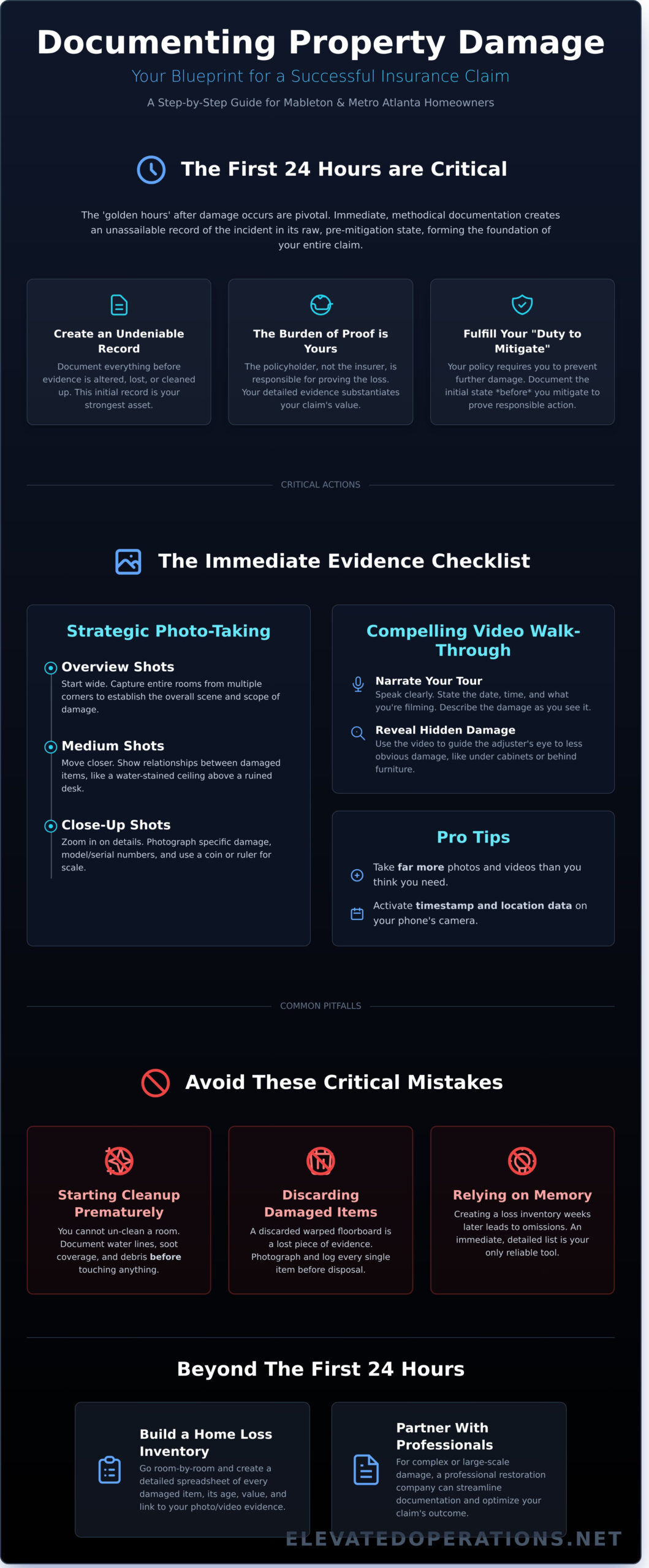
When your Mableton or Marietta home sustains damage, the clock starts ticking. The first 24 hours-the ‘golden hours’-are the most pivotal period for your claim’s trajectory. This is when the critical work of documenting property damage for insurance begins, creating an unassailable record of the incident in its raw, pre-mitigation state. In Georgia, where humidity can cause mold to appear in as little as 24-48 hours after water damage, this immediacy is not just strategic; it’s essential. The foundational goal is to build an undeniable visual and written log before any evidence is altered or lost.
Your Insurer’s Expectation vs. Reality
A common misconception is that the insurance company is responsible for proving your loss. The reality is that the burden of proof rests squarely on you, the policyholder. Your documentation serves a purpose similar to the legal concept of evidence; it substantiates your claim. While the adjuster will take photos, their objective is to document for the insurer’s file, not to capture the full scope of your personal loss. Furthermore, your policy includes a ‘duty to mitigate’ clause, requiring you to prevent further damage. Proper documentation before you begin mitigation proves you are acting responsibly while preserving a record of the initial state.
Common Mistakes Atlanta Homeowners Make
In the rush to restore order, many homeowners inadvertently weaken their own claims. The most critical errors we see are tactical, not intentional. Avoid these common missteps:
- Starting cleanup prematurely: You cannot un-clean a room to show an adjuster the initial water line or soot coverage. Document everything first.
- Discarding damaged items: A thrown-away warped floorboard or ruined rug is a lost piece of evidence. Photograph and log items before disposal.
- Relying on memory: Attempting to create a list of possessions from memory weeks later is a recipe for omission and inaccuracy. A detailed, immediate inventory is your only reliable tool.
The Immediate Evidence Checklist: Photos & Videos That Win Claims
In the immediate aftermath of a property loss, your smartphone is your most powerful tool. The visual evidence you gather in these first hours forms the bedrock of your insurance claim. Before you move or discard anything, your primary objective is to capture a comprehensive visual record. A common mistake is taking too few photos; the correct approach is to take far more than you believe necessary. We recommend activating the timestamp and location data features on your camera to automatically embed this critical information into every file, adding a layer of indisputable authenticity to your documentation.
Strategic Photo-Taking Techniques
A methodical approach to documenting property damage for insurance ensures no detail is overlooked. Your goal is to tell a complete story through a structured sequence of images. We advise organizing your shots into three distinct categories to create a clear and compelling narrative for your adjuster.
- Overview Shots: Start wide. Capture the entire affected room or area from multiple corners and doorways to establish the overall scene and scope of the damage.
- Medium Shots: Move closer to show how different damaged items relate to one another. For example, photograph the water-stained ceiling directly above the damaged laptop and ruined desk.
- Close-Up Shots: This is where you document the granular details. Capture specific points of damage on individual items, and be sure to photograph model and serial numbers on electronics and appliances. These detailed shots are a crucial first step in learning how to create a home inventory for your claim. For smaller areas of damage, place a coin or ruler next to it to provide an immediate sense of scale.
Creating a Compelling Video Walk-Through
While photos capture static details, a video provides dynamic context that can significantly strengthen your claim. A well-executed video walk-through brings the scene to life for the claims adjuster, who may never physically visit the property. This is a critical component of successfully documenting property damage for insurance and should be performed with deliberate care.
- Narrate Your Tour: As you walk slowly and steadily through the damaged areas, speak clearly. Describe what you are filming, explain the extent of the damage you see, and state the date and time you discovered it.
- Reveal Hidden Damage: Your narration should guide the viewer. Open cabinets, drawers, and closets to show damage that isn’t immediately visible, such as water pooling behind a vanity or soot inside a pantry.
- Capture Ambient Sounds: If relevant, let the microphone capture the sound of a dripping pipe, a running sump pump, or a beeping smoke alarm. These auditory details can be powerful supporting evidence.
Building Your Home Loss Inventory: A Room-by-Room Strategy
While photographs and videos provide powerful visual evidence, a detailed written inventory serves as the financial foundation of your insurance claim. This document quantifies your loss, translating visual damage into a clear, itemized list that adjusters can process efficiently. A systematic, room-by-room approach is the most effective way to ensure nothing is overlooked in the complex process of documenting property damage for insurance.
To optimize this process, utilize a digital spreadsheet or a dedicated home inventory app. This creates a structured, easily editable, and shareable record. Begin your inventory by prioritizing high-value items-such as electronics, major appliances, furniture, and artwork-as these often constitute the largest portion of your claim’s value. However, do not neglect the cumulative value of smaller items. Systematically account for less obvious categories, including clothing, kitchenware, linens, food spoilage, and even children’s toys.
What to Include for Each Item
Precision is paramount. For each damaged item, your inventory should function as a complete data profile. This level of detail removes ambiguity and supports a smoother valuation process. Log the following for every piece of personal property:
- Item Description: Be specific. Instead of “TV,” write “Samsung 55-inch QLED 4K Smart TV.”
- Identifying Details: Note the make, model, and serial number whenever possible.
- Age & Purchase Price: Estimate the item’s age and locate original receipts or credit card statements to verify the cost.
- Replacement Cost: Research and document the current market price to replace the item with a new, comparable one.
Documenting Structural Damage
Your inventory must also extend to the structure of your home itself. This is a critical step when documenting property damage for insurance that involves the building’s core components. Methodically list all damage to fixed elements like drywall, flooring, ceilings, and baseboards. Note the specific material (e.g., ‘engineered hardwood oak flooring,’ ‘plaster ceiling with crown molding’) and measure the dimensions of the affected areas, such as a ‘10×12 foot section of water-damaged carpet and padding in the master bedroom.’
Navigating the Claims Process with Atlanta Insurance Adjusters
Once you file a claim, your insurance company assigns an adjuster to your case. It is critical to understand their role: the adjuster works for the insurer, and their objective is to evaluate the validity and cost of your claim from the company’s financial perspective. While most are professional, their primary responsibility is to their employer, not to you. A successful outcome depends on your ability to present a clear, organized, and undeniable case. Your success in documenting property damage for insurance is the foundation; the next step is skillfully navigating your interactions with their representative.
For the adjuster’s first visit to your Mableton property, be prepared and professional. Have your evidence organized and accessible. It is also essential to maintain a meticulous communication log from this point forward. Document every call, email, and conversation with a note of the date, time, the representative’s name, and a summary of what was discussed. This log becomes an invaluable asset if disputes arise. Finally, a word of caution: never sign any documents, waivers, or settlement offers without fully understanding their implications. When in doubt, seek legal counsel.
Presenting Your Documented Evidence
Your diligence in documenting property damage for insurance culminates in this presentation. We recommend organizing all photos, videos, receipts, and your detailed inventory into a dedicated cloud folder (like Google Drive or Dropbox) for easy sharing. Provide the adjuster with digital copies or photocopies of everything; never give away your originals. During their inspection, walk them through the damage personally, pointing out specific details from your documentation that might otherwise be overlooked.
Presenting a well-organized physical binder can also be highly effective. While digital is convenient, a tangible, professionally compiled set of documents can underscore the seriousness of your claim. Companies that specialize in printing and document organization, such as ideasfactory, demonstrate the value of presenting clear, accessible information—a principle that applies universally when dealing with adjusters.
Handling Disagreements and Lowball Offers
If the adjuster’s initial estimate seems too low, do not view it as a final verdict. Instead, treat it as the start of a negotiation. Politely request a detailed, line-item justification for their estimate in writing. You can then present your independent contractor’s estimates as a data-driven counterpoint. Should you feel the process is unfair, remember that resources like the Georgia Office of Insurance and Consumer Protection Division exist to protect policyholders from bad-faith practices.
A well-managed claim is a critical operational process. If your business infrastructure feels overwhelmed by this or other challenges, it may be time to elevate your operational foundation.
When DIY Isn’t Enough: Partnering with Restoration Experts in Mableton
Following a property disaster, the path to recovery can feel complex and overwhelming. While the previous sections provide a roadmap for documenting damage yourself, the sheer volume of work-especially during a crisis-can be a significant burden. This is where a strategic partner becomes your greatest asset. Attempting to manage a large-scale loss alone can lead to missed details, undervalued claims, and unnecessary delays.
Professional restoration companies are specialists in the precise science of documenting property damage for insurance claims. We build the operational framework for your recovery, starting with a meticulous assessment. Our teams utilize specialized software like Xactimate to create the detailed, line-item estimates that insurance carriers require and respect. This technology translates visible and hidden damage into a language adjusters understand, removing ambiguity and streamlining the approval process. We interface directly with your adjuster, managing communications and advocating on your behalf to save you invaluable time and stress. Don’t manage this alone. Get 24/7 expert help with your claim and restoration.
The Elevated Operations Advantage
Our entire process is designed to build a solid foundation for your recovery. We deploy industry-standard technology and proven methodologies for documenting property damage for insurance, ensuring every detail is captured with forensic accuracy. Our primary objective is the complete restoration of your property, which means we are relentless in identifying all affected areas. This creates a seamless, efficient transition from initial documentation to emergency mitigation and full-scale reconstruction.
Elevate Your Recovery Process
Allow us to handle the operational complexities of your claim so you can focus on the well-being of your family or business. With deep experience serving the Mableton and greater Atlanta area, we understand exactly what local and national insurance adjusters need to see to approve a claim swiftly and fairly. Let our team at Elevated Operations build the strategic framework for a successful claim and a complete, high-quality recovery.
Elevate Your Recovery: A Strategic Approach to Your Mableton Claim
Navigating the aftermath of property damage requires a clear, deliberate strategy. The foundation of a successful claim rests on immediate, thorough action-from capturing detailed evidence within the first 24 hours to building a comprehensive home loss inventory. Mastering the process of documenting property damage for insurance is not just about listing losses; it’s about creating a compelling, undeniable case for your full and fair compensation in Mableton.
While these steps provide a crucial roadmap, you don’t have to manage the complexities alone. With over 20 years of experience serving Metro Atlanta, our IICRC Certified Technicians specialize in both meticulous restoration and direct insurance billing and communication, simplifying your path forward.
Elevate your recovery. Contact our 24/7 team for immediate help with damage and insurance claims. Let us manage the details, so you can focus on rebuilding with confidence.
Frequently Asked Questions
Can I start cleaning up before the insurance adjuster arrives in Mableton?
You should take immediate steps to prevent further damage, such as placing a tarp over a damaged roof. This is your “duty to mitigate loss.” However, you must not discard any damaged items or begin permanent repairs. Your priority is to first document everything with extensive photos and videos from multiple angles. This preserves the evidence of the initial loss, which is a critical foundation for a successful claim and ensures the adjuster sees the full scope of the damage.
What if I can’t find receipts for my damaged belongings?
While receipts are ideal, their absence does not invalidate your claim. You can substantiate ownership and value through alternative documentation. Gather photos of the items in your home, find bank or credit card statements showing the purchases, or locate original packaging and manuals. A detailed inventory list that includes brand names, model numbers, and where the items were purchased provides a solid framework for your adjuster to work from, proving ownership and establishing value for your personal property.
How long do I have to file a property damage claim in Georgia?
While Georgia’s statute of limitations for property damage lawsuits is generally four years, your insurance policy has a much stricter timeline. Most policies require you to provide “prompt notice” of the loss, often within days or weeks. Delaying your report can jeopardize your claim. It is imperative to notify your insurance carrier immediately after the damage occurs to protect your rights and initiate the claims process in accordance with your policy’s specific requirements.
Should I get my own repair estimate before the adjuster comes?
Yes, securing an independent repair estimate from a reputable, licensed contractor is a sound strategic move. This provides you with an unbiased, detailed assessment of the damage and repair costs. It serves as a crucial benchmark against which to compare the insurance adjuster’s estimate, empowering you to negotiate from an informed position. This proactive step ensures all necessary repairs are accounted for and helps you advocate for a fair and complete settlement from the outset.
What’s the difference between ‘replacement cost’ and ‘actual cash value’?
This distinction is fundamental to your settlement. Replacement Cost Value (RCV) covers the full cost to replace your damaged property with a new item of similar kind and quality, with no deduction for depreciation. In contrast, Actual Cash Value (ACV) pays the replacement cost minus depreciation for age and wear. For example, a five-year-old laptop might have an RCV of $1,200 for a new model but an ACV of only $400 after depreciation is applied.
My insurance company’s offer is too low. What are my next steps?
A low offer is a starting point for negotiation, not a final decision. First, formally request a detailed, line-item breakdown of the insurer’s estimate. Compare it against your independent contractor’s estimate and your own documentation to identify discrepancies. Prepare a structured, written response that outlines the shortfalls, provides your supporting evidence, and presents a clear counter-offer. This professional, evidence-based approach is the most effective way to contest a low settlement. If the financial strain of this process affects your credit, professional services from a firm like Allen & Allen, Inc. can provide valuable guidance.
Does homeowners insurance cover mold damage after a water leak?
Mold coverage typically depends on the source of the water. If the mold is a direct result of a “covered peril” that was sudden and accidental, such as a burst pipe, the remediation is often covered up to a specific policy limit. However, if the mold stems from a gradual leak, poor maintenance, or a flood (which requires separate flood insurance), the claim will likely be denied. Prompt action to mitigate the initial water damage is crucial for securing coverage.
How can a restoration company help with my insurance claim?
A professional restoration company serves as a critical strategic partner. They provide immediate mitigation to prevent further damage and create an expert-level scope of work report, which is essential for properly documenting property damage for insurance. Their detailed estimates and professional reports add significant credibility to your claim. They can also communicate directly with your adjuster using industry-standard terminology and software, ensuring a more streamlined and accurate settlement process.