Quick Answers
Related Questions People Ask Next
?
How do I know if I can remove mold myself or need to call a professional?The EPA’s guidance points to size and material as the two deciding factors. Growth under about 10 square feet on a hard, non-porous surface is often manageable with soap and water. Anything larger, inside a wall cavity, or on a porous material like drywall or insulation calls for a professional.
?
What is the actual difference between mold removal and mold remediation?Removal is the physical act of taking out or cleaning mold-affected material. Remediation is the full process around it, containment, air filtration, removal, treatment, and verification. Elevated Operations’ mold remediation service covers all four steps; removal is the piece a homeowner sometimes tackles alone on small jobs.
?
Which materials have to be removed instead of cleaned?Porous materials that have absorbed mold, drywall, insulation, and carpet padding among them, generally cannot be cleaned back to a safe condition and get physically removed. Non-porous surfaces like tile, glass, and metal can usually be cleaned and treated in place instead.
?
Does Elevated Operations handle small removal jobs, or only full remediation?Elevated Operations performs a free on-site inspection first and scopes the job to what it actually requires, spot cleaning for a contained, non-porous surface, or full removal and reconstruction when porous material or a larger area is involved.
The Removal Process
What Does Mold Removal Actually Involve in Metro Atlanta?
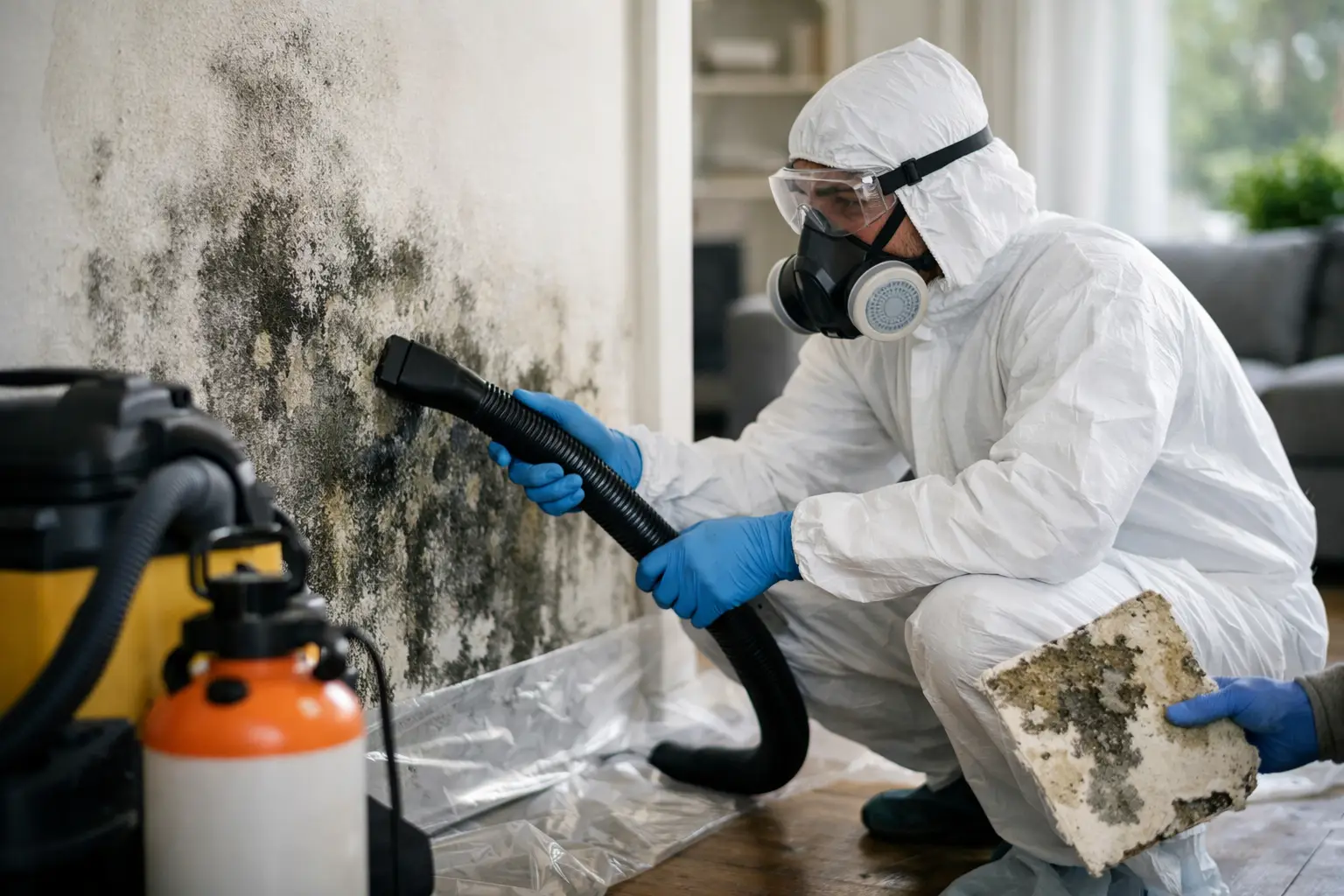
Mold removal in Metro Atlanta is the physical step of taking mold-affected material out of a home, or cleaning it in place when the surface allows it. Elevated Operations, LLLP starts every removal job with an inspection that decides which path a material takes, removed or cleaned, before any work begins.
Assessing What Needs to Come Out
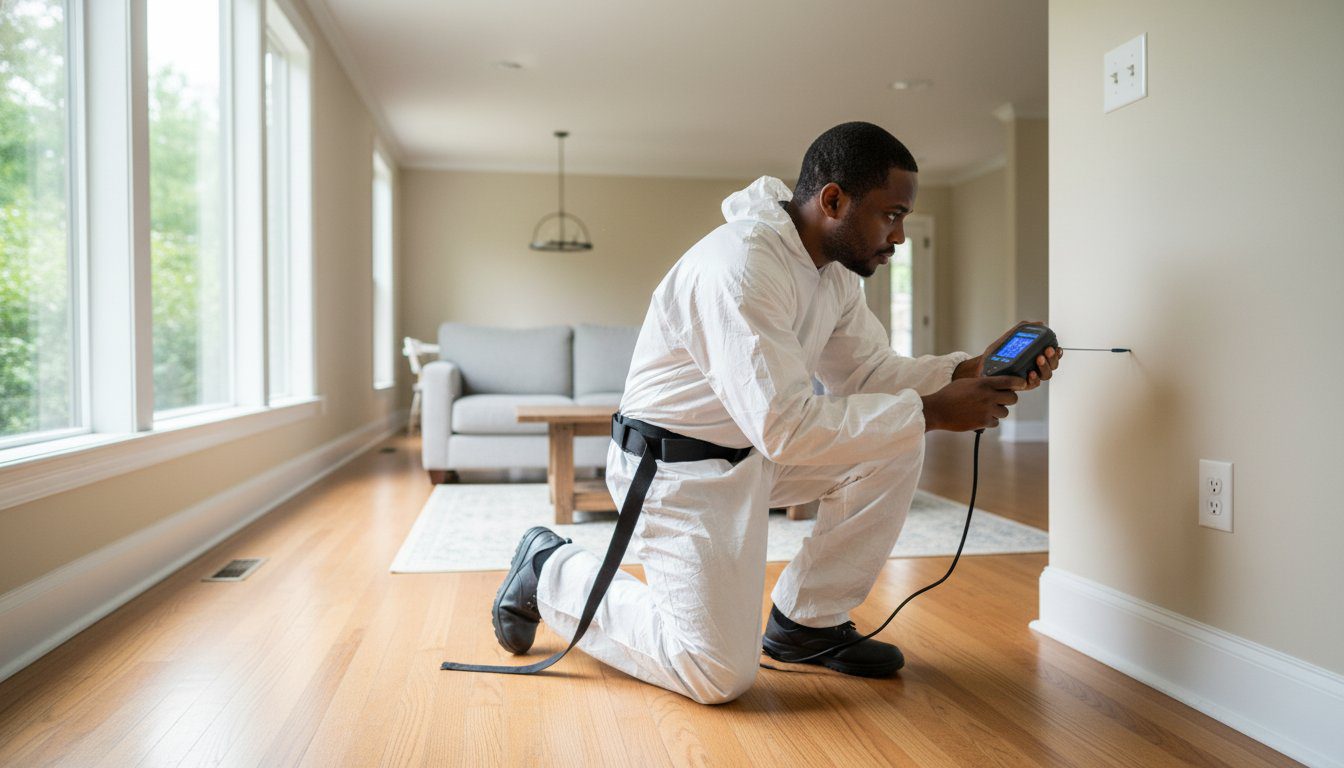
A moisture meter and visual inspection separate porous materials that have to be removed from non-porous surfaces that can be cleaned, before any tools touch the wall.
Physical Removal of Affected Material
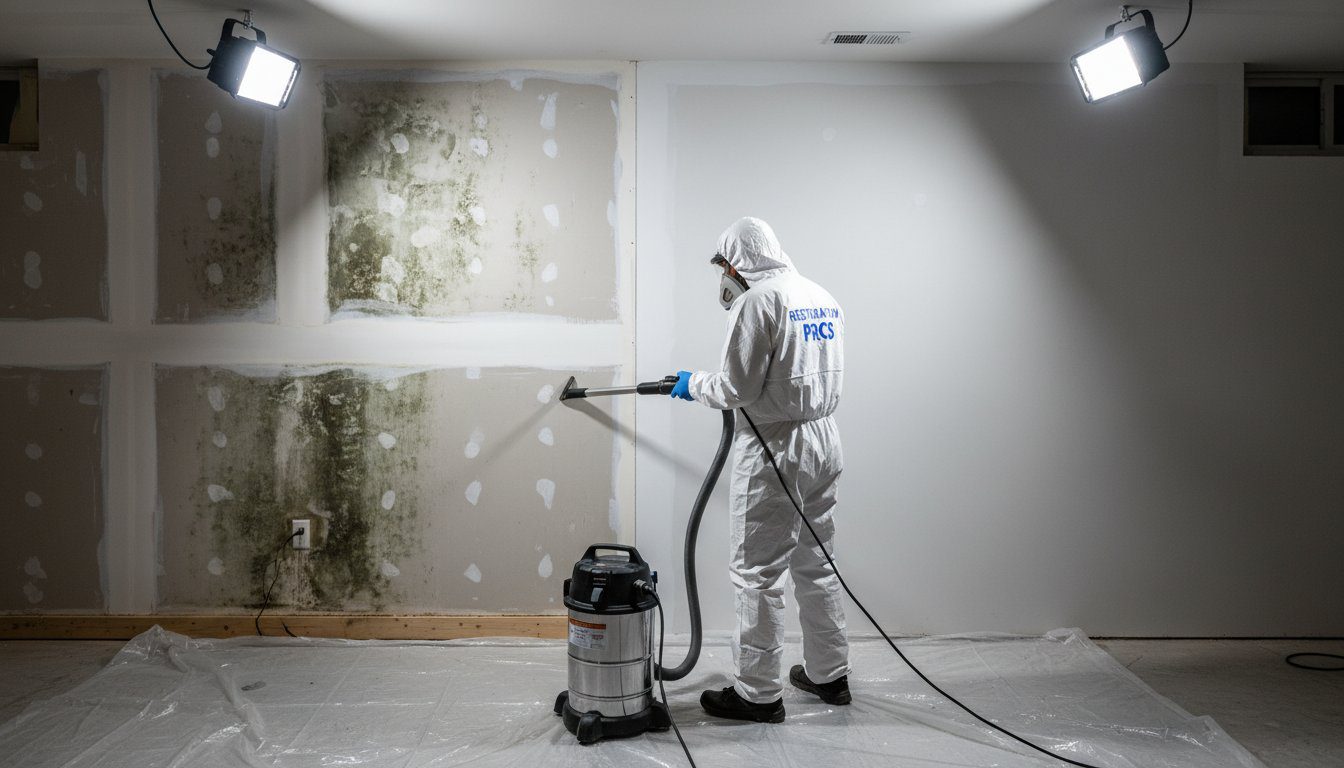
Drywall, insulation, and other porous material that has absorbed mold gets cut out, bagged, and carried out rather than scrubbed, since porous materials rarely clean back to a safe condition.
Spot Cleaning Non-Porous Surfaces
Tile, grout, glass, and metal surfaces with surface-level growth get cleaned and treated in place instead of removed, which saves material and labor cost on the parts of the job that do not need tear-out.
Disposal & Post-Removal Wipe-Down
Removed material is bagged on site to limit spore spread, and the surrounding area gets a final wipe-down and moisture check once removal is complete.
Removal and cleaning are not interchangeable choices made by preference. The material decides which one applies, and getting that call wrong, cleaning something that needed to come out, or removing something that only needed a wipe-down, either leaves mold behind or costs more than the job required.
Cost & Scope
What Determines Whether a Mold Removal Job Costs More Than a Cleaning Job?
The cost of mold removal in Metro Atlanta comes down to how much of the affected area is porous material that has to be torn out versus non-porous surface that can be cleaned in place. Elevated Operations provides a free on-site inspection and a written scope before any material comes out, and bills insurance directly when the mold traces back to a covered water loss.
Remove vs. Clean Ratio
A job that is mostly cleaning, tile, grout, or non-porous trim, costs less than a job where most of the affected area is porous material that has to be torn out and replaced.
Square Footage Past the DIY Threshold
Growth under about 10 square feet on a hard surface is often within reach of a homeowner with soap and water. Once an area grows past that, or spreads across more than one material type, professional removal is the safer call.
Disposal & Replacement
Removed drywall, insulation, or subfloor has to be bagged, hauled out, and in most cases replaced, which is where a removal job starts to cost more than a cleaning job.
Insurance Coverage
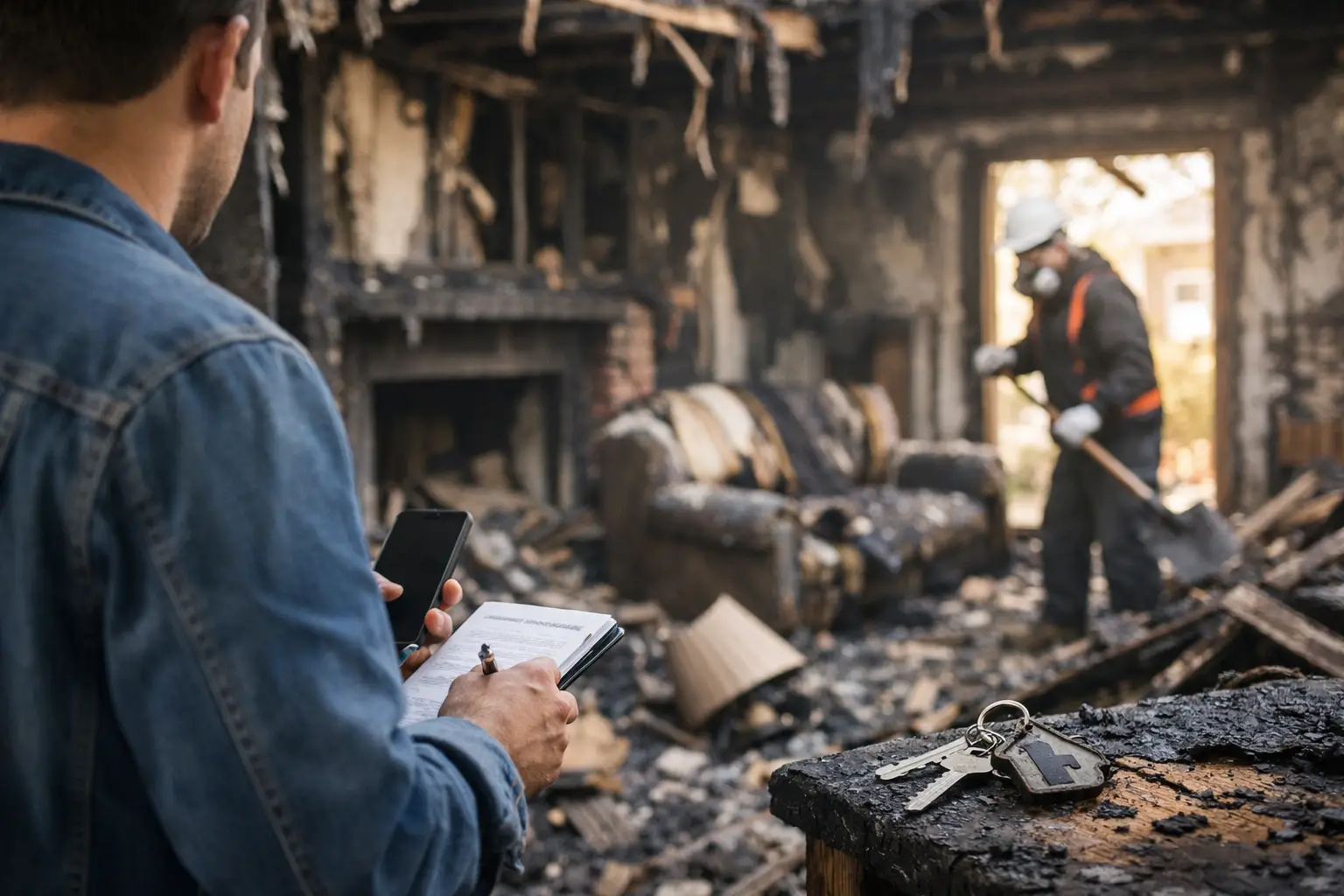
Georgia homeowners policies typically cover mold removal tied to a sudden, covered water loss such as a burst pipe, not mold from long-term humidity or a slow leak left unaddressed. Elevated Operations documents the moisture source at the start of the job.
A homeowner’s decision to clean a small surface alone and call a professional for the rest is not just about safety. It directly changes what the final invoice looks like, since cleaning in place is nearly always the cheaper of the two paths.
Not Sure If Your Mold Needs Removal or Just Cleaning?
Elevated Operations inspects the affected area, tells you honestly which materials need to come out and which can be cleaned, and provides a free written scope before any work starts.
The DIY Decision
When Should You Call for Mold Removal Instead of Handling It Yourself?
Four situations come up most often when Metro Atlanta homeowners are deciding whether to grab gloves and a scrub brush or make a call instead.
1
The Growth Is Under 10 Square Feet on a Hard Surface
Tile, glass, sealed countertops, and painted trim with light, surface-level growth generally fall within the range the EPA describes as manageable with soap, water, gloves, and ventilation, as long as the area stays small and dries out once cleaned.
2
The Growth Covers More Than 10 Square Feet or Keeps Coming Back
Once an area grows past roughly 10 square feet, or mold you cleaned once returns in the same spot, the moisture source and the extent of the material affected both need a professional look before more work goes into scrubbing.
3
The Mold Has Reached Drywall, Insulation, or Subfloor
Porous material does not clean back to a safe condition regardless of how small the visible patch looks. Any growth on drywall, insulation, carpet padding, or wood framing needs removal, not scrubbing.
4
You Started Cleaning and It Made Things Worse
Scrubbing without containment can push spores into rooms that were not affected before. If dry-brushing, sanding, or vacuuming disturbed the growth, stop and call so the spread can be assessed before it turns into a bigger job than it started as.
Decision Guide
Remove It or Clean It – Which Materials Go Which Way?
Whether a material gets removed or cleaned comes down to porosity, not how bad the mold looks on the surface. Porous materials absorb mold growth below what the eye can see and rarely clean back to a safe condition. Non-porous materials hold growth on the surface only, where cleaning and treatment can actually reach it.
The table below is the material-by-material breakdown Elevated Operations technicians use during the initial inspection to explain, before any work starts, what is coming out of the house and what is staying.
Two materials in the same room can land on opposite sides of this table. A tiled shower wall next to a drywall ceiling with the same visible staining often means cleaning one surface and removing the other.
Local Conditions
How Does Metro Atlanta’s Climate Affect What Ends Up Needing Removal?
Metro Atlanta’s humid subtropical climate keeps porous building materials wetter for longer than they would stay in a drier region, which pushes more of them past the point where cleaning is still an option. Homes across the seven-county service area see this most in crawl spaces, attics, and rooms that back up to an unfixed leak.
Humid Summers, Longer Saturation
Extended summer humidity means a porous material that gets damp does not dry out on its own the way it might in a drier climate, giving mold more time to soak in before anyone notices it.
Crawl Space Wood & Subfloor
Crawl space framing and subfloor common in homes across Marietta, Mableton, and other established neighborhoods sit close to ground moisture and red clay soil that drains slowly, which is why wood in these spaces more often needs removal instead of surface cleaning.
Post-Leak Drywall
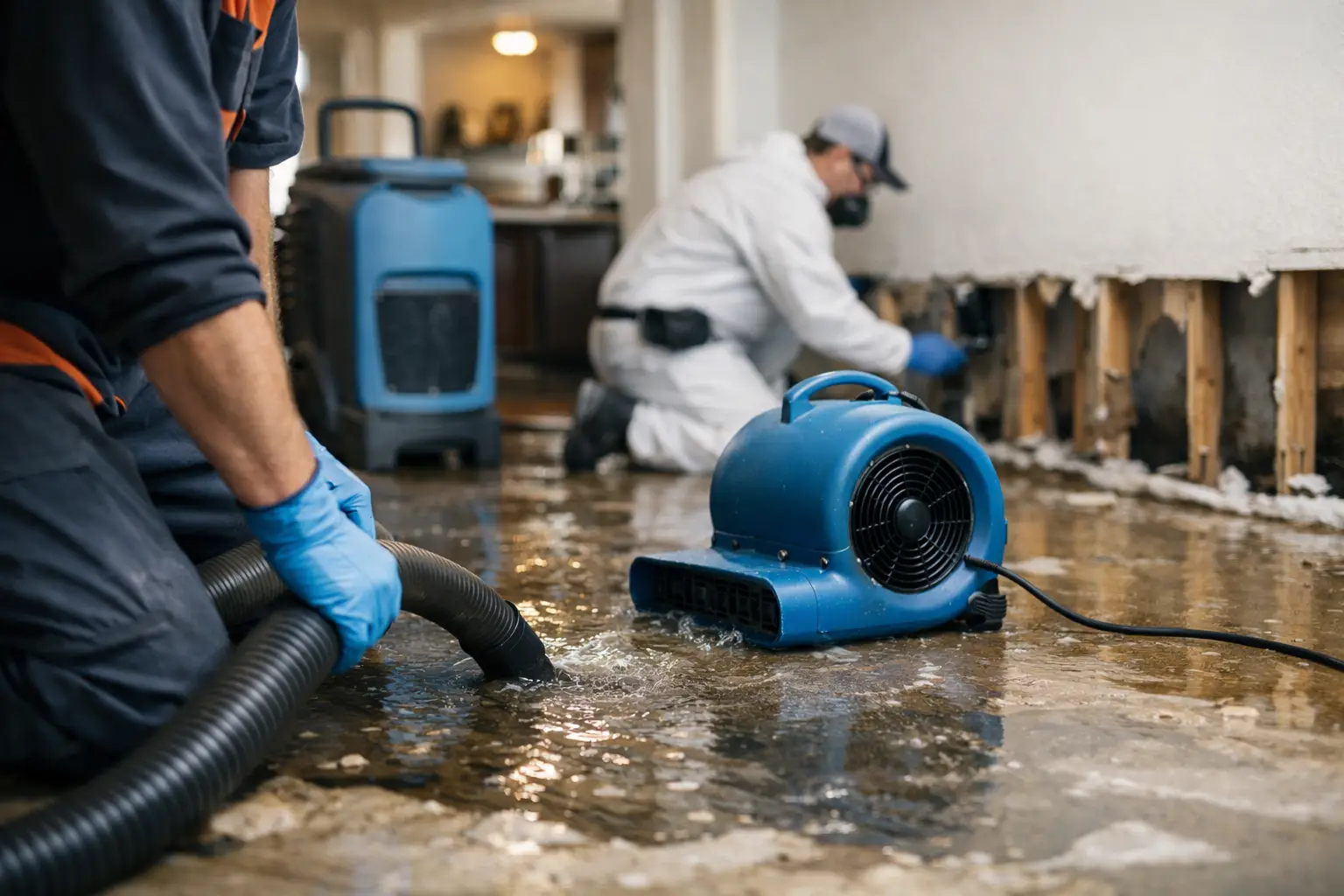
Drywall that stayed damp past the EPA’s 24 to 48 hour mold window after an unresolved leak has usually absorbed enough moisture that cleaning the painted surface will not address what has grown into the paper facing behind it.
A newer slab home in Henry or Paulding County and an older crawl space home in Marietta face the same climate, but the crawl space home’s wood-heavy construction gives mold more porous material to reach, which is why removal comes up more often in older housing stock than in newer builds (U.S. Census Bureau, Metropolitan and Micropolitan Statistical Area Population Estimates, 2020s series, Atlanta-Sandy Springs-Roswell metro area).
Verifying the Work
How Do You Know a Mold Removal Job Was Actually Done Right?
A mold removal job done right leaves a homeowner with a written record of what came out of the house, not just a painted-over wall. Four checks separate a contractor who removed what needed to go from one who covered a surface and called it finished.
Ask for a Written Scope Before Work Starts
The scope should say which materials are being removed and which are being cleaned, not a verbal walkthrough with no documentation to check the finished job against.
Confirm What Actually Left the House
Removed drywall, insulation, or subfloor should be bagged and hauled out, not painted or sealed over. Ask to see the disposal, not just the finished wall.
Check for a Post-Removal Moisture Reading
A contractor should confirm the area reads dry on a moisture meter after removal, since new material installed over a still-damp space invites the same growth back.
Ask About the Moisture Source, Not Just the Mold
Removal alone does not stop mold from coming back if the leak, humidity, or ventilation problem that fed it is never addressed. A contractor should be willing to talk about the cause, not just the cleanup.
Dealing With Mold in Your Metro Atlanta Home Right Now?
Elevated Operations responds across Cobb, Fulton, DeKalb, Douglas, Clayton, Henry, and Paulding counties in under 60 minutes, with IICRC-certified technicians, direct insurance billing, deductible assistance up to $1,000, and a 12-month warranty on every completed project. Rated 4.9 stars across 71 Google reviews.
IICRC-Certified · Direct Insurance Billing · 12-Month Warranty · Serving Cobb, Fulton, DeKalb, Douglas, Clayton, Henry & Paulding Counties