24/7 Emergency Restoration · Serving Metro AtlantaEmergency? (770) 404-6895
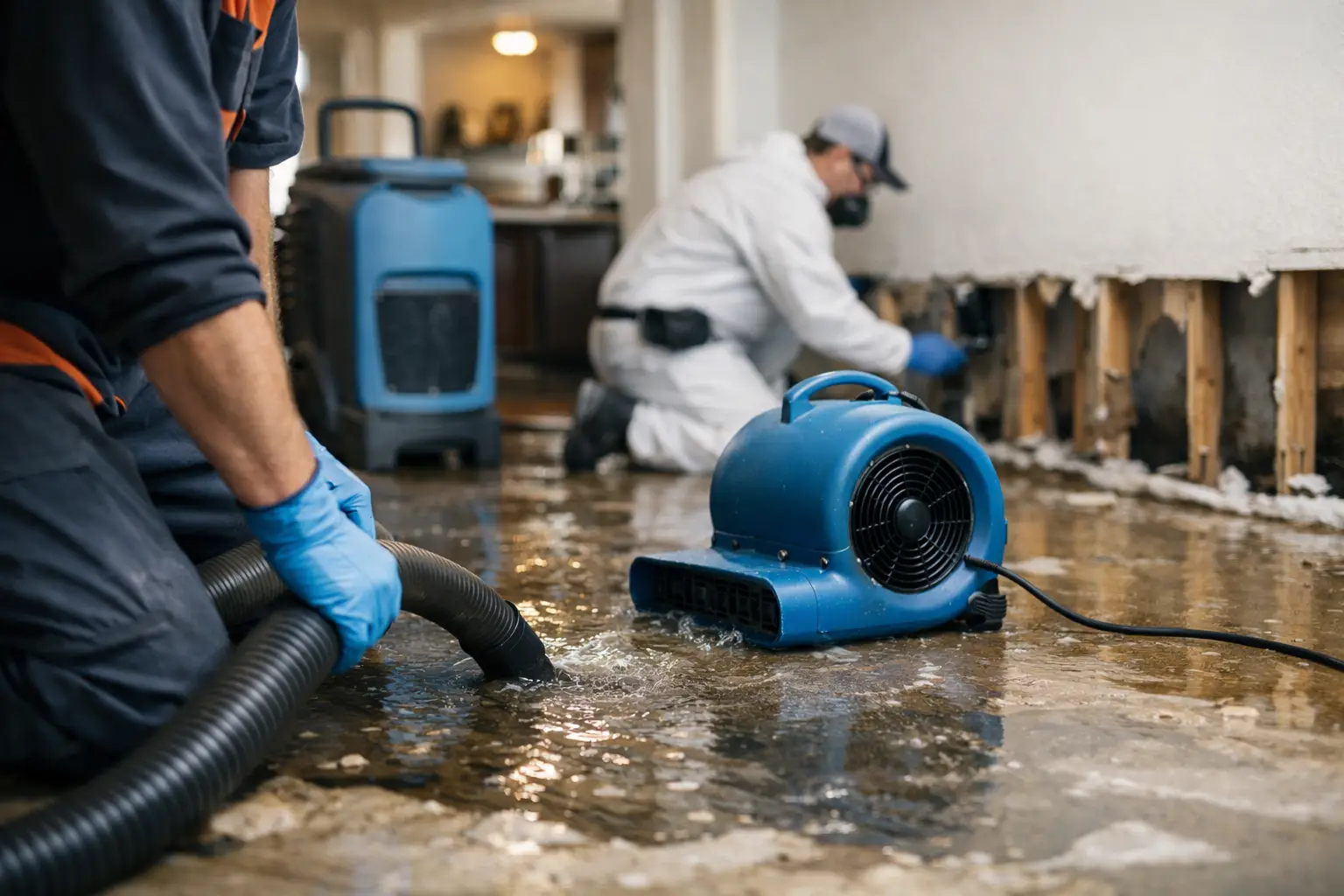
Water mitigation services in Metro Atlanta stop a water loss from spreading the moment Elevated Operations arrives, extracting standing water, drying structural materials, and documenting every step for the insurance file. Mitigation is a distinct claim phase from repair or rebuild. IICRC-certified technicians respond 24/7, usually within 60 minutes.
IICRC-Certified · 5-Star Rated · 60-Minute Response · Insurance Billed Directly
On a homeowner's policy, mitigation is the set of emergency actions, extraction, drying, and securing the property, that stop a loss from growing worse. Adjusters generally expect this phase to start immediately, separate from any decision about repairs or rebuild.
No. Mitigation is the first phase, stopping the loss and preventing secondary damage. Restoration and reconstruction come afterward and cover the repair or rebuild of whatever mitigation could not save. Elevated Operations handles both under one crew.
Most homeowners insurance policies include a condition requiring the policyholder to take reasonable steps to prevent further damage after a loss. Calling a certified mitigation contractor quickly is generally the clearest way to meet that obligation.
Mitigation addresses the emergency, extraction and drying, while repairs address what was actually damaged. Keeping the two phases separate on the claim file gives the adjuster a documented record of what was done to limit the loss versus what needs to be rebuilt.
Water mitigation means limiting the loss, not repairing it. The term describes the emergency actions taken in the hours after a leak or flood: removing standing water, drying the structure, and protecting undamaged areas so a contained leak does not turn into a larger claim. Everything after that point is repair or reconstruction, a separate phase with a separate scope.
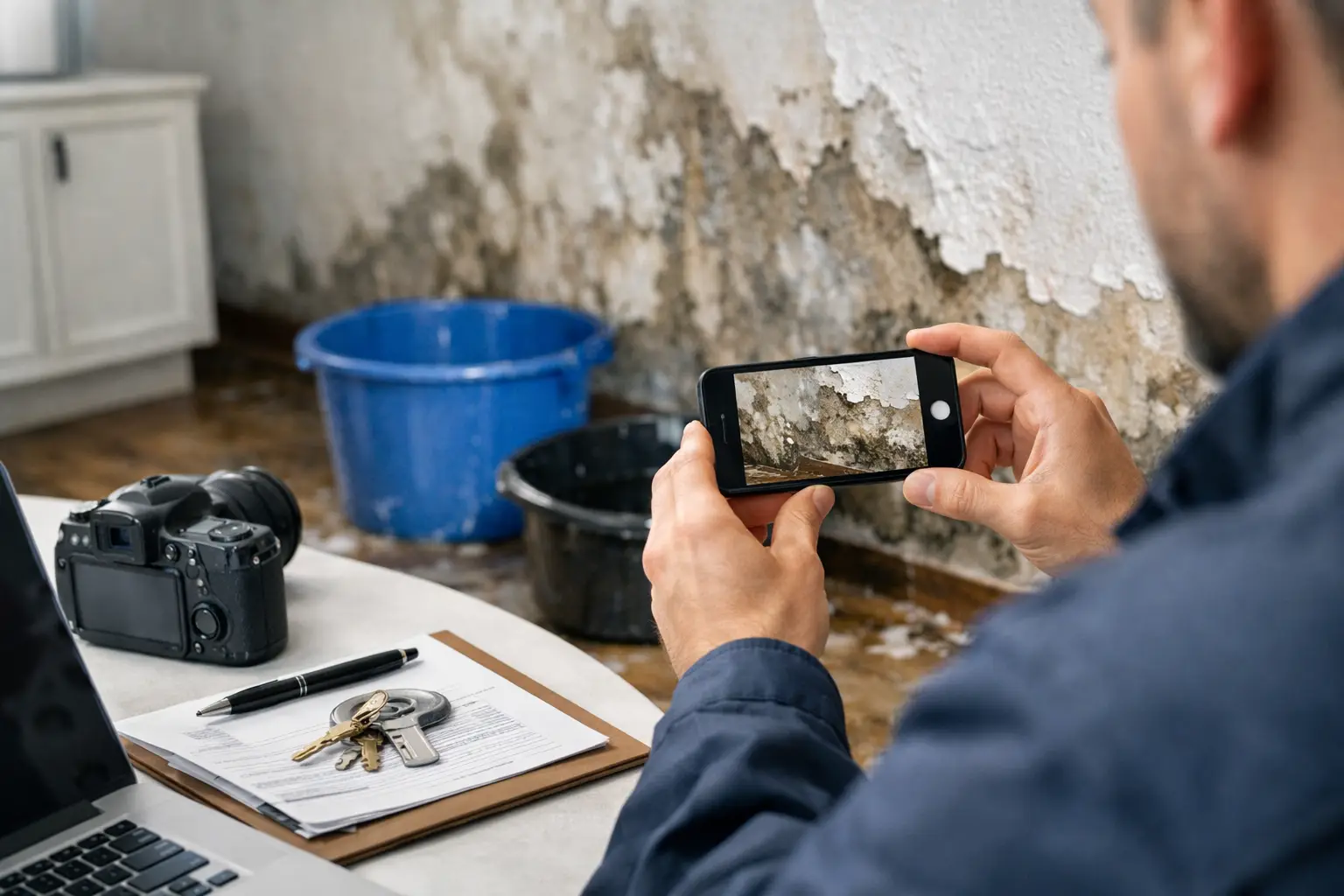
Extraction and, where needed, a plumbing shutoff come first, since every additional hour of standing water adds square footage to the eventual claim.
Moving furniture, blocking wet carpet from spreading to dry rooms, and containing the affected area keep a contained loss from becoming a whole-floor loss.
Photos, moisture readings, and a written log of what was removed and when give the claim a timeline instead of a dispute that has to be investigated.
Once the structure reads dry, mitigation is complete and repair or reconstruction can begin using the same documentation instead of a second inspection.
Mitigation and the insurance claim move together. The faster the mitigation phase is documented and closed out, the faster an adjuster can review the repair estimate that follows it.
Water mitigation is billed and documented separately from repairs because insurers evaluate the two phases differently. Mitigation is typically approved quickly since it prevents a bigger loss, while a repair or reconstruction estimate requires a full scope review. Elevated Operations submits mitigation documentation to the adjuster and bills the carrier directly on covered claims.
Mitigation work, extraction, drying equipment, and antimicrobial treatment, appears on the claim as its own line item, distinct from the repair estimate that follows.
Every mitigation job gets a dated photo record and moisture readings, the documentation an adjuster typically requests before approving payment.
Acting quickly and documenting that action is how a policyholder satisfies the mitigation condition most homeowner policies include.
Elevated Operations assists with the deductible up to $1,000 on qualifying claims, applied once the carrier confirms coverage.
Elevated Operations communicates directly with the assigned adjuster during the mitigation phase, so the homeowner is not relaying technical details back and forth.
Mitigation documentation and the repair estimate are two different documents inside the same claim file, and an incomplete first one slows down approval of the second.
Every hour without mitigation adds to what has to be repaired later. IICRC-certified technicians respond within 60 minutes and start documenting for your claim from the first minute on site.
Four situations tied to the claim process, not just the water itself, are when calling for mitigation immediately matters most.
Mitigation does not wait for an adjuster visit. Extraction and drying should start immediately, documented with photos, while the claim is still being assigned.
A gap between discovering water damage and calling for mitigation can raise questions about whether the loss was properly addressed. Starting mitigation the same day removes that question.
Drywall, subfloor, or insulation that stays wet risks the EPA's 24 to 48 hour mold window, turning a mitigation-only claim into one that also needs remediation.
If a contractor proposes repairs without documented moisture readings or photos, mitigation documentation should come first so the repair scope can be checked against it.
Each mitigation step exists to head off a specific kind of secondary damage, the harm that happens after the original loss because water sat too long or a material stayed wet. The table below maps the action to what it is protecting against.
None of these actions are billed as repairs. They are billed and documented as loss-limitation, which is why an adjuster reviews them differently than a repair invoice.
| Mitigation Action | Secondary Damage It Prevents | Why It Matters to the Claim |
|---|---|---|
| Emergency water extraction | Saturation of subfloor, framing, and insulation | Keeps the loss from expanding into a structural repair claim |
| Structural drying and dehumidification | Mold growth within the EPA's 24 to 48 hour window | Avoids turning a mitigation claim into a mold remediation claim |
| Moving and covering contents | Furniture, flooring, and belongings absorbing more water | Protects the contents portion of the policy from a larger loss |
| Water shutoff or temporary containment | Continued water flow from the same source | Stops the loss at its origin instead of managing it after the fact |
| Photo and moisture documentation | Disputes over how much of the property was actually affected | Gives the adjuster a clear record to approve the claim promptly |
None of these actions repair anything. They exist to keep the damage from getting worse while the claim moves through the adjuster's review.
Metro Atlanta's humid subtropical climate and spring storm season, combined with the remnants of Gulf and Atlantic hurricanes that reach the region most falls, produce sudden, large-scale water losses across a metro area of roughly 6.4 million people. When several homes in the same neighborhood are affected at once, how quickly mitigation starts often decides whether a claim stays contained or grows.

Spring storm season brings the heaviest rainfall of the year across Cobb, Fulton, and the rest of the metro area, the period when Elevated Operations sees the highest volume of mitigation calls tied to sudden roof and window intrusion.
Remnants of Gulf and Atlantic storms that track inland most falls can drop heavy rainfall over a short window, the kind of event where mitigation has to start the same day to keep pace with the water.
Georgia's humidity keeps materials from air-drying on their own the way they might in a drier climate, part of why insurers expect mitigation to start immediately rather than wait to see if a wet spot dries out.
A slow response in a dry climate and a slow response in Metro Atlanta's humidity do not carry the same risk, which is part of why the duty to mitigate gets enforced closely here.
An adjuster reviewing a mitigation claim is looking for documentation that follows a recognized standard, not just a paid invoice. IICRC certification means the technician followed the ANSI/IICRC S500 protocol that governs professional water mitigation, which gives the paperwork more weight when the claim is reviewed.
Certified technicians follow the documented industry standard for water mitigation, the same standard most adjusters are trained to recognize.
A written scope of the mitigation work, not just a verbal estimate, gives the homeowner and the adjuster the same starting point.
Because Elevated Operations is a licensed general contractor, the same company that performs mitigation can carry the claim into repair and reconstruction without a subcontractor hand-off.
Mitigation invoices go directly to the insurance carrier on covered claims, rather than requiring the homeowner to pay out of pocket and wait for reimbursement.
Elevated Operations responds across Cobb, Fulton, DeKalb, Douglas, Clayton, Henry, and Paulding counties in under 60 minutes, with IICRC-certified technicians, direct insurance billing, deductible assistance up to $1,000, and a 12-month warranty on every completed project.
IICRC-Certified · Direct Insurance Billing · 12-Month Warranty · Serving Cobb, Fulton, DeKalb, Douglas, Clayton, Henry & Paulding CountiesFrom emergency mitigation to full reconstruction, handled in-house so you are never managing a chain of subcontractors mid-crisis.
Water DamageExtraction, structural drying, and moisture mapping after floods, leaks, and burst pipes.
Get help now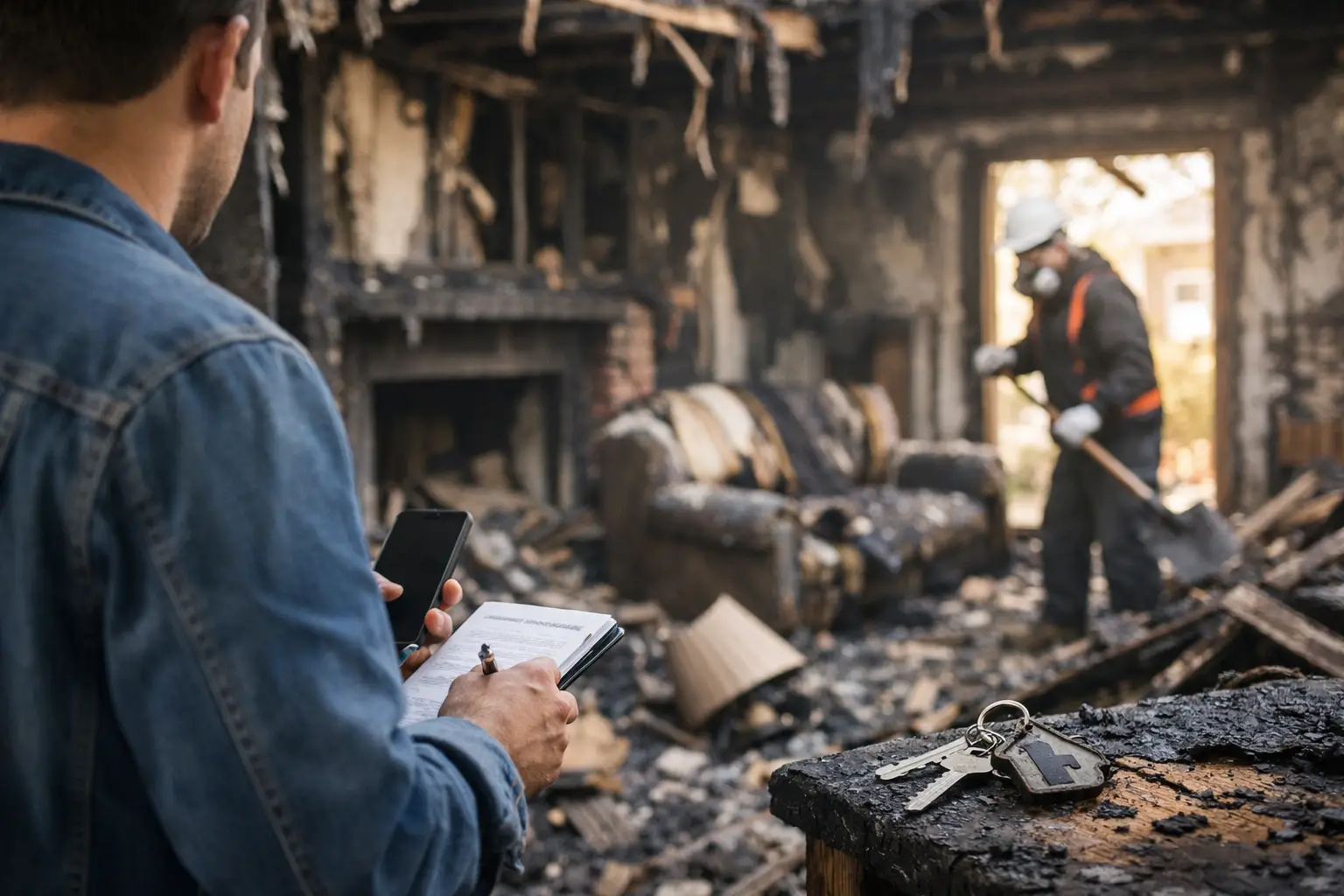 Fire & Smoke
Soot removal, odor deodorization, and content cleaning after fire and smoke damage.
Learn more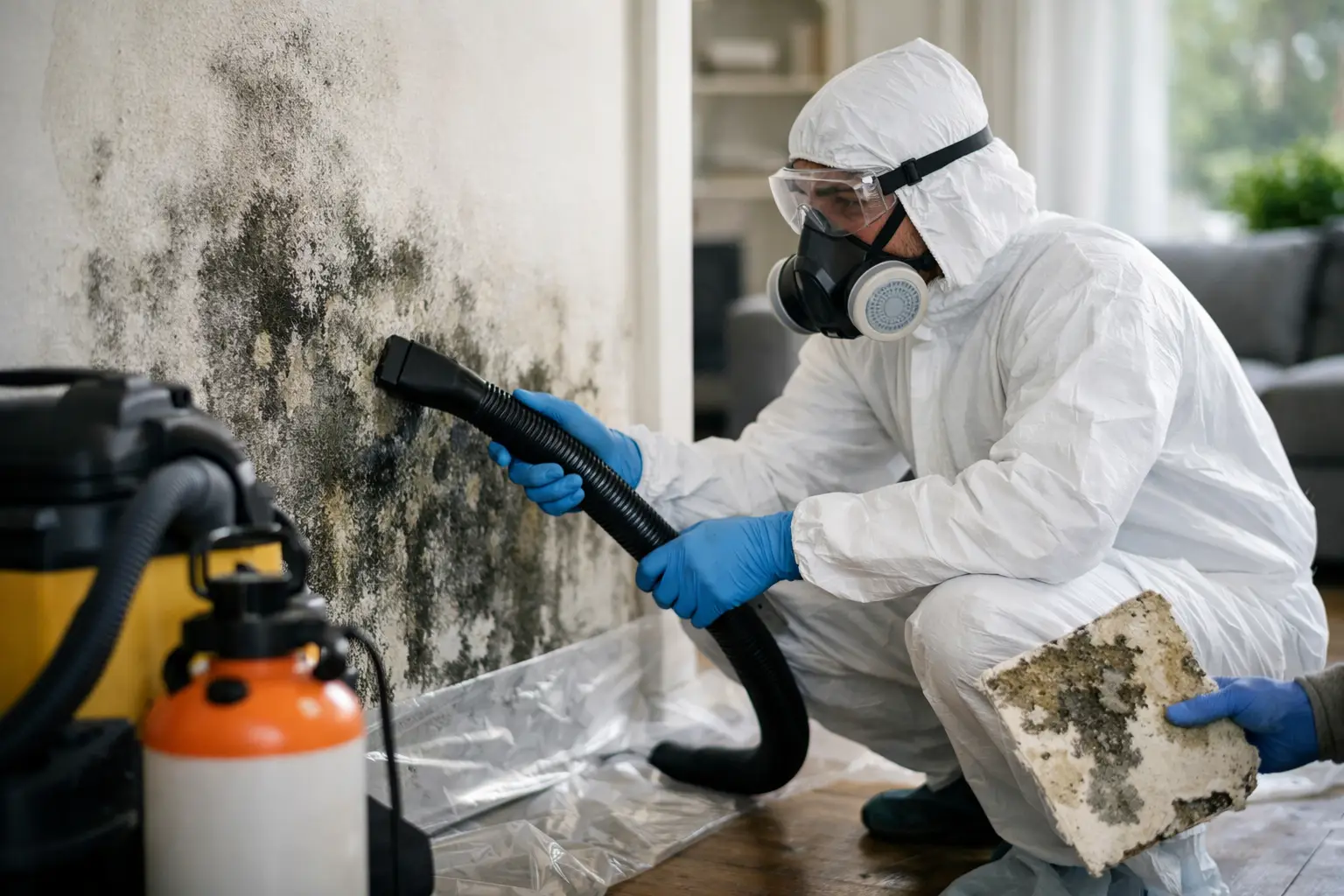 Mold
MoldContainment, removal, and moisture control that stops mold from coming back.
Learn more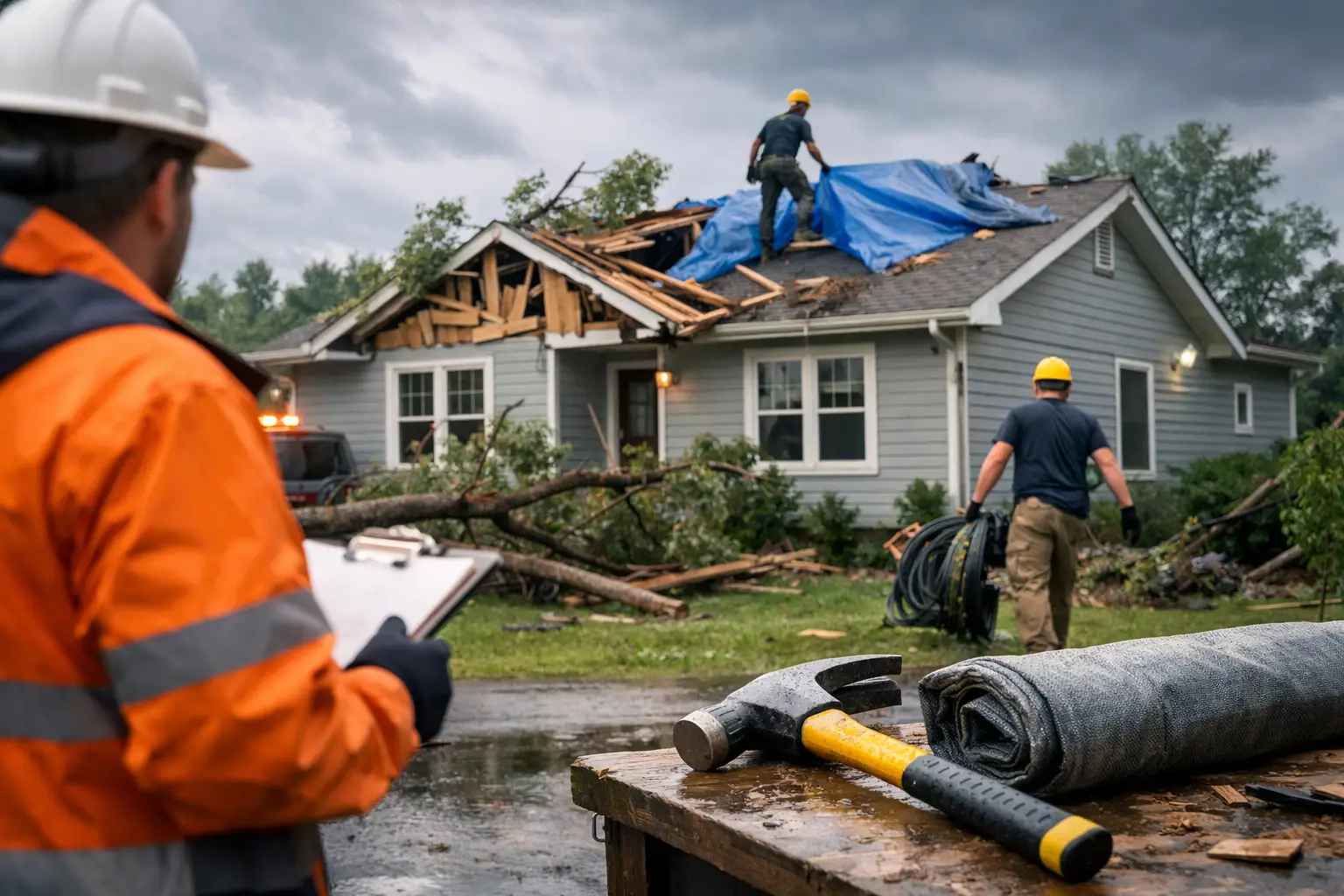 Storm
StormEmergency board-up, roof tarping, and full recovery after wind, hail, and storms.
Learn more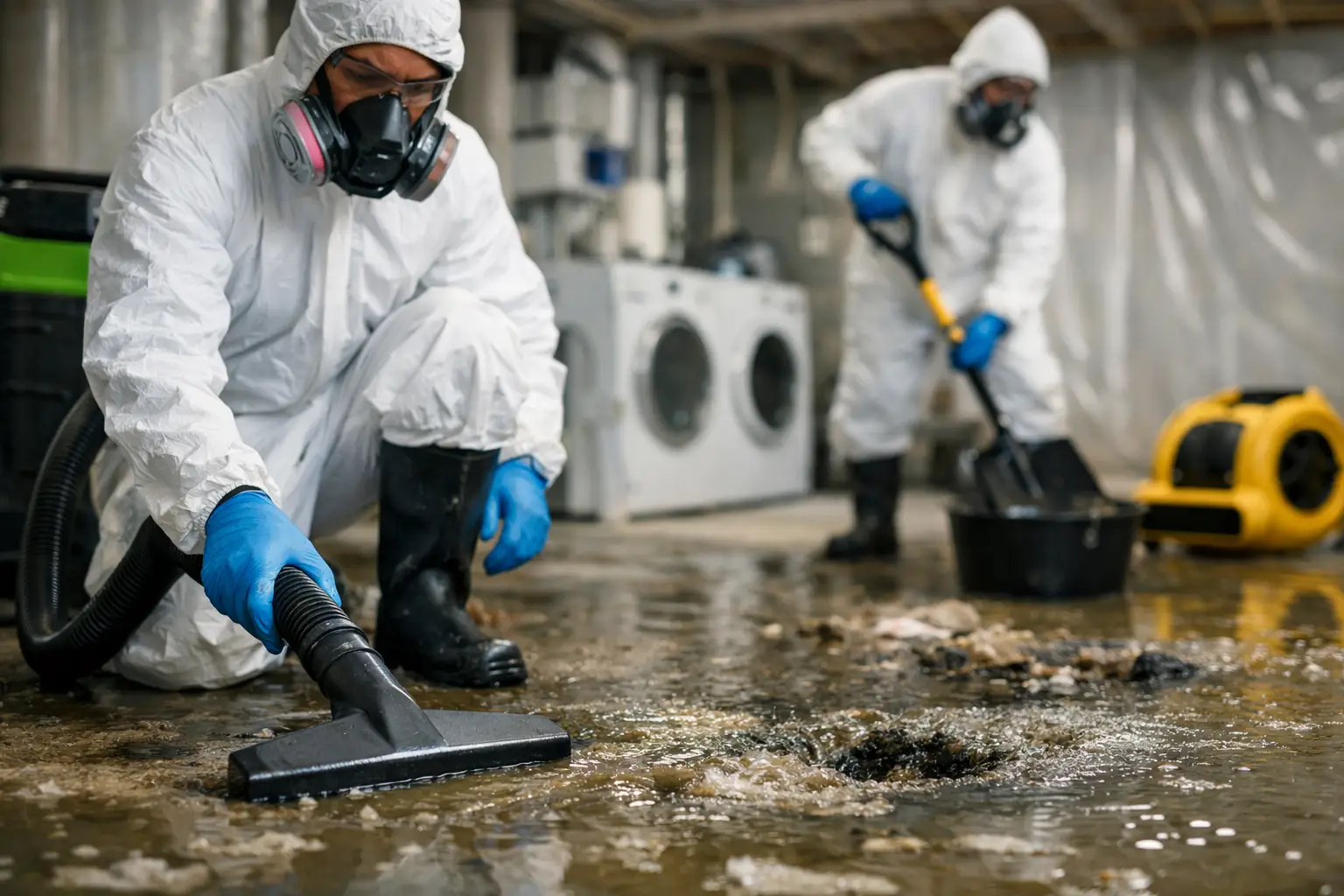 Sewage
Safe biohazard cleanup and sanitizing after sewage backups and overflows.
Learn more Reconstruction
Full rebuild by a licensed general contractor, so your property comes back whole.
Learn moreElevated Operations is an IICRC-certified, licensed general contractor based in Mableton that handles the entire recovery in-house, so after one loss you are never coordinating a cleanup crew, a mold crew, and a contractor separately. One team, one point of contact, from the first pump-out to the final coat of paint.
People call when the property feels like a disaster. They leave reviews because Chris and the crew made it right. These are real, verified Google reviews.
Elevated Operations dispatches IICRC-certified crews across Metro Atlanta from our Mableton base, with a 60-minute emergency response day or night. Choose your city:
Call now for an immediate response, or request your free inspection and get a certified crew on-site within the hour across Atlanta and nearby areas.