24/7 Emergency Restoration · Serving Metro AtlantaEmergency? (770) 404-6895
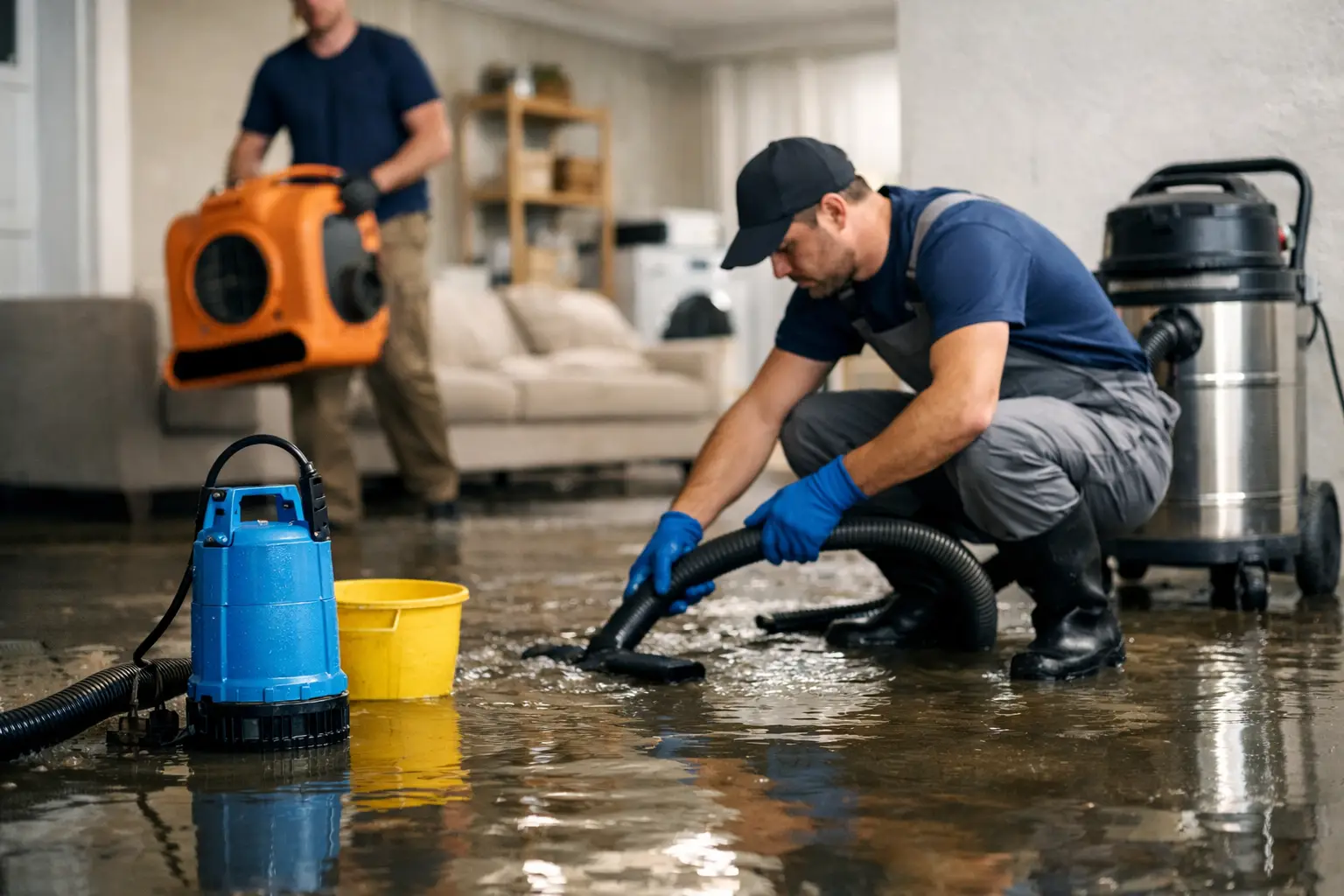
Flooded basement cleanup in Metro Atlanta means fast pump-out, structural drying, and dehumidification before standing water turns into the mold problem the EPA warns can start within 24 to 48 hours. Elevated Operations, LLLP sends IICRC-certified technicians across Cobb, Fulton, DeKalb, Douglas, Clayton, Henry, and Paulding counties with a 60-minute response, direct insurance billing, and a 12-month warranty.
IICRC-Certified · 5-Star Rated · 60-Minute Response · Insurance Billed Directly
Elevated Operations targets a boots-on-the-ground arrival within 60 minutes anywhere in the Metro Atlanta service area, Cobb, Fulton, DeKalb, Douglas, Clayton, Henry, and Paulding counties, 24 hours a day, every day of the year, with the pumps already loaded on the truck.
Coverage depends on the cause. A sudden pipe burst is usually covered, while sump-pump failure and sewer backup often require a separate endorsement. Elevated Operations documents the loss and bills the carrier directly on covered claims, with deductible assistance up to $1,000.
Metro Atlanta's saturated clay soil holds groundwater against a foundation wall long after a storm passes, so hydrostatic pressure can keep pushing water through a crack or cove joint on a dry afternoon. A sump pump that is barely keeping pace is usually the other half of the problem.
Often, yes. If extraction and drying start within the EPA's 24 to 48 hour window, drywall, flooring, and framing can frequently be dried in place instead of replaced.
Flooded basement cleanup in Metro Atlanta means relieving hydrostatic pressure at the foundation, pumping out standing water, and drying framing that sits directly on a concrete slab. Elevated Operations follows the ANSI/IICRC S500 standard while working around the realities unique to below-grade space, cove-joint seepage, a failed sump pump, or a backup through the lowest drain in the house.
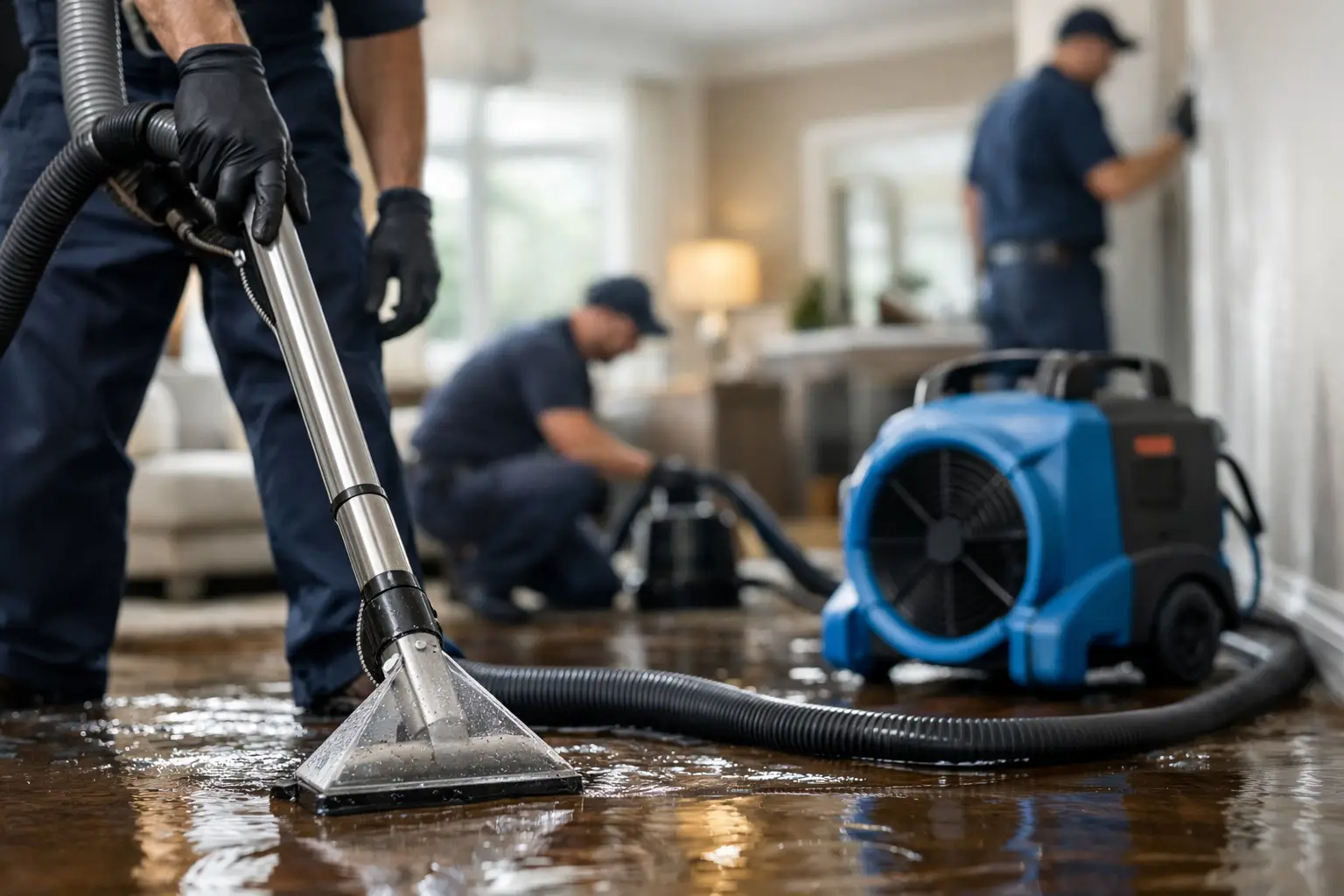
A submersible backup pump goes to work on the pit immediately, whether the original sump pump lost power, its float switch stuck, or it simply could not keep pace with the water arriving.
Moisture meters and a thermal imaging camera trace exactly where hydrostatic pressure is forcing water through, a cove joint where the wall meets the slab, a wall crack, or a window well.
Commercial dehumidifiers and air movers target framing that sits directly on concrete, since a below-grade room already runs more humid than the floors above it even before a flood.
Drywall, carpet and pad, and framing touching the slab get rebuilt once the space reads dry, since porous materials sitting at grade wick moisture upward long after the visible water is gone.
A footing drain or interior French drain, where one exists, is only as good as the sump pump it feeds. If either one fails, groundwater that should have routed around the basement finds the cove joint instead, which is why Elevated Operations checks both before a single dehumidifier gets set up.
The cost of flooded basement cleanup in Metro Atlanta depends on where the water came from, a sump-pump failure and a sewer backup do not need the same containment, whether the space is finished, and how long carpet, drywall, and framing at grade sat wet before extraction started. Elevated Operations provides a free on-site inspection and a written quote before any work begins.
A sump-pump failure or foundation seepage generally needs less containment than a sewer backup, which requires biohazard protocols and antimicrobial treatment before drying can start.
A basement with a bare concrete floor and no drywall dries faster and involves less material replacement than a finished space with framed rooms, carpet, and pad sitting at grade.
Drywall, carpet pad, and framing left wet past the mold-risk window the EPA describes typically need to come out rather than dry in place.
A covered loss like a burst supply line gets billed directly to the carrier, with deductible assistance up to $1,000 on qualifying claims. Sump-pump failure and sewer backup more often need a separate policy endorsement.
Pump-out and drying alone cost less than a job that also involves sealing a foundation wall, replacing a sump pump, or rebuilding a finished basement's drywall and framing.
Basement flooding sits inside a larger pattern across Metro Atlanta homeowners insurance claims. The Insurance Information Institute reports that water damage and freezing accounted for 27.6 percent of homeowners insurance property-damage claims by cause in 2022, the largest single cause after wind and hail (Insurance Information Institute, “Facts + Statistics: Homeowners and Renters Insurance,” ISO/Verisk data, 2018-2022 dataset). Elevated Operations documents whether a claim started with a sump-pump failure, a burst line, or a sewer backup, since a Georgia policy does not treat those three the same way.
IICRC-certified crews respond within 60 minutes, 24 hours a day, with pumps loaded before they ever leave the shop. Get a free quote and a written scope for the pump-out and drying before any equipment gets set up.
Below-grade space fails in a handful of predictable ways across Metro Atlanta basements. If any of these match what is happening in yours right now, stop mopping and call.
A sump pump stops protecting a basement three ways: the power goes out during the storm that needed it most, the float switch sticks and never signals the motor to start, or the water simply arrives faster than the pump can move it out of the pit. Shut off electrical circuits in the affected area if it is safe to do so, then call.
Metro Atlanta's dense clay soil holds rainwater against a foundation instead of draining it away, building the hydrostatic pressure that forces seepage through wall cracks, the cove joint, and window wells. Standing water needs extraction and drying before it spreads to framing and stored contents.
A basement floor drain or the lowest toilet in the house is usually first to back up when a sanitary line is blocked or overwhelmed, since it sits below every other fixture in the home. This is Category 3 black water and a biohazard. Do not attempt to clean it yourself; Elevated Operations handles extraction, sanitization, and odor elimination under the containment protocols contaminated water requires.
A musty smell with no standing water in sight usually means moisture already wicked upward into drywall, carpet pad, or framing sitting on the slab from an earlier seepage event that never fully dried. A moisture meter and thermal imaging camera find it before it becomes a mold remediation job.
Five sources account for most Metro Atlanta basement floods: sump-pump failure, foundation-wall seepage, storm rain or window-well overflow, a burst supply line, and sewer backup. Each one also carries an IICRC clean, gray, or black water rating, but it is the source, not the category, that tells Elevated Operations what to do first.
Where the water came from decides how a crew responds to a flooded basement more than which lab category it technically falls under. The table below maps the sources Elevated Operations sees most often in Metro Atlanta basements to what is actually happening and the response each one needs.
| Basement Water Source | What's Actually Happening | Elevated Operations Response | Reconstruction Likely? |
|---|---|---|---|
| Sump-pump failure (power loss, stuck float, or overwhelmed capacity) | Groundwater keeps entering the pit but stops leaving it, so it rises onto the floor | Emergency pump-out, pit and float inspection, extraction, monitored drying | Sometimes, baseboards and flooring near the pit often replaced |
| Foundation-wall or cove-joint seepage | Hydrostatic pressure from saturated clay soil pushes water through a wall crack or the cove joint | Moisture mapping, extraction, drying, monitoring for recurrence | Rarely for a single event, more likely if seepage is ongoing |
| Storm rain or window-well flooding | Surface water overwhelms the grading or a window well and enters above or below the sill | Extraction, structural drying, dehumidification | Rarely, if pumped out and dried within the EPA's 24 to 48 hour window |
| Burst supply line or plumbing failure | Clean water releases quickly from a pipe or fitting inside the basement | Extraction, structural drying, dehumidification | Rarely, if dried within 24 to 48 hours |
| Sewer or sanitary backup | Wastewater enters through the lowest drain or fixture in the house | Full containment, biohazard protocols, tear-out of porous materials | Usually, drywall, insulation, and subfloor typically rebuilt |
A sump-pump failure or foundation seepage that looks minor on day one gets worse the longer it sits against carpet, drywall, and framing at grade, which is the argument for calling within the first hour instead of waiting to see if the water recedes on its own.
Metro Atlanta's dense red clay soil, heavy spring and hurricane-season rainfall, and stock of older homes with below-grade basements combine to make basement flooding a recurring event rather than a one-time accident. Clay soil compacts and drains slowly, which pushes water toward foundation walls instead of away from them, and basements built before modern exterior waterproofing standards have fewer barriers to stop it.
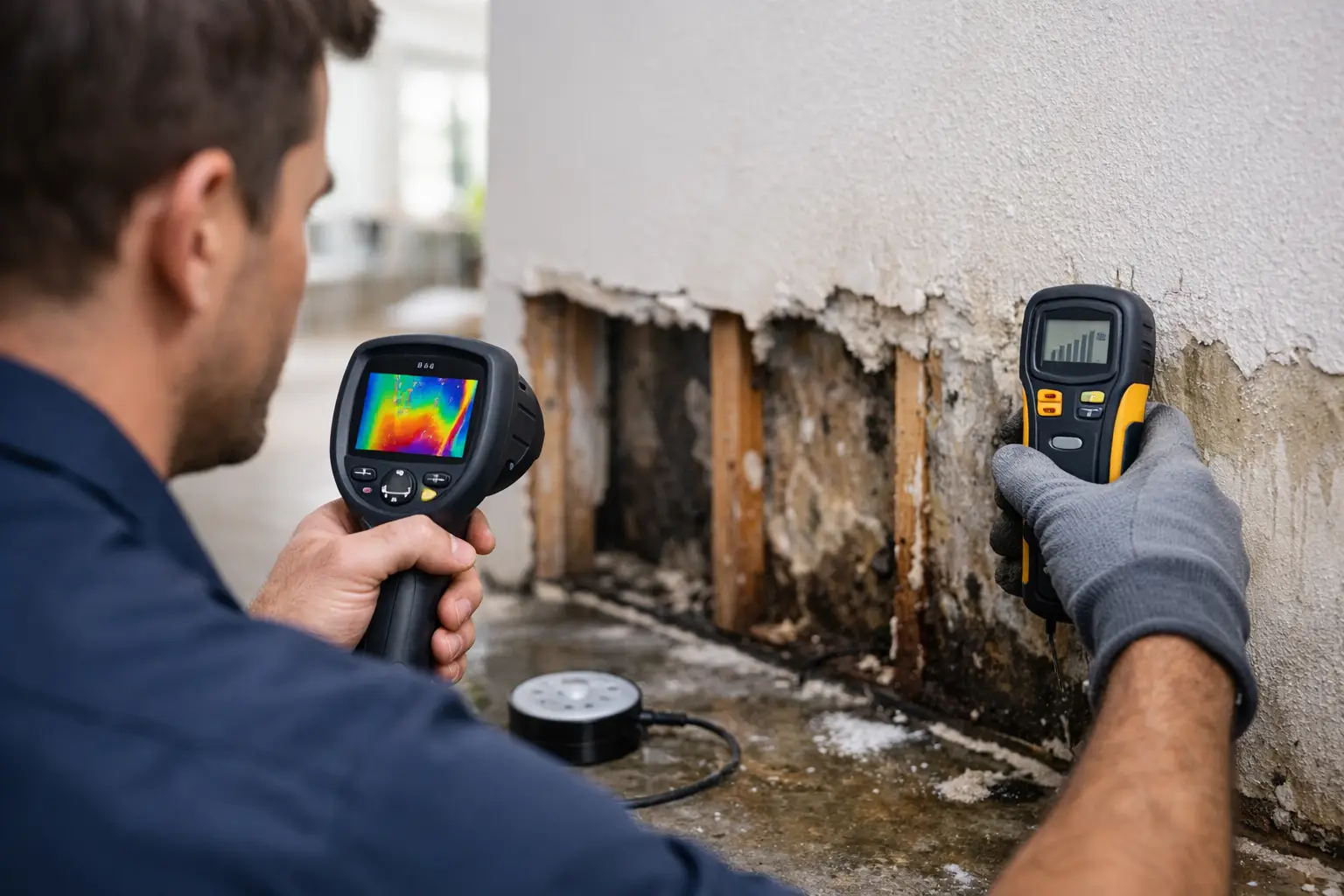
Metro Atlanta's red clay compacts tightly and drains slowly, so after a storm it holds rainwater against a basement's foundation walls instead of letting it soak away. That trapped groundwater is what builds the hydrostatic pressure that eventually finds a crack, a cove joint, or a window well.
Basements in homes built across Marietta, Decatur, and Douglasville before modern exterior waterproofing and French drain standards became common have fewer barriers between the soil and the basement wall, and need a foundation check as part of a complete drying plan, not just pump-out.
Spring storm season and the remnants of Gulf and Atlantic hurricanes each fall soak Metro Atlanta's already-saturated clay, and a below-grade basement is the first place in a house where that groundwater ends up. The seven-county metro area is home to roughly 6.4 million people, most living in homes built for a different rainfall pattern than the region sees today.
Basement depth changes the drying plan more than most homeowners expect. A daylight basement with windows exposed on one side behaves differently than a basement fully below grade with block walls on all four sides, even though both start with the same first step, finding where the water is actually coming from (U.S. Census Bureau, Metropolitan and Micropolitan Statistical Area population estimates, 2020s series, Atlanta-Sandy Springs-Roswell metro area).
Choosing a certified contractor for flooded basement cleanup protects both the property and the insurance claim, since an uncertified crew can miss hidden moisture, misdiagnose the water category, or leave a claim without the documentation an adjuster needs. Four checks separate a licensed, certified restoration company from a storm-chaser working out of a rental van.
Ask for IICRC certification and general liability insurance in writing before a crew sets a pump in your basement, not just a verbal claim at the door.
A physical Metro Atlanta address that existed before your basement flooded matters. A magnetic sign on a rental van is not a track record.
Compare the written scope of work against what your insurance adjuster approves for the sump pump, drywall, and flooring line items. Ask before signing if the numbers do not match.
Read every line of an assignment of benefits form before signing. A blank AOB hands a stranger control of your basement claim.
IICRC-certified technicians reach Cobb, Fulton, DeKalb, Douglas, Clayton, Henry, and Paulding counties in under 60 minutes, with sump-pump, moisture-mapping, and drying equipment already loaded. Insurance is billed directly, deductible assistance runs up to $1,000, and every completed job carries a 12-month warranty. 5-star rated on Google.
IICRC-Certified · Direct Insurance Billing · 12-Month Warranty · Serving Cobb, Fulton, DeKalb, Douglas, Clayton, Henry & Paulding CountiesFrom emergency mitigation to full reconstruction, handled in-house so you are never managing a chain of subcontractors mid-crisis.
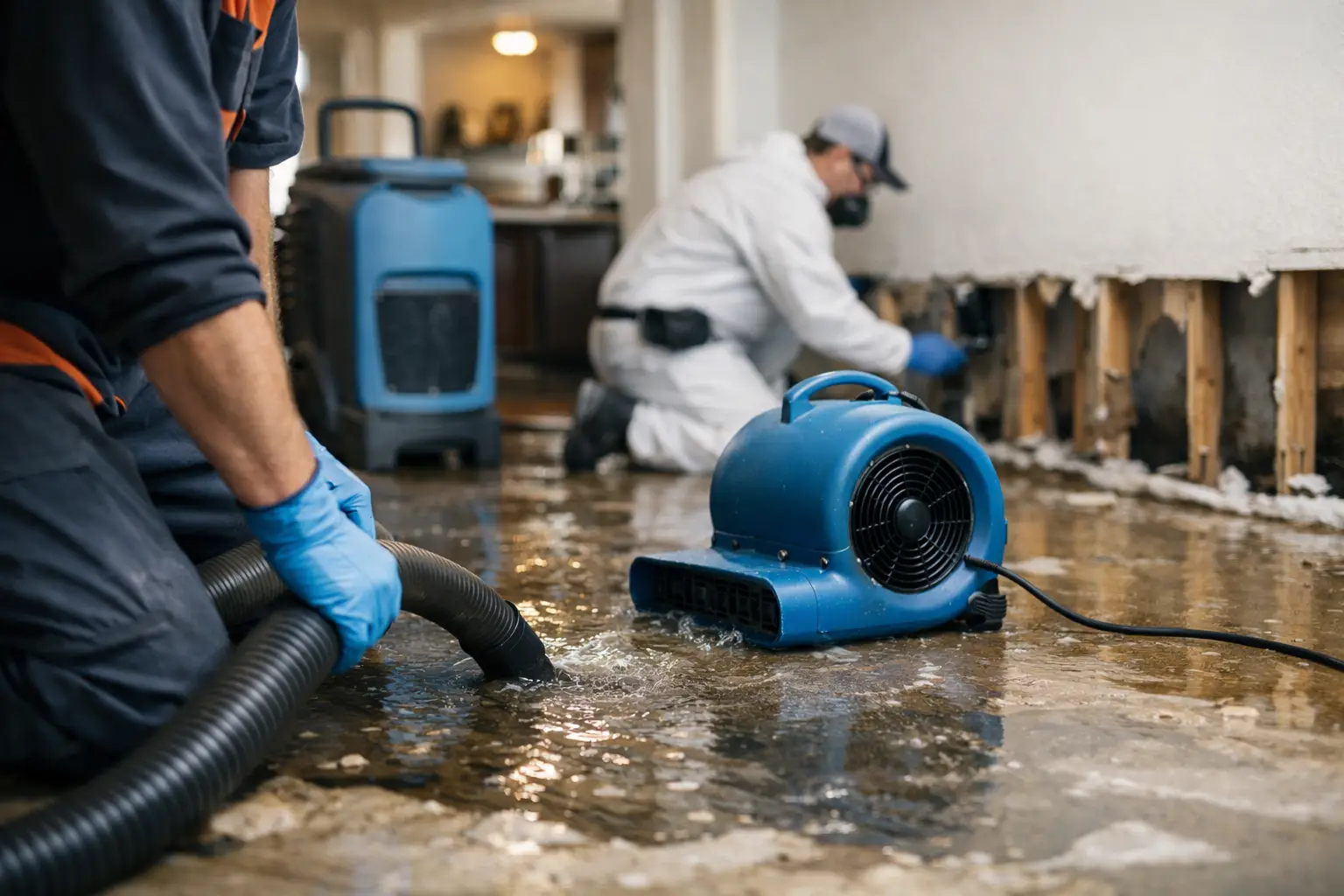 Water Damage
Extraction, structural drying, and moisture mapping after floods, leaks, and burst pipes.
Get help now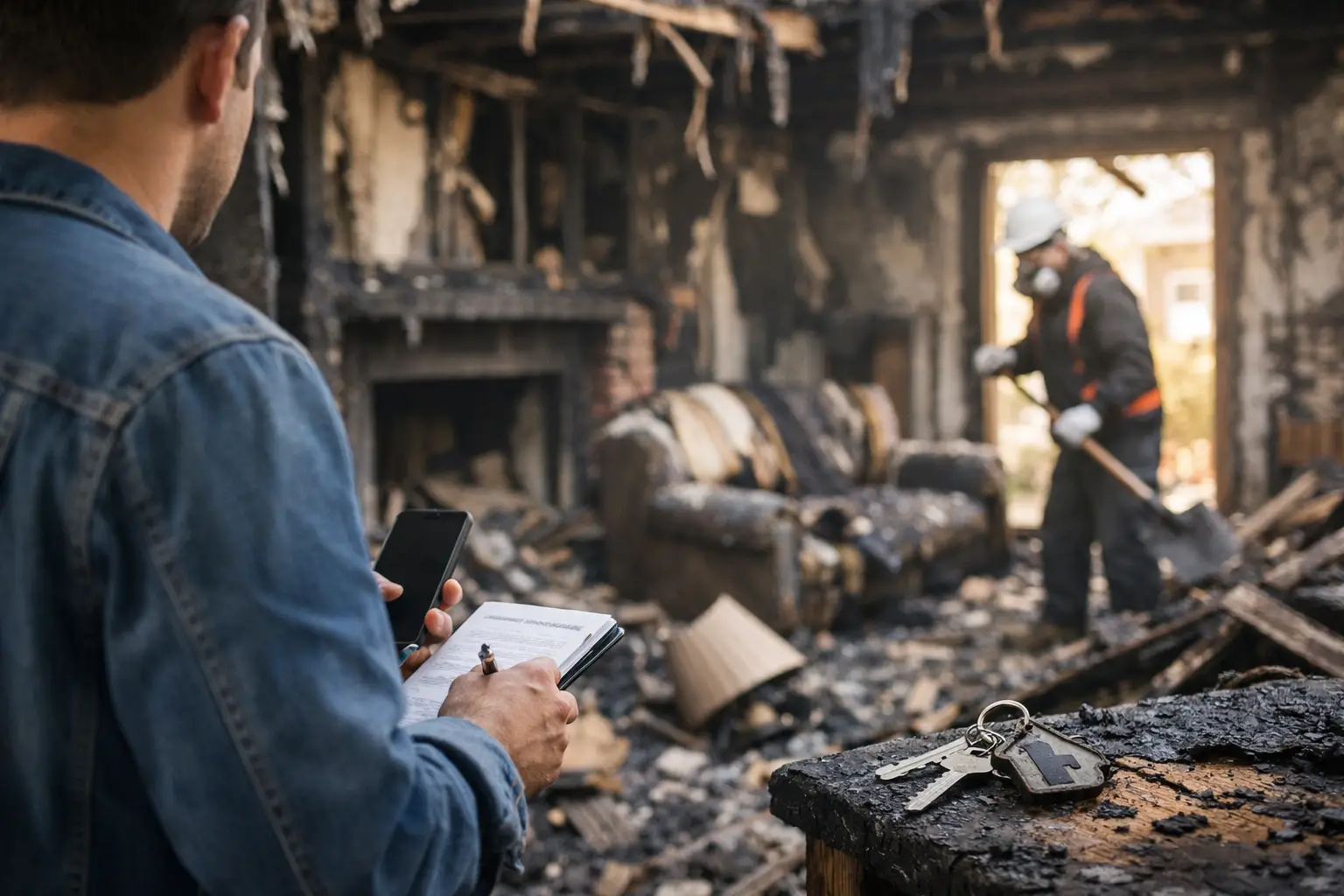 Fire & Smoke
Soot removal, odor deodorization, and content cleaning after fire and smoke damage.
Learn more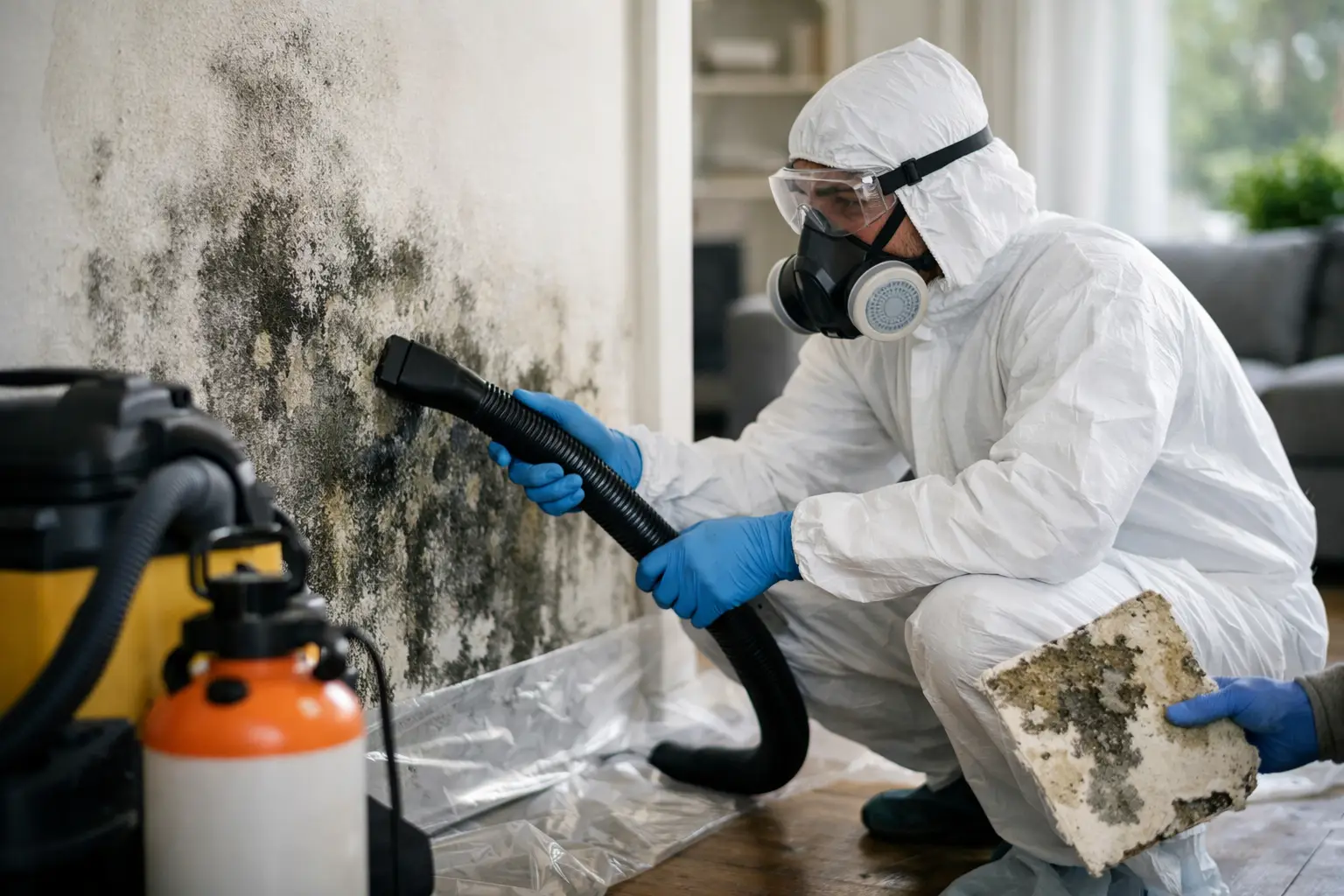 Mold
MoldContainment, removal, and moisture control that stops mold from coming back.
Learn more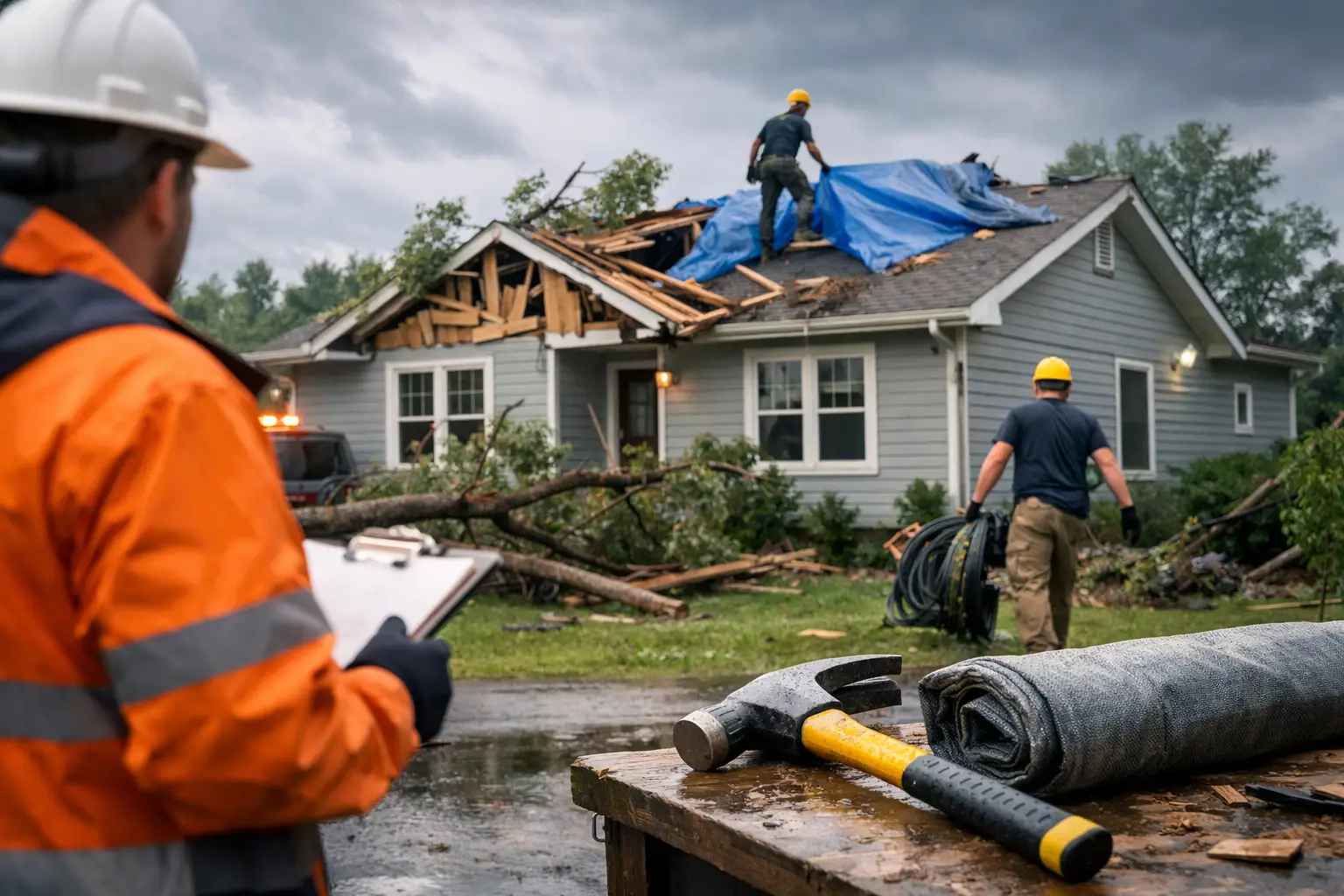 Storm
StormEmergency board-up, roof tarping, and full recovery after wind, hail, and storms.
Learn more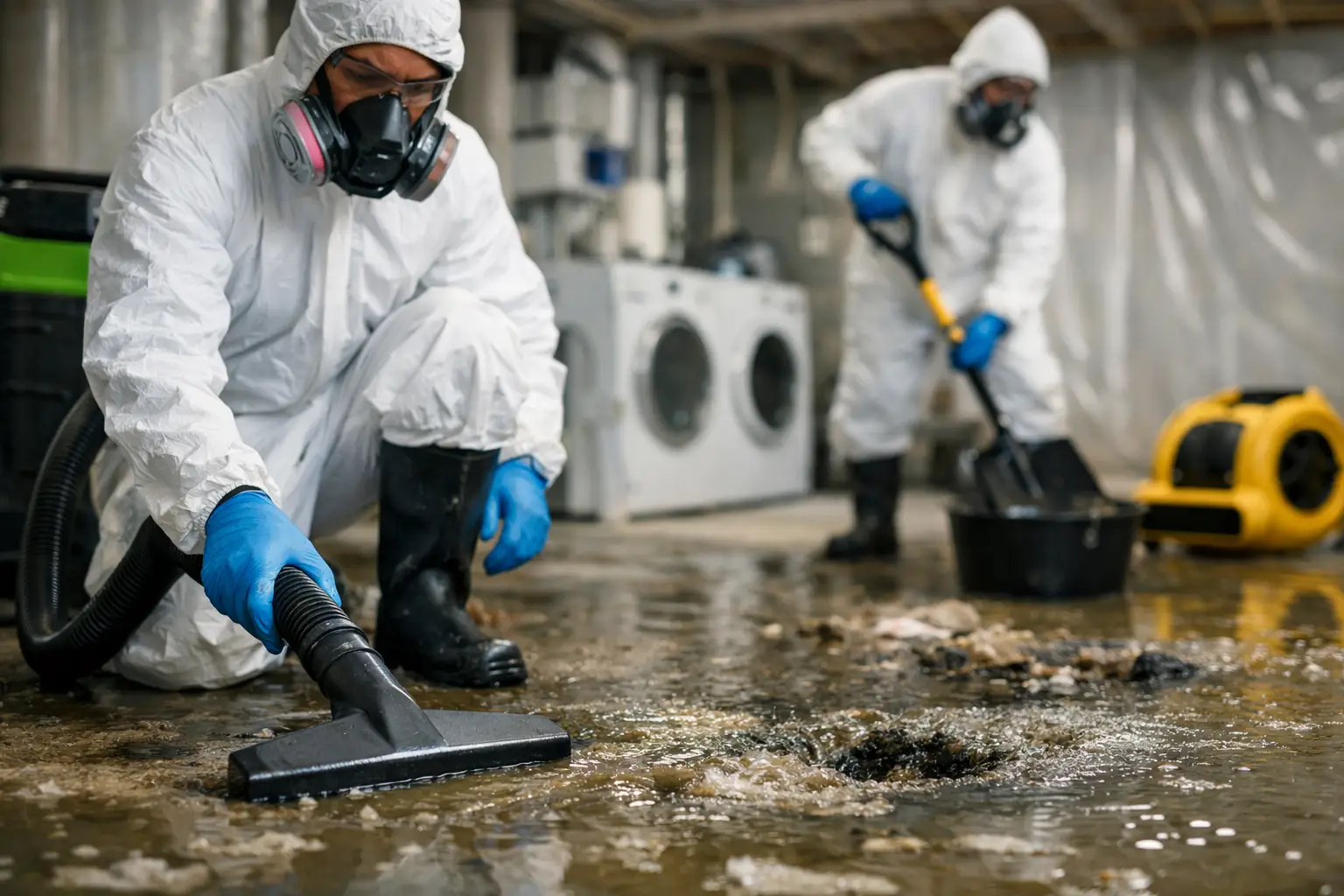 Sewage
Safe biohazard cleanup and sanitizing after sewage backups and overflows.
Learn more Reconstruction
Full rebuild by a licensed general contractor, so your property comes back whole.
Learn moreElevated Operations is an IICRC-certified, licensed general contractor based in Mableton that handles the entire recovery in-house, so after one loss you are never coordinating a cleanup crew, a mold crew, and a contractor separately. One team, one point of contact, from the first pump-out to the final coat of paint.
People call when the property feels like a disaster. They leave reviews because Chris and the crew made it right. These are real, verified Google reviews.
Elevated Operations dispatches IICRC-certified crews across Metro Atlanta from our Mableton base, with a 60-minute emergency response day or night. Choose your city:
Call now for an immediate response, or request your free inspection and get a certified crew on-site within the hour across Atlanta and nearby areas.